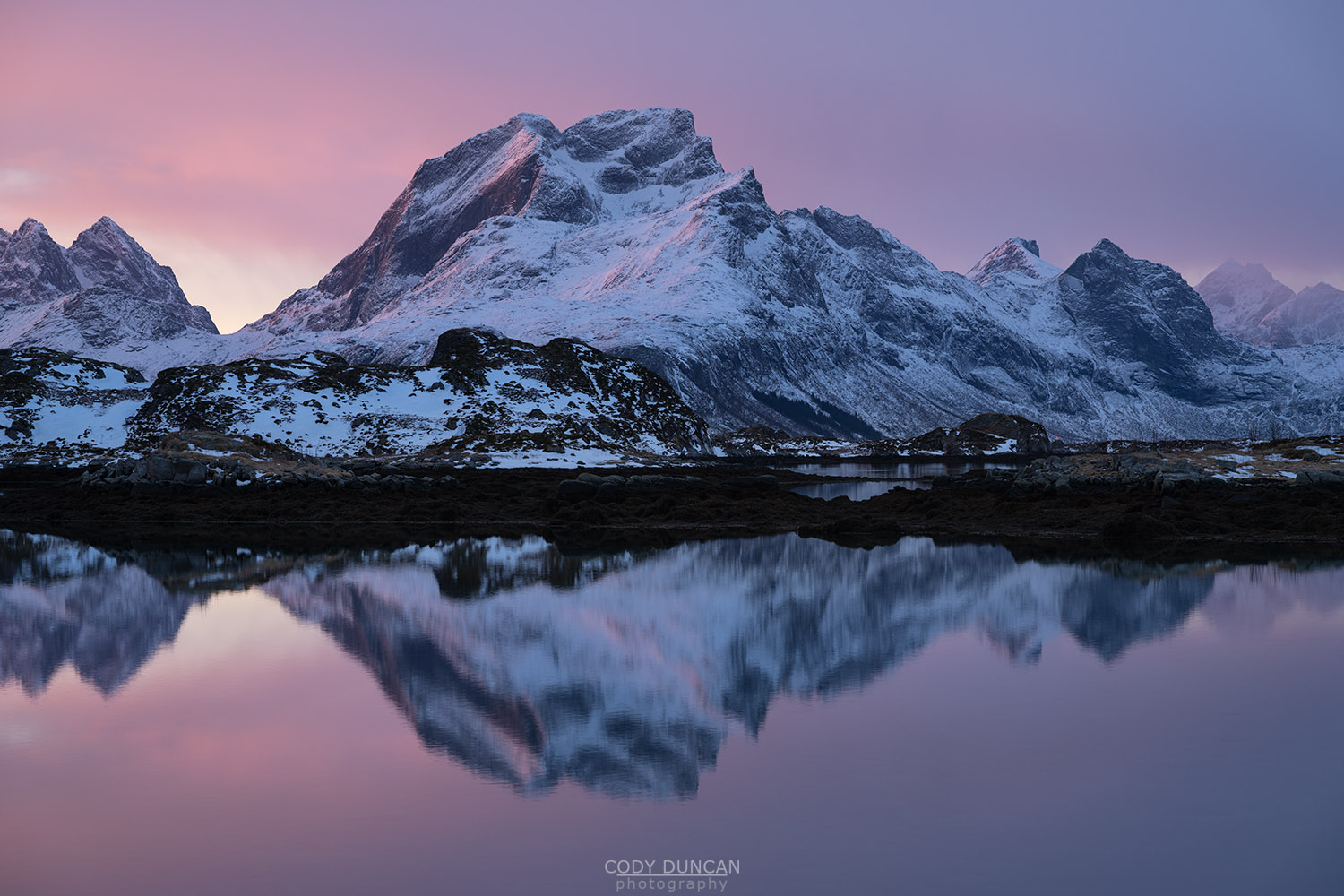
Photo: Dawn light shines over Narvtinden mountain peak and reflection, Flakstadøy, Lofoten Islands, Norway. January 26, 2026. 09:51
This view has long been a favourite of mine. It is often a relatively straightforward shot, so I don’t tend to stop there too often anymore, but on this January morning, it looked like the sky had potential for something special.
The air was calm and still, and cold! Some snow flurries were gently floating in from the north so it was a race for which would arrive first; the light or the low clouds. It ended up being a bit of both.
As far as I could tell, the southern horizon seemed clear and I was hoping we’d get a good light show as the sun arrived. And it came very close, but didn’t quite happen. Conditions were just on the edge of one of those fire in the sky moments, the clouds never quite caught all the light and these soft pinks faded across the sky into a deep blue of the passing snow. I would have probably been better to be looking in a more southernly vantage point. But I do like the softness and subtleness of the light for this image.
Camera Info: Nikon Z8 Nikon 24-120mm f/4 84mm ISO 100 f8 1/13 Second WB Daylight
News of the enforcement of the commercial driving regulations in the Lofoten region has begun to spread in the background of the photo workshop community. Many of the more serious (international) guides have already been using legal and licensed transport in recent years, but I still see multiple workshops driving around in rental vans or cars on a daily basis while I’m out guiding myself. I’m sure many are completely unaware of the laws around commercial transport, as it is not exactly easy to find the info buried within various government websites and mostly in Norwegian. But the law is the law, and it will likely come as a cold shock to some when they are pulled over and the photo workshop is forced to come to a stop.
Lofoten has become an important destination in the photography workshop world. But what has previously existed will not likely exist in the future as the guiding scene here becomes more regulated. What is likely to disappear first are the cheaper price point tours. And this goes not only for photography workshops, but for hiking tours, skiing, etc. If you want to get a quote from a local bus company for a 17 seater mini-buss, you are looking at a starting price around €1.000/day. That is just for a person to drive, not guide, not teach, not know the weather, just the cost of getting from point A to point B. Small operators like myself might be slightly cheaper, but with a 9-seater van, groups are limited to 6 clients + guide. There will likely be some international guides who have to make the choice between a lower price-point but larger group, vs. higher price point and smaller group. All in all, this will likely increase any workshop price by €1.000 or so for a week long trip.
The days of a photographer driving a small group around will probably soon becoming to an end on Lofoten. I’m sure some will continue to try and fly under the radar, rent 2-3 small vehicles and not a large van with a bright yellow Hertz sticker on the side. I’ve seen some think they can form a ‘club’ and have the ‘members’ be on this trip – good luck arguing this with Norwegian police after being pulled over and asked for paperwork. The police have even told local guides to report suspected illegal operators, and I know this is being done. Any vans or groups of vehicles without license numbers on the side of the doors stand a high chance of getting reported. Unfortunately, it looks like guiding in Lofoten going to become like life in the former East Germany and we have to fear our co-guides and neighbours will report us to the Stasi.
I do have some questions about the burden of proof required to accuse someone of illegal guiding. In some cases, like a British guide in a vehicle with mixed national clients, it will probably be pretty easy. But how are they going to distinguish between a small group of friends, especially if one or several of them are professional photographers in their home country, but just here on Lofoten to shoot their own work? Will it be guilt first, and prove innocence later? …After you’ve been stopped from driving for several days and lost half your trip. I cannot answer this, but at the moment it’s looking more like the inquisition, guilt first and innocence later. Not the best news after you’ve already been burnt at the stake for heresy.
I’ve seen some online grumblings that that this will greatly benefit local guides like myself, who can then begin to charge extortionately high prices in the El Dorado of northern Norway. True, perhaps, especially if I could multiply myself 10x during the winter season and then hide in a cave the rest of the year. The reality of guiding photography workshops on Lofoten is the season is very limited: there are about 7-8 reliable weeks in winter, and maybe 2-3 weeks in Autumn. So it is not a particularly great amount of time to make up the costs for operating and living in Norway. Not all that glitters is gold – says my rusting skis which haven’t been touched in 2 years because I barely have a day off in the winter season for recreation, let alone for my own photography and exploring new places.
Local businesses have already been following these laws for many years and were forced to purchase vehicles solely for guiding use, at great operating expenses to ourselves. So to see some Germans complaining that Lofoten is now expensive to run trips to, well, dudes, welcome to the fucking club! It’s not cheap of any of us either! And nor has it been to those who also operate legally with a local tour provider these last years. So be glad you’ve been able to sneak in and undercut all local guides for years without any enforcement of the laws the locals have been following and paying for for years – like the €5.500 deposit for having a taxi license and €10.000 deposit for booking tours. And if any Europeans had wanted to make Lofoten/Norway a mainstay of their business, they could have done so much easier than myself as an American. But to complain that you can no longer have cheap trips in one of the world’s most expensive countries feels a bit…
Without even knowing what is going on, the energy already feels strange this year, quieter than expected. There was a conference in early February about how the driving regulation enforcement is affecting local businesses. I’ve heard one of the local car rental agencies is selling a sizeable potion of their vans. I suspect there has been a growing panic in the background and many have canceled their workshops, and this is spreading out to Lofoten’s tourism industry as a whole, which is around 30% of the local economy.
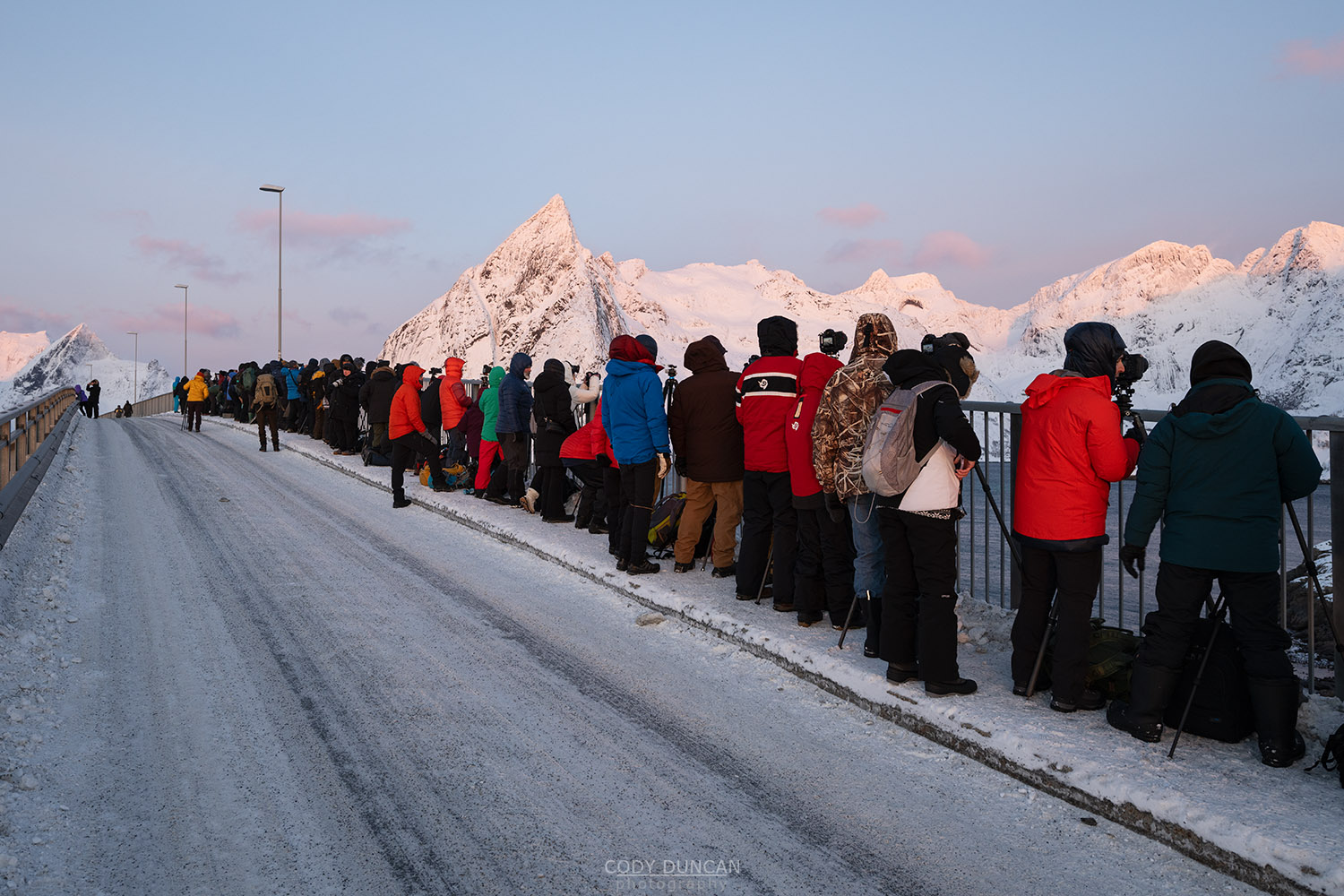
For better or worse, it was largely the small photography guiding community that put winter on Lofoten on the map long before the now growing amount of ‘normal’ tourists. It was photographers who kept the cafe’s and restaurants in western Lofoten open throughout the winter, when only 10 years ago it would otherwise be a ghost town. If Norway was smart, it would at least setup a system similar to Iceland, which allows international guides to operate as long as they have all their qualifications and paperwork in order. Norway’s black or white system seems overly harsh, and is probably not doing much to address the major issue of safe driving on Norway’s winter roads anyhow. It will be like all prohibitions: expensive for those to operate legally, while still allowing for a large underground market.
For my final words on the subject. It would be good if the national and regional travel agencies like Visit Norway and Destination Lofoten put an overview of the rules for commercial driving on their websites, and even better if in several languages. There are lots of people getting paid lots of money all over Norway in which this should be their business. Yet here I am, just a random dude, writing all this for nothing on a blog barely anyone with reads, to hopefully inform at least one person on what is now happening here. But I suspect these laws are not which many in the tourism industry want to be shared. If the law comes down heavy, it will not be good for business on Lofoten, that is for sure.
https://www.68north.com/content/2026/02/2026-02-commercial-driving-norway-03.jpg10001500Codyhttps://www.68north.com/content/2016/12/68north-logo-V4.pngCody2026-02-25 03:00:002026-02-27 07:28:57Guiding in Norway Part 3 – Thoughts On The Future for Guiding on Lofoten
The following is going to be long, complicated and confusing. And if you think it’s bad just to read, imagine trying to operate a business under these conditions.
Going back to late 2020, the new transportation regulations required all persons offering transportation for payment, even if transportation was not the main purpose, but a side product like photography or ski guiding, to have a valid taxi license for the vehicle in use – løyve. Having a løyve required the vehicle to be owned by a Norwegian business and the vehicle registered as a taxi in the motor vehicle database. For the owner of the business to receive a løyve, they also had to have a kjoreseddel – taxi drivers license. Once thew news spread and the mountains of paperwork, police, and financial checks were done, most local Lofoten guides got on board once they navigated the then confusing application process.
Fast forward to late 2024 and the government decided that all persons with a løyve now needed to be connected to a central taxi dispatch by Q2 of 2025. Obviously photography guides and other tour operators are not taxis. So some other new language was put into the laws that allowed small tour operators to receive a ‘dispensation for the requirement for a taxi license/løyve.’ It’s more or less the same thing, but different.
The benefit of the new language was the allowance of rental vehicles to receive the dispensation, not just a vehicle owned by the person/business. Though that doesn’t help me too much after I was forced to buy a 2nd van in 2023, which sits unused in my driveway most of the year. Cost of doing business in Norway…
The granting of the løyves or dispensation from løyve happens on a county by county basis. For those of us operating in Lofoten, this is Nordland county. For any guiding which might occur in Senja or Tromsø, this would be Troms county. This is opposed to larger commercial buses, which are regulated on a national level, also for international buses and drivers.
Troms county is currently not granting dispensations from the taxi license, but still requires all tour operators to have a valid løyve and a vehicles owned by the business and the owner to have taken the taxi business operators exam. How they deal with the requirement for connection to a central taxi dispatch, I don’t know. But the difference between a løyve and dispensation is an important detail that will come up in a minute.
Let’s go back in time again. Lofoten only has 2 small regional airports, Leknes and Svolvær. The nearest ‘major’ airport which can handle normal passenger jets like 737s/a320s is Harstad-Narvik Evenes airport, several hours drive east of Lofoten along the main E10 road. Destination Lofoten, the main visitor agency for Lofoten has been promoting Evenes airport as the regional hub over the last years and has now gotten several direct flights from multiple European destinations to the airport. This sounds good, right? Easier access to the Lofoten region for international visitors. But… With Norway there’s always a but.
To reach Evenes airport from Lofoten along the E10 requires crossing into Troms county on two occasions, 9km and 50km stretches respectively (of a total of 230km from Leknes), before reaching Evenes airport, which itsef is in Nordland county. Troms county is not allowing the transport of clients by valid dispensation holders from Nordland on these sections of road, even if they are just transiting to/from other areas in Nordland. In other words, guides and small tour operators from Lofoten are not allowed to pickup clients from the airport that the Lofoten region is marketing as Lofoten’s regal hub to the outside world.
Nordland county is now having to take Troms county to the central government for clarification.
A general reasoning behind the laws is to have a safe and regulated industry, including general road safety. While not allowing local Lofoten guides to reach Evenes airport, or forcing them to take a full day detour via Bodø and Narvik, the exact opposite of safety is achieved. In practice, it is probably making the roads even more dangerous, as clients who might have booked guided transportation from Evenes airport will now either have to rely on infrequent public transportation, or rent a car themselves for the long drive to Lofoten. There is already extreme safety issues with inexperienced tourists driving in winter conditions in recent years, including a fatal head-on collision near Evenes airport in January 2026, when a tourist in a rental car on the way from Tromsø to Lofoten crossed over into oncoming traffic, killing two sisters and severely injuring a third.
So this bizarre standoff between Troms and Nordland is not likely achieving its goal of safer roads, and is more likely making the roads more dangerous by limiting (safer) transport options for visitors.
Meanwhile, as I’m sitting in a hotel room in Svolvær on the last days of a workshop, there is a German tour bus driven by a German driver parked outside. And down the road is a Lithuanian tour bus driven by a Lithuanian driver. Both of these vehicles are allowed to freely travel from Nordland to Troms and anywhere else in Norway, as large buses are regulated by commercial driving laws from the state road agency – Statens Vegvesen. While myself, with a Norwegian vehicle, a Norwegian taxi driving license, a Norwegian vehicle dispensation, Norwegian insurance, and everything else, am only allowed to operate within Nordland county, as small guides are regulated under county-by-county taxi regulations. So international bus drivers unfamiliar with regional weather conditions and roads are given more operating rights than local small guides.
https://www.68north.com/content/2026/02/2026-02-commercial-driving-norway-02.jpg10001500Codyhttps://www.68north.com/content/2016/12/68north-logo-V4.pngCody2026-02-23 03:00:002026-02-27 07:26:38Guiding in Norway Part 2 – Disfunction in the North
Several years ago I wrote an introductory article about the commercial driving license regulations in Norway for small guiding operations like photography workshops.
As the rules currently stand, only Norwegian residents with a Kjoreseddel – taxi operators license – received from the Norwegian police, and a valid dispensation from løyve or a løyve received from the local county are allowed to drive clients for pay of any sort in Norway.•
At the time of writing my original article there had still yet to be any enforcement of the rules in Lofoten or greater Nordland region. And, depending on which authority one might ask, you would get any number of different and conflicting answers about how the rules applied and to whom. Guiding on Lofoten was still basically a free-for all and a majority of photography workshops were operating without licensing. Even last year, I have seen photos of un-licensed tour operators in vehicle crashes interacting with the police and nothing was done.
This has now changed. Driving regulation enforcement has come to Lofoten and the surrounding regions.
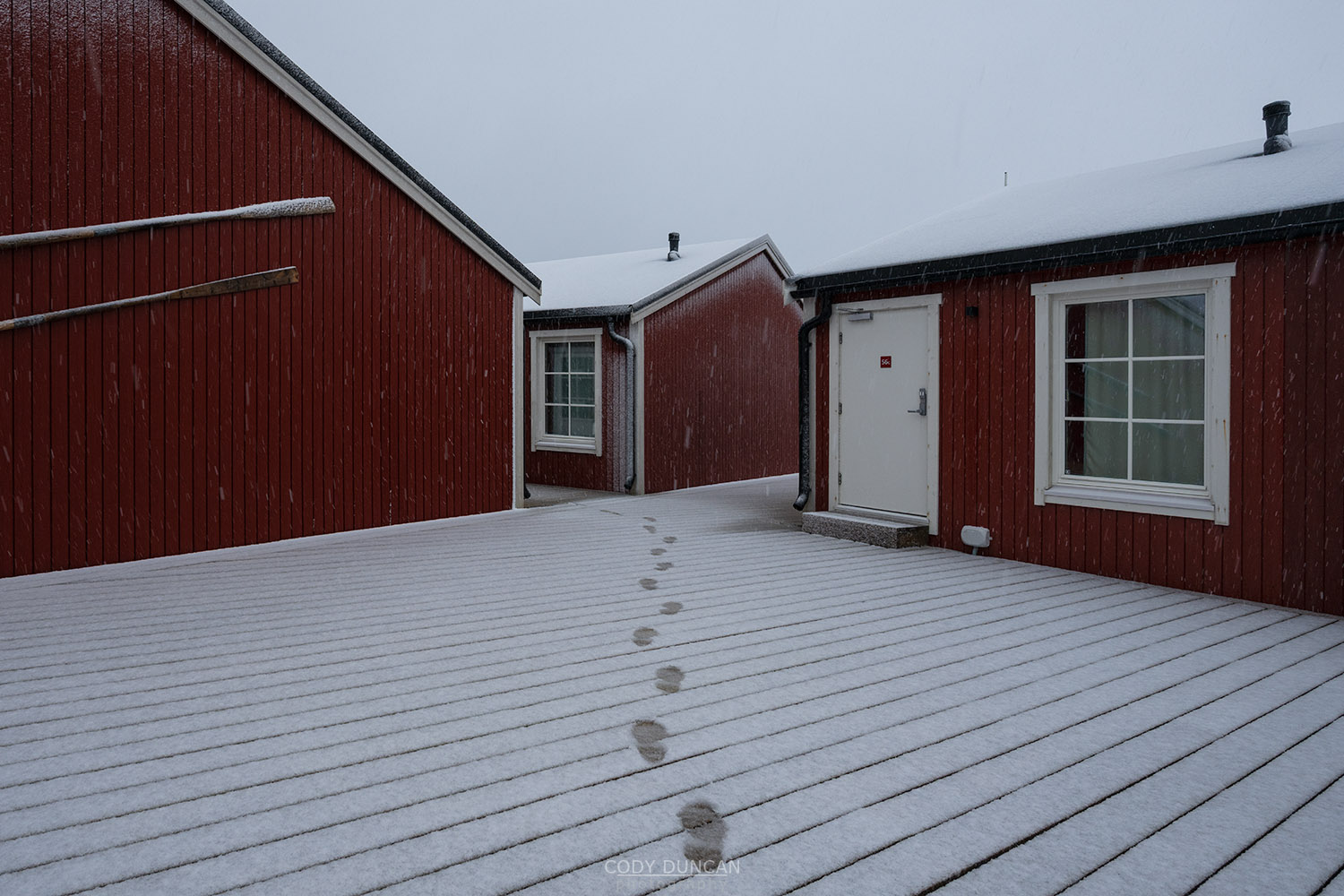
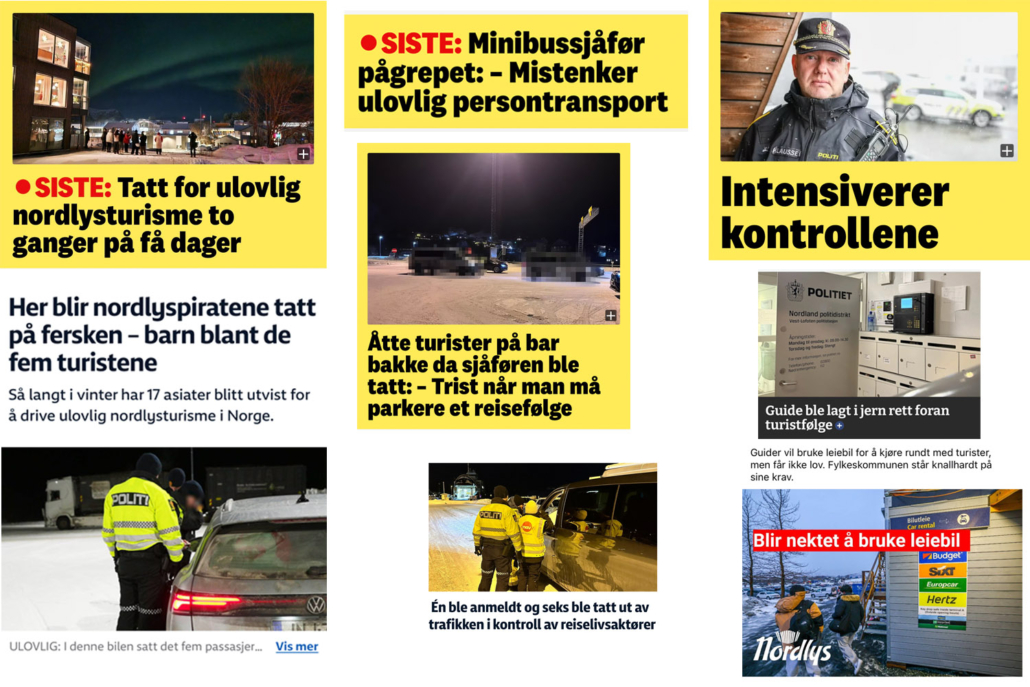
Photo: Newspaper headlines from recent weeks about ongoing control of illegal guiding operations.
According to an NRK article from February 15, 2026. 17 (Asian) tour operators have been deported from Norway thus far in the winter season, while dozens of others have been stopped and fined. The difference in treatment is non-EEA parties are, in addition to driving illegally, also working illegally in Norway. Hence the deportation and bans for future travel. European guides are so far being treated with slightly softer gloves, and mostly being fined, in addition to a ban on any current guiding/driving activities.
For the first time since the rules were enacted, large traffic controls have been held in Reine, Svolvær, Harstad, Narvik, and other areas throughout January and February. This enforcement is specifically checking for suspected illegal guides and transport. There are regular and ongoing arrests, fines, driving bans, and deportations throughout the region as I publish this article.
Beyond just enforcement of the regulations around driving, the Norwegian A-krim or Labor crime division has become involved. This is the main factor in the deportation of non-EU/EEA parties as they are deemed to be working illegally without valid permits.
Although, to add a layer of confusion, Norway’s own immigration and employment agency, UDI, states on their website for tour guides:
“Tour guides accompanying foreign travel companies do not need a residence permit if they are to work in Norway for up to three months. Requirements: You cannot have an employer in Norway.”
Reading the above kinda-sorta seems to make it sound like guides do not require a visa/residence permit for guiding in Norway, as long as they are not working for a Norwegian based company. But the driving without permits is still 100% illegal and not open to any interpretation of the law.
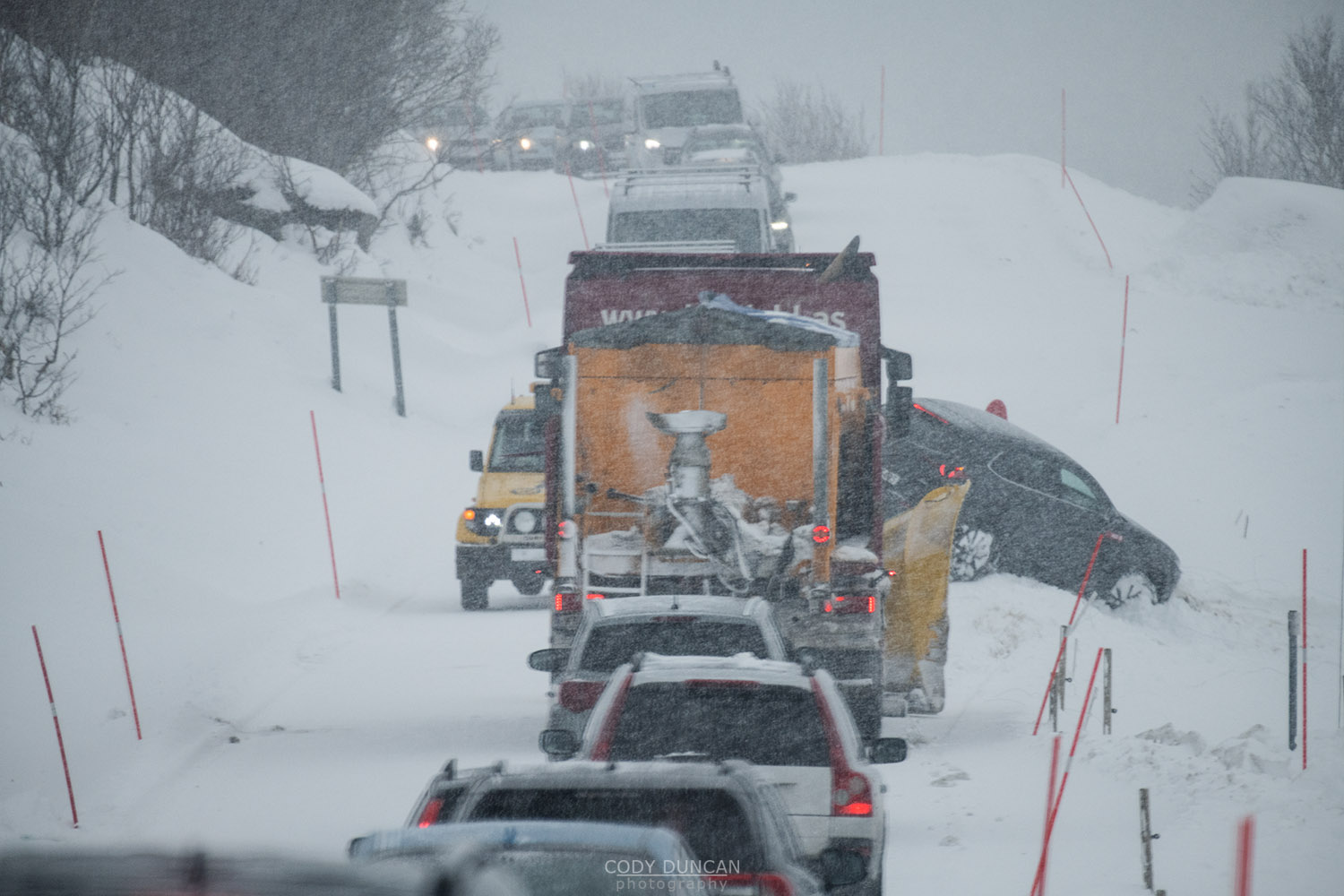
Why the sudden enforcement? Most likely it is a partial result of the extremely negative press certain nationalities have received in recent years for a high amount of reckless driving and crashes in recent winters. Accidents are now multi-daily occurrences and a fatal head on collision of tourist vs. local occurred near Evenes airport in late January, killing 2 local women. There was even a recent story about the same tow truck driver rescuing the same couple from driving off the road 7 times within a week. It would almost be comical if it did mean lives were on the line.
This has made dangerous driving a high priority for authorities this winter. The authorities are unable to stop to foreign nationals renting vehicles in winter, even if they have no winter driving experience. The only drivers they are able to target are commercial guides and operators without all the legal paperwork.
Another reason I suspect is from last summer, when a French tour operation setup multiple tents in a granny’s local cloud berry field, including leaving the remnants of what people camping without a toilet do. There have been family feuds over and fights over cloud berry fields in Norway, so the French tour operator, illegally driving around French registered vans, not following the camping rules of Allemannsretten, stirred up quite an outrage among the locals. This was even a discussion point during a tourism conference in Leknes last autumn, where local authorities made it seem like not much could be done. Well, it turns out things are being done now.
In this, I am specifically talking about 9 seater vans or smaller. Larger 16 seat + buses are operated under a different licensing scheme.
https://www.68north.com/content/2026/02/2026-02-commercial-driving-norway-01.jpg10001500Codyhttps://www.68north.com/content/2016/12/68north-logo-V4.pngCody2026-02-20 06:39:362026-02-27 07:24:55Guiding in Norway Part 1 – Commercial Driving Regulation Enforcement Begins on Lofoten
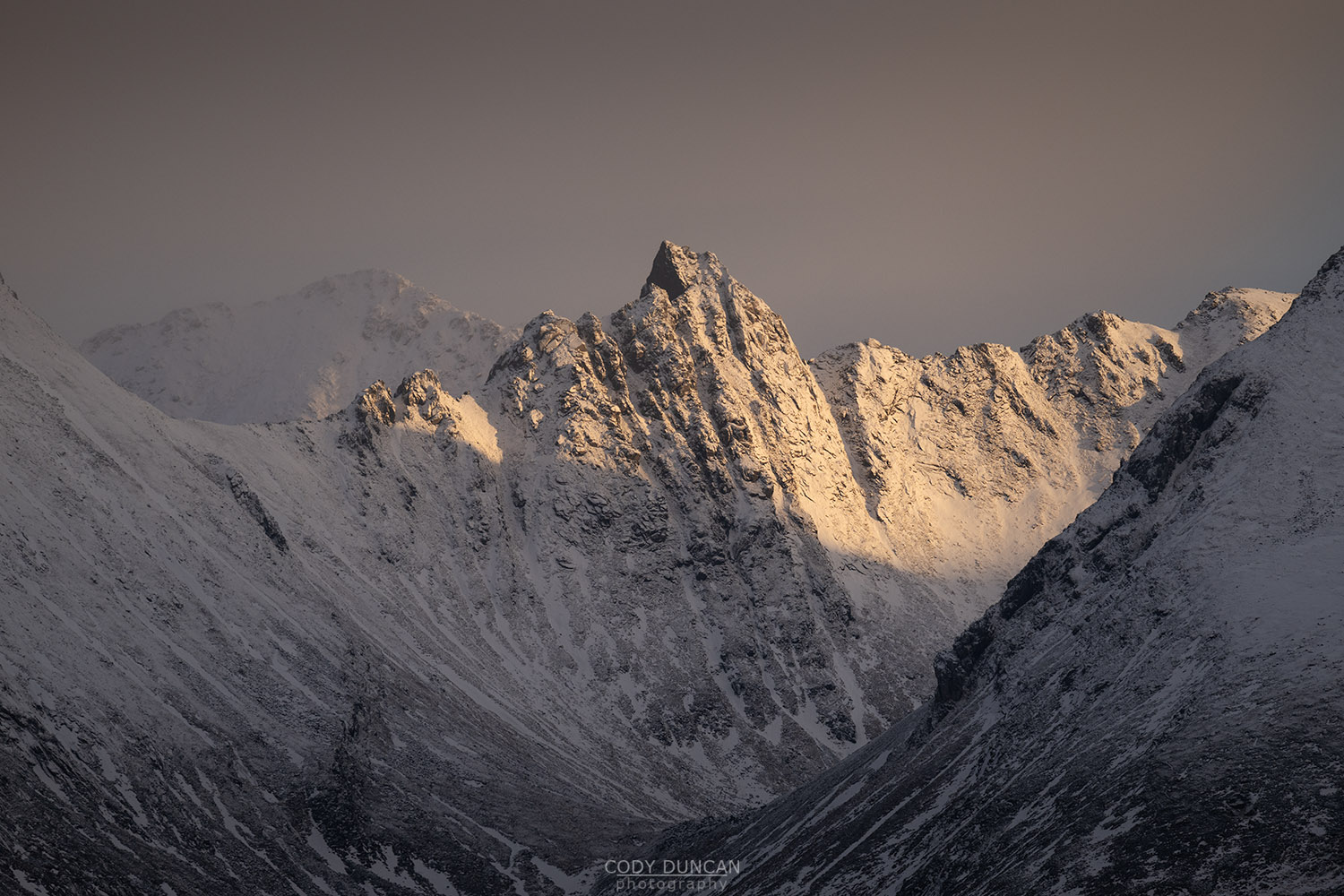
Photo: Warm winter light shines through the steep valleys of distant Flakstadøy, Yttersand, Lofoten Islands, Norway. January 26, 2026. 11:36
Despite the quickly lengthening days, the late January sun does not rise far above the horizon, leaving much of the northern valleys of Lofoten hidden in shadow. Here, even approaching noon, the sun only shines across the highest peaks rising over Vikten, the rest of the valley and village remains in the shadow of the surrounding mountain wall.
I actually almost didn’t shoot this image, but after seeing by co-guide Sam take a nice version, I decided it was worth pulling out the camera as well. I do tend to get a little lazy on Lofoten these days, and it is a common occurrence during image reviews that I think to myself that I probably should have taken a few more photos during the trip – especially with the fantastic winter conditions this year has received so far.
It is a simple image, but I like the mood in it. Late January is always a good time of winter on Lofoten; The days are long enough where you have plenty of time to shoot and get around, but the sun is low that you still have that feeling and atmosphere of being in the far north. By late February, the sun is beginning to feel a bit more ‘normal,’ or as it could be anywhere else in the world. It is only the difference of a few weeks, but you can feel it.
Camera Info: Nikon Z8 Nikon 100-400mm f/4.5-5.6 400mm ISO 200 f7.1 1/400 Second WB Daylight
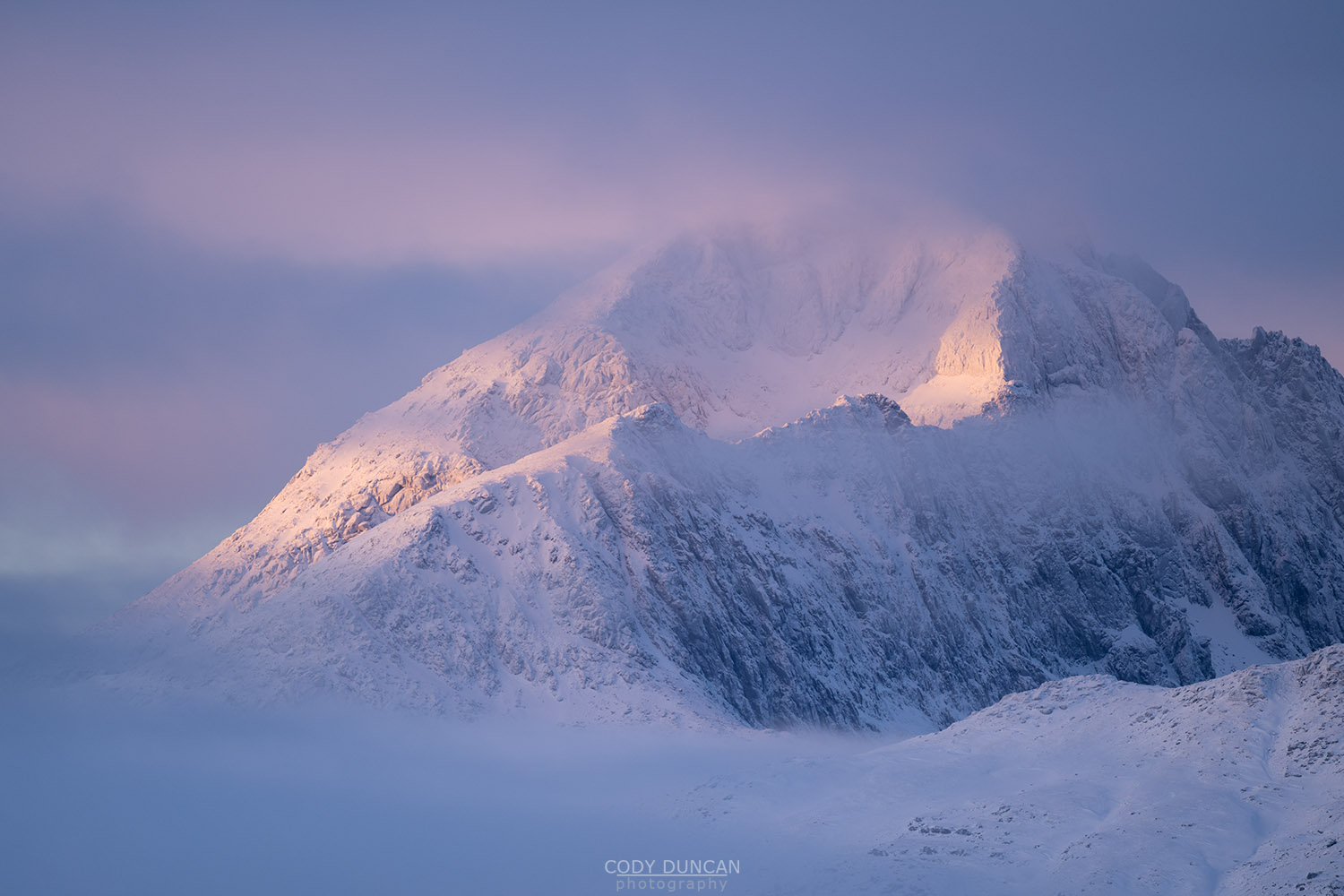
Photo: Misty clouds conceal Ristinden peak at dawn, Vestvågøy, Lofoten Islands, Norway. February 5, 2026. 09:30
I will dare to say that the last month has been the best winter in recent memory. Day after day of cold and still weather, barely a hint of wind, and nights of dancing northern lights over the snow covered mountains. Having completed my first 2 photo workshops of the year, both groups have walked away with amazing images that would often take multiple visits to Lofoten to achieve. It has been a good start to my winter guiding season compared to the struggles with warm, stormy weather of the previous couple years. Let’s hope this continues!
This image is from one of those mornings where I wish I could freeze time. Central Vestvågøy was largely covered in a low, wispy fog flowing in and out of the valleys and hills. Rarely have I ever seen such conditions in winter. Unfortunately, it was also a day in which I had to move the group from Leknes to Svolvær, which always makes things a little difficult with a van stuffed with luggage (and this group had a lot of luggage!).
As we drove east across Vestvågøy I could see the misty clouds swirling around the mountain peaks and as I reached the low pass at Torvdalshalsen, which, most importantly, has a parking area, I knew it would be a near-perfect location for the time being as the dawn light lit the steep slopes or Ristind among the swirling mist.
Despite the stillness, moments like this are often brief, and this was one of those times to remind the group with one of my common sayings, ‘Less talk, more walk!’ In other words, get moving people, this light isn’t going to last forever! And eventually the mist rose and concealed the mountain.
Camera Info: Nikon Z8 Nikon 100-400 f/4.5-5.6 340mm ISO 200 f5.6 1/160 Second WB Daylight
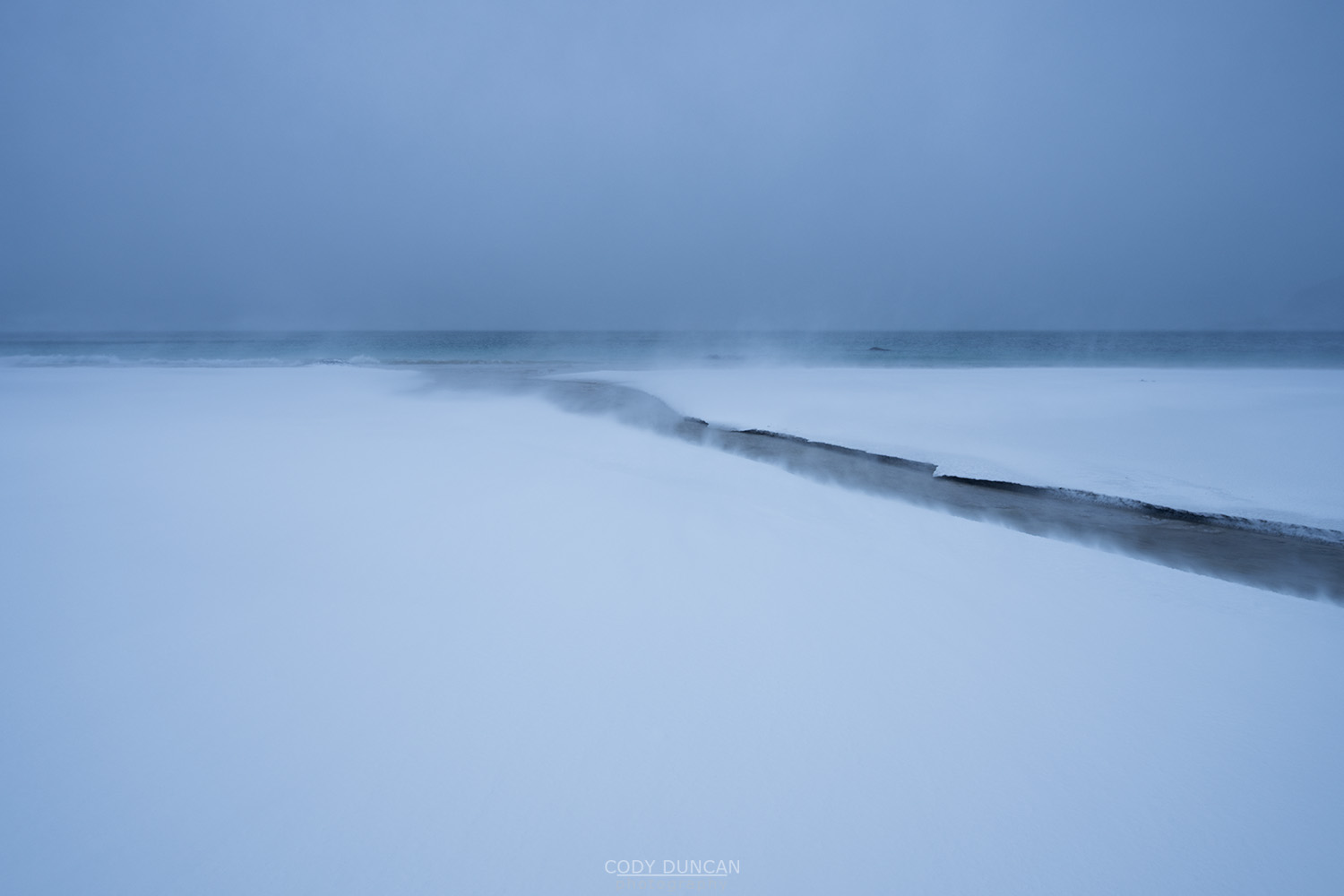
Photo: Winter winds blow over Haukland beach, Vestvågøy, Lofoten Islands, Norway. February 2, 2025. 11:48
But where are the mountains? Yes, there should be mountain in the background of this image, except at this moment in the middle of a passing snow shower, there aren’t. Or well, the mountains are there, you just can’t see them. Only a bit a patience, and understanding of Lofoten’s weather will determine if you leave the windswept beach or wait things out a little bit. For Lofoten in general, patience is often the key. Or perhaps experience is the key, as in the moment of this photo, all views seem lost. Should one stay, or walk away?
It is probably because of the false illusions of social media that many now expect almost every moment to be perfect. We want perfect scenes of a perfect snow covered beach and mountains, yet don’t expect to be there when the snow is actually falling and the mountains aren’t visible – that just occurs in some other magical time when we are not present. We only want the results, the scenes of perfection we now see a thousand times a day on social media.
But for a snow covered landscape to exist, it must snow at some point. And that moment might be when you are walking across a windswept beach.
Camera Info: Nikon Z8 Nikon 14-30mm f/4 25mm ISO 100 f9 1/15 Second WB Daylight
We may request cookies to be set on your device. We use cookies to let us know when you visit our websites, how you interact with us, to enrich your user experience, and to customize your relationship with our website.
Click on the different category headings to find out more. You can also change some of your preferences. Note that blocking some types of cookies may impact your experience on our websites and the services we are able to offer.
Essential Website Cookies
These cookies are strictly necessary to provide you with services available through our website and to use some of its features.
Because these cookies are strictly necessary to deliver the website, refusing them will have impact how our site functions. You always can block or delete cookies by changing your browser settings and force blocking all cookies on this website. But this will always prompt you to accept/refuse cookies when revisiting our site.
We fully respect if you want to refuse cookies but to avoid asking you again and again kindly allow us to store a cookie for that. You are free to opt out any time or opt in for other cookies to get a better experience. If you refuse cookies we will remove all set cookies in our domain.
We provide you with a list of stored cookies on your computer in our domain so you can check what we stored. Due to security reasons we are not able to show or modify cookies from other domains. You can check these in your browser security settings.
Google Analytics Cookies
These cookies collect information that is used either in aggregate form to help us understand how our website is being used or how effective our marketing campaigns are, or to help us customize our website and application for you in order to enhance your experience.
If you do not want that we track your visit to our site you can disable tracking in your browser here:
Other external services
We also use different external services like Google Webfonts, Google Maps, and external Video providers. Since these providers may collect personal data like your IP address we allow you to block them here. Please be aware that this might heavily reduce the functionality and appearance of our site. Changes will take effect once you reload the page.
Google Webfont Settings:
Google Map Settings:
Google reCaptcha Settings:
Vimeo and Youtube video embeds:
Other cookies
The following cookies are also needed - You can choose if you want to allow them: