
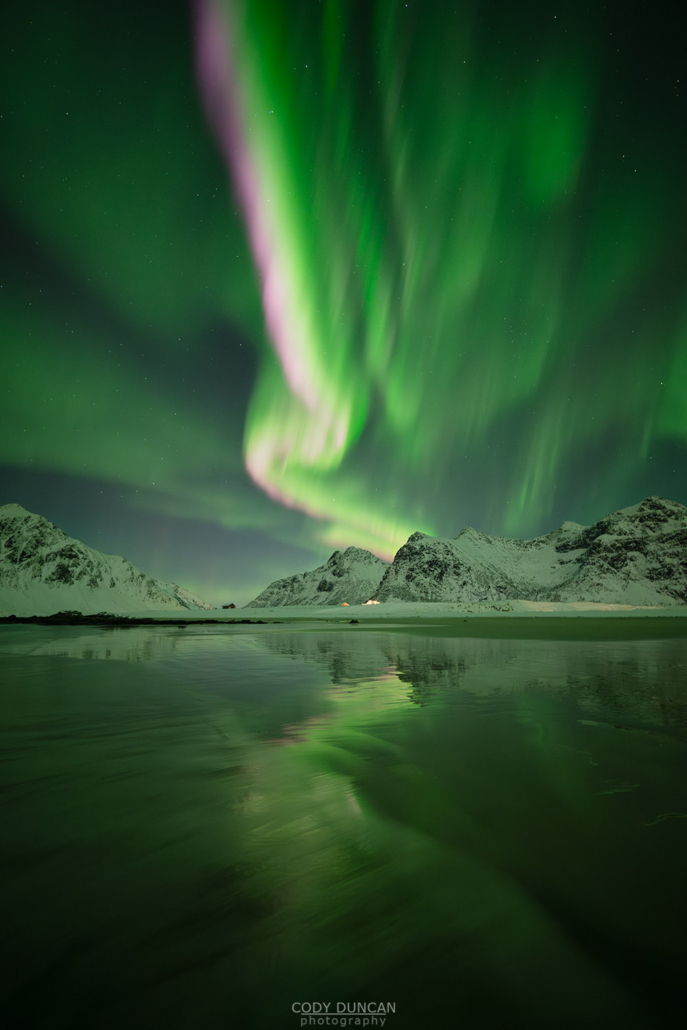
Friday Photo #691 – Skagsanden Aurora
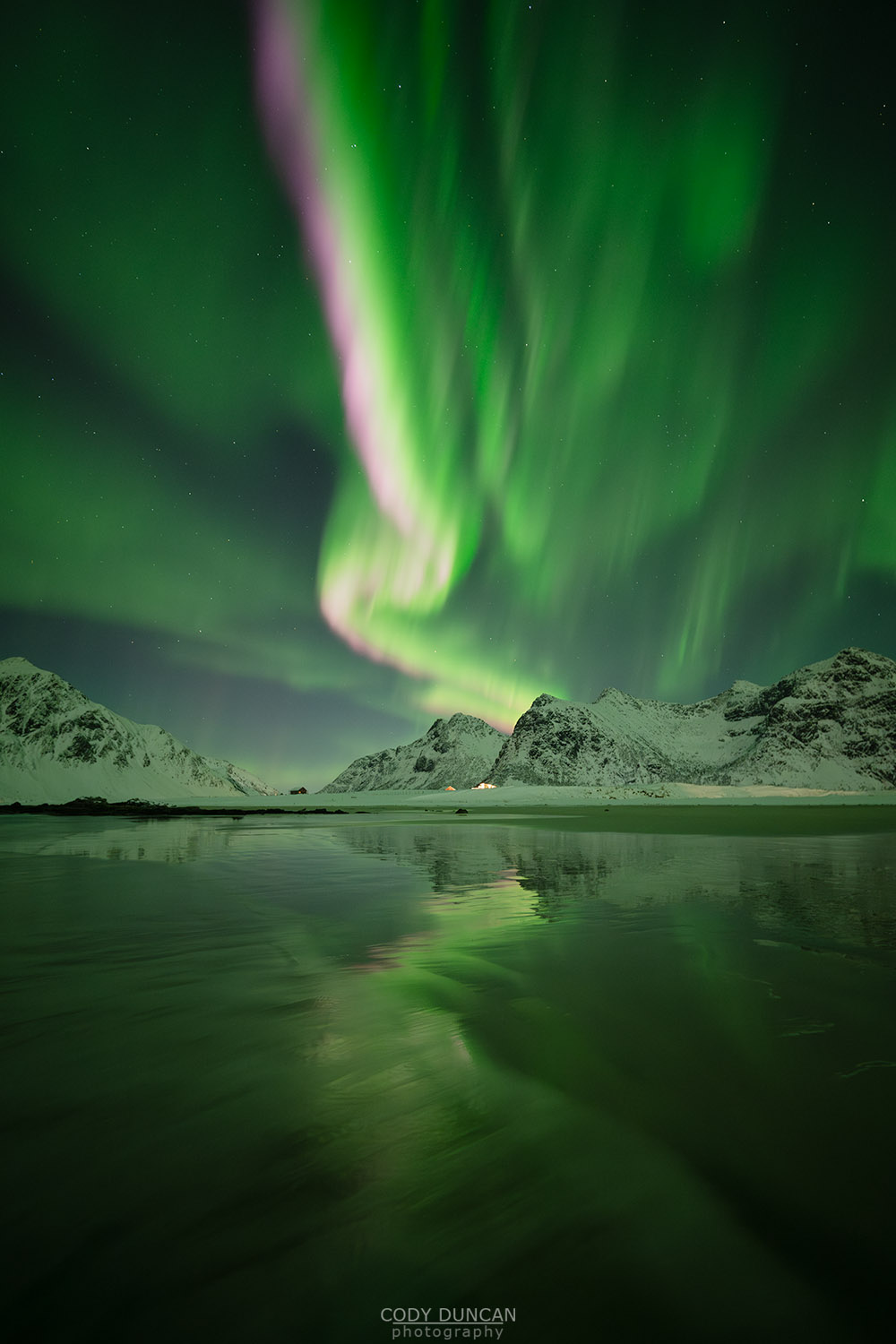
Photo: Northern Lights – Aurora Borealis rise into sky over Skagsanden beach, Flakstadøy, Lofoten Islands, Norway. February 23, 2026. 21:26
The days of April are quickly growing longer as Lofoten enters the period of not-really-winter but not-quite-spring. How long this weather lasts is anyones guess and this year it seems to have already started at the beginning of March, as weeks of rain have already melted away all the low level snow across the islands, with only slight dustings temporarily returning the landscape white again for a short while. After a long winter guiding, it is that time of year where I want to go south and see some green grass and trees, which is still about 6-7 weeks away here in the north.
What is soon coming to an end though is Lofoten’s aurora season, with a little over 2 weeks left for your last chance to see the northern lights until they return again in late August. This winter started off pretty well, mostly helped by the stable and clear weather of January and February. However, as March arrived, the weather became stormy and unsettled, and almost consistently grey – especially the nights. There have been many difficult aurora years in the past during my workshop season, but finally, this year was the first time a winter photo tour did not get any northern lights over the course of a week since I started guiding on Lofoten in 2016. Frustratingly for them, both the week prior and after were lucky with 4 nights of aurora each. That is how the luck works up here sometimes, and after 10 years, it finally caught up with me.
This image is from a fantastic night in late February. I had the group on site early but the aurora were off to a slow start this evening. Though this is often helpful for groups, as everyone can get setup as a leisurely pace, get their cameras focused, etc., without panicking that they are missing a sky full of dancing aurora. That came later.
After some hours of the normal ebbs and flows, a little before 21:30 the sky finally decided to put on a fantastic show for the group as dancing streaks of magenta aurora shone from horizon to horizon – actually almost too high/south in the sky for Skagsanden beach.
In the above image, is the aurora near its peak brightness at 21:26: ISO 2000, f/2.2 1 second exposure. The below image was taken just 3 minutes prior, at 21:23: ISO 2000, f/2.2 4 second exposure. The aurora increased 2 stops in brightness in those 3 minutes, but it was really more like 1 minute, as I had stopped shooting to change compositions.
If I had not been paying attention to the change in brightness, I would have completely lost the magenta highlights in the above image. It also makes the aurora much brighter than the remaining night sky – with a quarter moon on this night, and a much more tricky exposure overall. In these moments the aurora is often moving quite fast as well, making it difficult to find a composition, especially while standing on a beach with multiple photo groups around. While better visually just watching the sky full of dancing light, it is a fast moving and difficult photographic scenario.
The below image, while lacking the intensity of the above, is a much easier shooting situation while on location, and easier processing once home, as the scene was already pretty well balance between the aurora and the night sky and foreground reflections. And while still moving slightly across the sky, the aurora is easier to compose with the surrounding landscape.
Two different northern lights images taken from the same spot only 3 minutes apart. That is the magic of it.
Camera Info:
Nikon Z8
Viltrox 16mm f/1.8
16mm
ISO 2000
f2.2
1 Second
WB Daylight
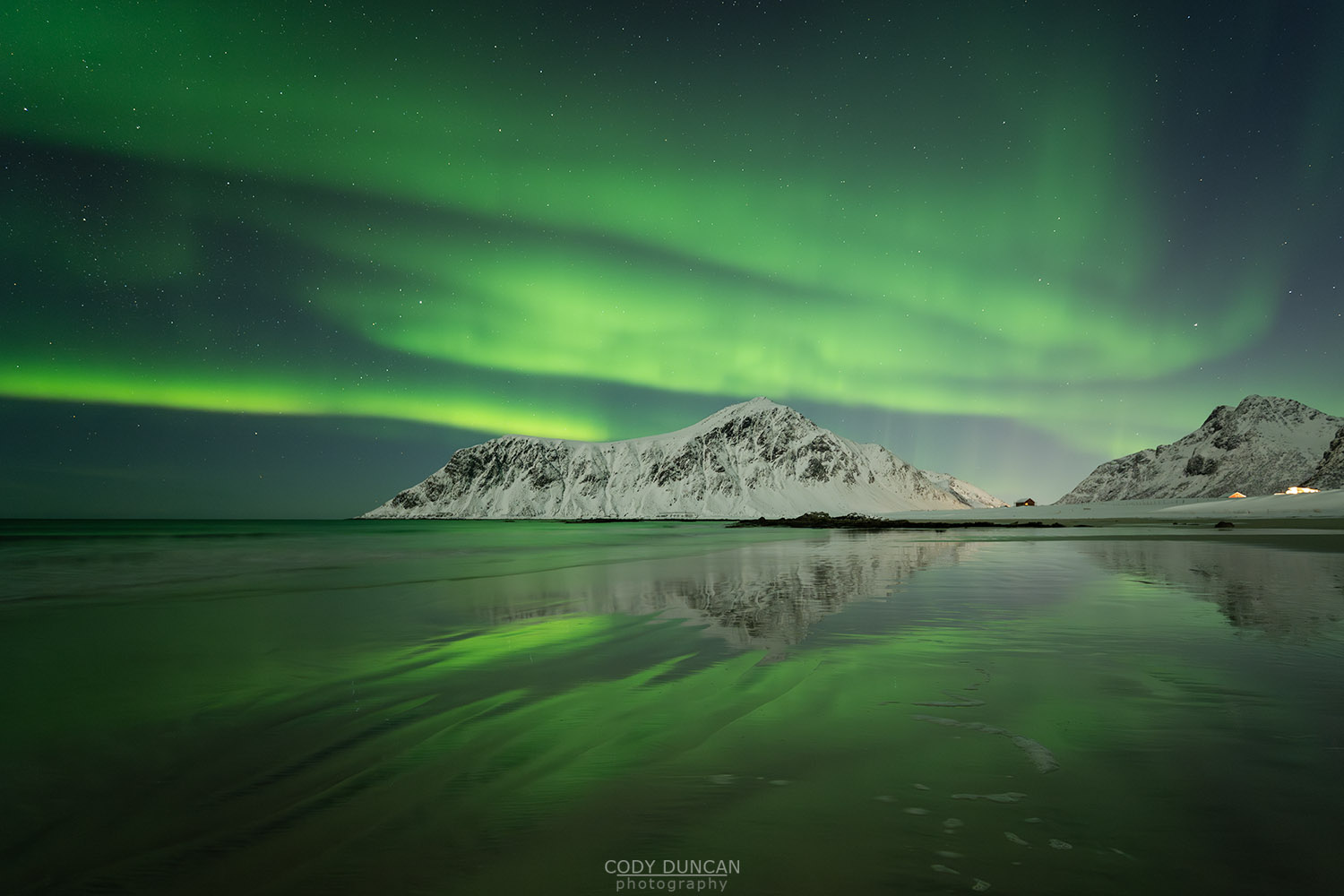
Photo: Northern Lights – Aurora Borealis shine across sky over Skagsanden beach, Flakstadøy, Lofoten Islands, Norway. February 23, 2026. 21:23
Camera Info:
Nikon Z8
Viltrox 16mm f/1.8
16mm
ISO 2000
f2.2
4 Seconds
WB Daylight


Leave a Reply
Want to join the discussion?Feel free to contribute!