Myrland Breakwater - Friday Photo #258

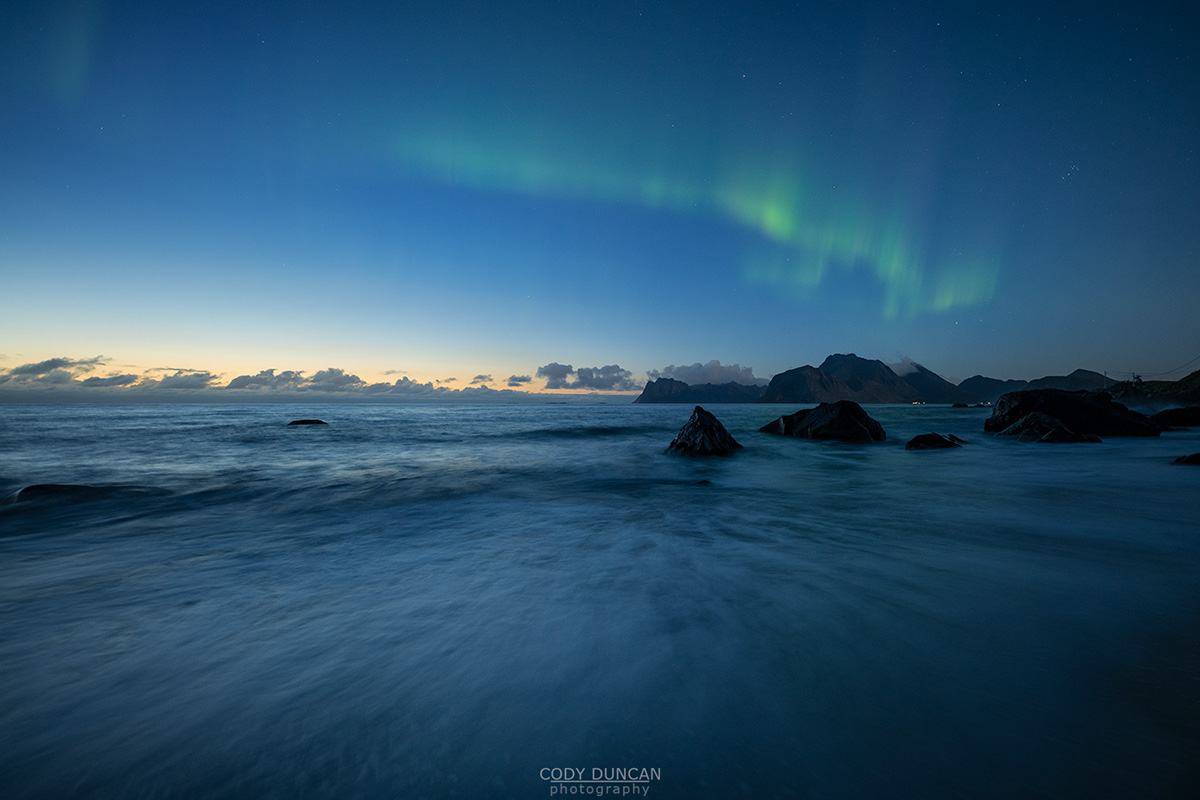
Photo: The old breakwater at Myrland, Flakdstadøy, Lofoten Islands, Norway. November 26, 2017. 12:10

During the 2nd rockslide incident in November, which left us cutoff for 12 days, I decided to take a walk down to our old breakwater here in Myrland. Destroyed by a storm during the mid ’90’s (if memory serves me correct), it has remained a pile of fallen stones ever since.

With the latest rockfall, there has been some renewed talk to rebuild it. As in its current condition, it’s impossible to get a boat here. And if we are cutoff from land as well, then that doesn’t leave us in a very good position should any sort of emergency arrive.

However, I have also heard that there was some funding received to rebuild it some years ago, which never took place. And if there’s one thing that I’ve learned about living in Norway: There is a lot of talk about doing something, but little actual action resulting from all the talking. I have taken up a sort of, ‘I’ll believe it when I see it’ attitude to things around here. But I guess that is one of the costs for living at the end of the world.

About the photo itself. two images, vertical shift, with my beloved 24mm tilt-shift lens on a rainy November afternoon. Actually, after 8 years of hard use and abuse, and mostly due to a bad fall in October, I’ll be retiring this lens soon. I have ordered a new one, as it is one of my favorite lenses for coastal landscapes here on Lofoten. Though it was a bit of a tough decision, as it is quite an expensive lens, and I’m not entirely sure how much longer I’ll keep shooting with Nikons – as more or less all my other lenses/bodies are broken or falling apart and will need replacing soon. Which means it might be time for a switch to mirrorless, instead of buying the same gear over again. I also used a 6 stop ND filter – I’ve recently switched from using B+W to Breakthrough Photography, which I’m quite happy with so far.

Camera Info:
Nikon D800
Nikon 24mm f/3.5
24mm
ISO 100
f 11
30 seconds
WB Daylight
6 stop ND filter
Two images – top, bottom

Polar Night - Friday Photo #256

Photo: Twilight glow of winter’s polar night, Flakstadøy, Lofoten Islands, Norway. December 11, 2016. 10:49

As December arrives the Lofoten is soon about to enter the mørketid, otherwise known as the polar night – the time in which the sun does not rise above the horizon here in the north.

It has already been dark for a while, and so the sun a little above, or a little below the horizon doesn’t make too much of a difference to the day during the last weeks. But as the sun finally drops into the sea, even that weak bit of direct light will be missed as we enter a month of twilight and darkness.

Last year, living in Skjelfjord, I think I noticed the change to the mørketid much more as the sun was visible over the southern horizon until it finally vanished into the sea. Where I live now, with mountains closing in my valley to the south, the sun hasn’t been visible from my house since mid October. And so if I don’t leave home, as when I was stuck for 5 days due to a rockslide, I can only see the sun shining on the distant mountains.

I took this image on my way home from Leknes one morning. After what had seemed like endless weeks of storms and wind, the Islands suddenly fell silent. With an hour to go till noon, the day would become a bit brighter, but not much.

For the time being, I still enjoy the experience of the darkness. But next year I’ll probably find myself in Spain or Portugal for a week or two to refill on the vitamin D!

Camera Info:
Nikon D800
Nikon 24-70mm f/2.8
32mm
ISO 100
f 10
1/4 second
WB Daylight

winter hiking - Friday Photo #255

Photo: Winter on Volandstind, Flakstadøy, Lofoten Islands, Norway. January 13, 2017. 12:19

It is getting to be that time of year in which I’m receiving an increased amount of emails asking if it’s possible to hike such and such mountain on so and so day, what the weather will be, and what gear is needed.

I don’t know.

I will reiterate some things here, but if you are thinking about coming here in winter for some hiking, then you should first read my article:

Winter Hiking on Lofoten

When I get an email about hiking some mountain – and unfortunately, Reinebringein is the most commonly referenced one – I always struggle with what to reply. Should I be blunt, and simply say it’s impossible? Should I give some advice about gear? But if you don’t know what gear to use, then you probably don’t have the proper experience for hiking here in winter. Do I remind people that there is little to no daylight in January? Or do I just say: Sure, everything is possible. Which it is – given the correct experience.

From an email, I don’t know anything about you. Have you hiked before? Have you seen snow before? Do you know how to judge avalanche risk? Can you navigate in a whiteout? Are you going to go hiking in a full storm because you only have 2 days on Lofoten and need that photo for Instagram? And a million other things…

So it is more or less an impossible question to answer: If _you_ can hike something.

There are some relatively easy mountains during winter on Lofoten. The locals are out all year round and the same with myself. However, as a whole, Lofoten in winter is not for the inexperienced and the mountains here need to be respected.

Camera Info:
Nikon D800
Nikon 24-70mm f/2.8
27mm
ISO 400
f 10
1/50 second
WB Daylight

landslide - Friday Photo #254

Photo: Large rock-slide blocks the road to Myrland, Flakstadøy, Lofoten Islands, Norway. November 17, 2017. 12:14

Thursday evening sometime between 20:00 and 22:00 nature send a reminder of who is in charge. A friend and come over for a short visit to checkup on a project we are working on, leaving after a couple hours. But soon I heard a knock on my door and she had come back, saying there were some rocks in the road. There had been a large rock in the road earlier in the day, but it had been cleared, so maybe she though it was just the darkness that made it look like more. So we hopped in my van to check things out.

Approaching the scene in the darkness, my headlamps lit up the first initially small boulders – which hadn’t been there when I passed by in the late afternoon, before illuminating large blocks in the distance, completely covering the road. Hmm, no one is getting by that this night…

In the morning I returned to checkout the scene again. It was indeed the largest rockslide I’ve seen since moving here. As information spread, I was interviewed by the news agency NRK, and we began to find out that my little village, of merely a dozen residents, would be cut off for a while – The original estimate of a Saturday opening being extended to Monday.

And so I sit at home, with unexpected guests and glad I generally keep enough food on the shelves for just this type of situation. Saturday I will miss an event I was hoping to attend, but that is life up here…

As a bit of a side note. Despite the fact that there are clearly posted ‘no stopping’ (not just the ‘no parking’) and rockfall signs for this section of the road, many people car/van/motorhome camp along there all summer long. If it is not too late in the evening and I see people out and about, I will often stop and give them a bit of a warning that they might not be in the best place. On any given night it is not likely that something will happen, and it makes me feel like an asshole, possibly interrupting some romantic moment or ruining their perfect camping spot with the midnight sun shining in the north. But I drive this road on an almost daily basis and see what falls from above. It would be nice if people listened the signs, but they don’t. So I’ll probably have to be an asshole next summer as well, telling people that they should move along…

And in fact, along with some friends, I remember telling a van to move which was parked in this exact spot of the avalanche sometime in July. The amount of fresh small rockfall and debris present there should have already indicated that it was a poor camping location. Had they been there this Thursday evening, they would now be buried under tons of rubble.

Camera Info:
Nikon D800
Nikon 70-200mm f/4
200mm
ISO 320
f 5
1/125 second
WB Daylight

Campfire and Northern Lights - Friday Photo #250

Photo: Campfire below northern lights, Storsandnes, Flakstadøy, Lofoten Islands, Norway. September 28, 2017. 22:33

Sometimes life is best enjoyed simply by being there. The final evening of my 2017 Exploring Autumn photo tour, this was the 4th night (of 6) where we had northern lights in the sky overhead.

We had already spent sunset this evening in the mountains above Unstad, returning to my van by headlamp. And already on the way down, the aurora had begun dancing in the fading twilight. A quick stop for pizza in Leknes, we hurried to another beach, eating on the way.

Normally, this night alone would have been good and everyone would have been shooting as much as possible. But they had been slightly spoiled by the previous night, which was one of the best aurora shows that I have ever seen!

And so I did what I might do had I been on my own or with a few friends – build a campfire! From time to time, when the lights got strong, we would go wander off and take some photos, only quickly to return to the warmth of the fire. As the hours passed, the photography time lessened and the fire time grew. Until finally we decided to call it a night.

Camera Info:
Nikon D800
Nikon 14-24mm f/2.8
14mm
ISO 2000
f 2.8
5 seconds
WB Daylight

Tønsåsheia camp - Friday Photo #246

Photo: Autumn camping on the summit of Tønsåsheia, Flakstadøy, Lofoten Islands, Norway. September 22, 2016. 18:40

The forecast had been better than reality – A common occurrence on Lofoten. What I thought would be fairly clear skies was filled with a layer of high cloud. I was a bit disappointed upon reaching the summit of Tønsåsheia and finding a place to setup the tent for the night. But as normal on Lofoten, the light changed…

As evening arrived, a soft twilight light fell over the Islands. There is always something special about standing on the edge of Lofoten, with the view across endless mountain peaks fading into the distance. The mountains here might not be that high, but they are as visually stunning as anywhere else in the world. A perfect combination of sea and summit.

I still maintained hopes for northern lights on this night, but alas, the clouds came in too thick. And so it was a night of sleep for me. Maybe next time.

Camera Info:
Nikon D800
Nikon 70-200mm f/4
116mm
ISO 200
f 7.1
1/40 second
WB Daylight

Summer Flowers - Friday Photo #241

Photo: Field of summer flowers, Flakstadøy, Lofoten Islands, Norway. July 6, 2017. 14:37

From mid June until early July the fields of Lofoten are filled with endless color of an infinite amount of flowers. Even the farm fields, such as this, can provide endless photo opportunities. But one has be be quick.

Farming on Lofoten is mostly simple: Let your field grow, cut it, let it grow again, cut it again. For the first growth, beginning in late May, the fields explode with color. But as the flowers peak, soon the farmers will bright out the mowers and cut everything to the ground to store for the winter.

I had driven past this field two days prior, and all was fine. Driving past on this day, in early July, the farmer had already partially cut the field. Knowing the opportunity would probably not survive the following day, I stopped for a quick photo. Maybe not the best light, but this is what Lofoten looks like at its peak: fields of gold.

Camera Info:
Nikon D800
Nikon 70-200mm f/4
125mm
ISO 100
f 5.6
1/500 second
WB Daylight

Myrland Spring - Friday Photo #230

Photo: Spring snow over Myrland, Flakstadøy, Lofoten Islands, Norway. May 30, 2017. 23:34

A cold north wind has been blowing across Lofoten during the last week. And while the summer sun has arrived on the islands, summer temperatures seem far away! Fresh snow has fallen across the mountains on several days, and while somewhat normal, it has been a colder than average May here in the north. And I just read that some areas of 3x the amount of snow than normal right now. Perhaps I should pull out the skis and head back to the mountains!

Often I watch the nice light and dramatic clouds outside my window during the evening, thinking to myself that I should head out to the mountains, until I remember the work I still need to do, and continue typing away on the computer. But the other day, I finally succumbed to the temptation and went for a quick sprint up Hornet.

Unfortunately, I waited a little too long, and a lay of clouds ate the sun before I reached the summit. I did manage a coupe images of the soft light shining over the valley, but nothing much compared to what I would have seen if I left an hour earlier. But with this my new backyard, I think I will have plenty of chances for something special in the next years.

Camera Info:
Nikon D800
Nikon 14-24mm f/2.8
14mm
ISO 100
f 9
1/15 second
WB Daylight

Ytresand Midnight - Friday Photo #229

Photo: Moltind and Stortind reflect on Ytresand beach under the spring midnight sun, Flakstadøy, Lofoten Islands, Norway. May 29, 2016. 23:48

In a few more days the midnight sun will arrive on Lofoten. And by midnight sun, I mean that the sun will not sink below the horizon. Which isn’t really at midnight either, but closer to 01:00, due to daylight savings time. But I guess midnight sun sounds more romantic than one-o’clock-in-the-morning-sun.

I always find spring to be a bit of a strange time of year for the senses. Or more specifically, the days and light are what I associate with summer, but the temperatures, especially this May on Lofoten, are closer to what I think of as winter. So I just need to make sure to brink my big jacket if I plan on sitting around the mountains all night long.

This evening had a layer of light clouds over the northern sky. Something that I normally hate during the day, as it causes a flat, boring light. But with the sun low on the horizon, it was just strong enough to for some nice, warm light to shine across the mountains.

At low tide, Ytresand beach has the potential for some nice reflections, and being just down the road from my house in Skjelfjord at the time, it was an easy location to get to for a quick photo or two. The mountains of Stortind (right) and Moltind (center-ish) form the dramatic ridgeline on central Flakstadøy.

Camera Info:
Nikon D800
Nikon 24-70mm f/2.8
50mm
ISO 100
f 11
1/15 second
WB Daylight

Stornappstind Sunset - Friday Photo #228

Photo: Last light over Stornappstind from Slettind, Flakstadøy, Lofoten Islands, Norway. May 13, 2017. 22:24

The midnight sun is little more than a week away now, but I have already begun the transition to ‘night’ hiking. Though on off days, it feels a bit weird to stay up until 03:00 and wake up just before noon or so. Makes me feel like I’ve been out partying all night and then am waisting half the day, but I think I’m adjusting better than last year.

Slettind is now one of my ‘backyard’ mountains. Though there is no trail, a relatively easy grassy slope leads you up to the ridge at around 480 meters. Then some sheep trails and a few rock steps continue the way up to the 569 meter high summit. I have a feeling this will be a place I visit quite frequently, as the views are incredible.

Under the long hours of sunlight the snow is quickly melting out and the islands are beginning to turn green, though this year seems a bit on the late side, as temperatures have remained on the cooler side for much of May. However, in the mountains, it can still be full winter, and if you are planning on hiking anything inland or at elevation during the next few weeks, then you need to be prepared for winter hiking, not casual trail walking.

You can see the coastal side of Stornappstind is mostly melted out, while the high valley on the right side is still carrying a lot of snow. And the remaining snow is likely deeper area, while the shallow stuff covering rocks will be what has melted out first.

And another warning about rockfall. This is a dangerous time of year on Lofoten. Each time I drive the road to Leknes, there are new stones, and some of them quite large, which have fallen from the mountains above.

Camera Info:
Nikon D800
Nikon 14-24mm f/2.8
15mm
ISO 100
f 10
1/15 second
WB Daylight