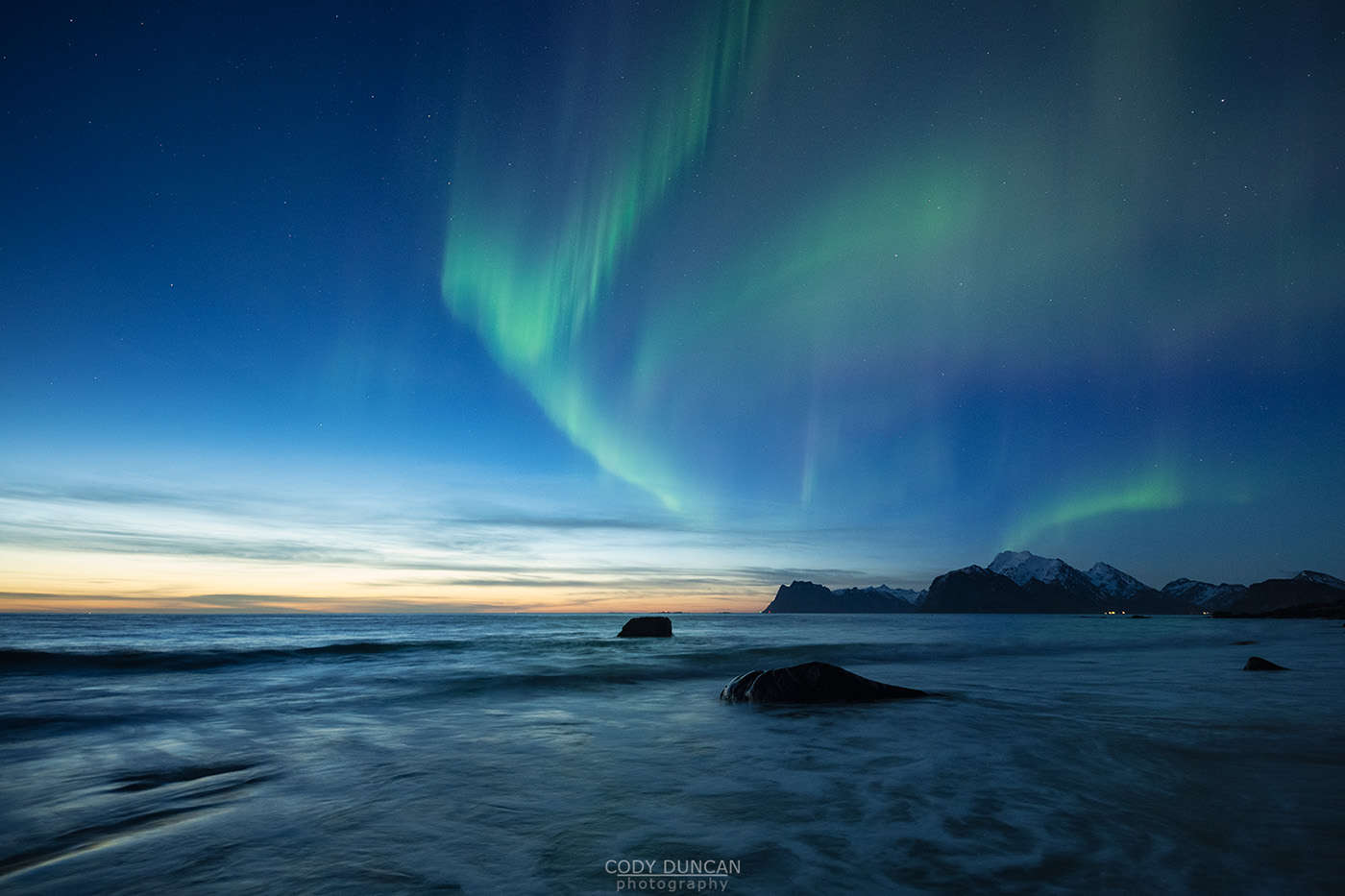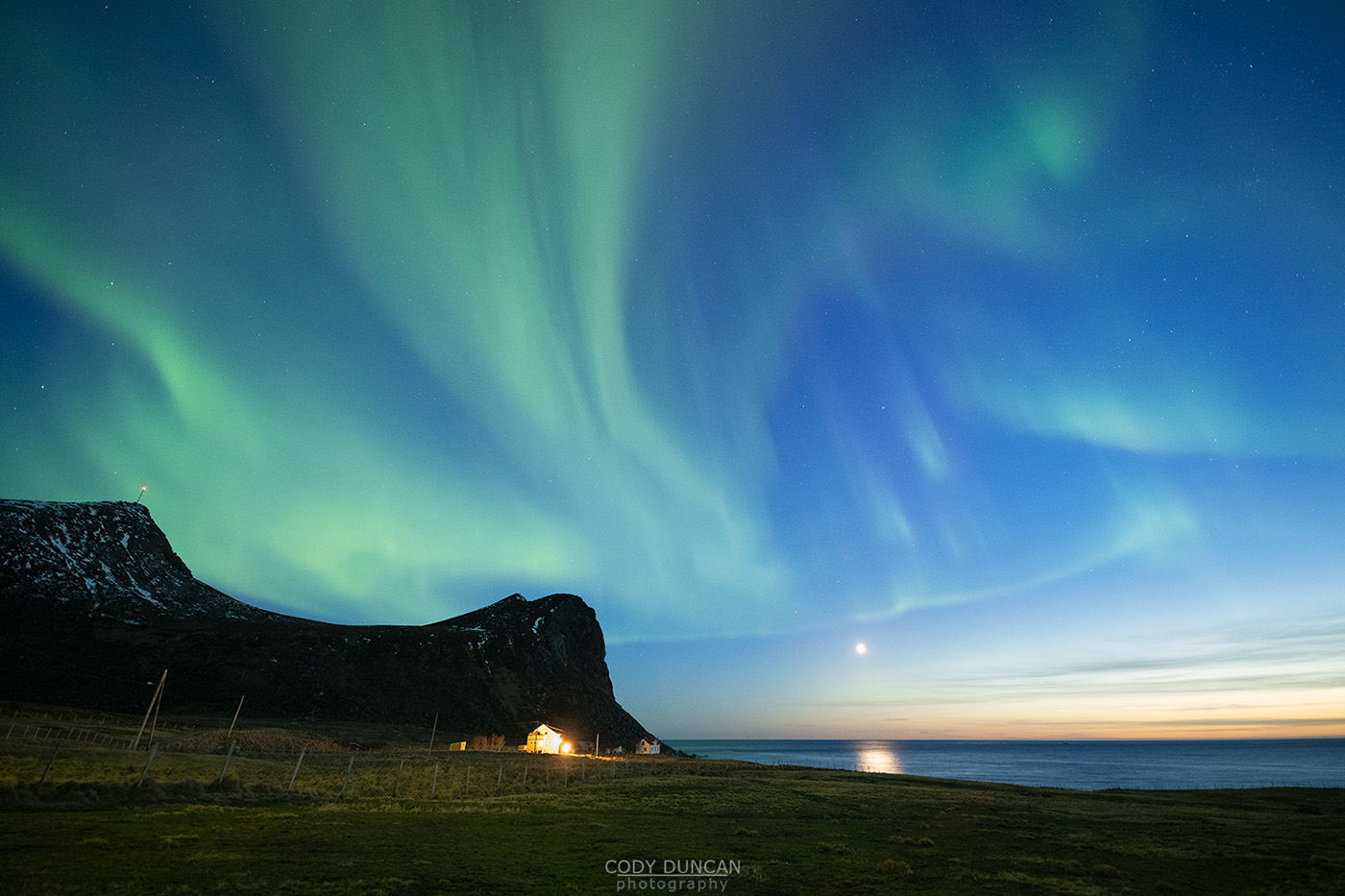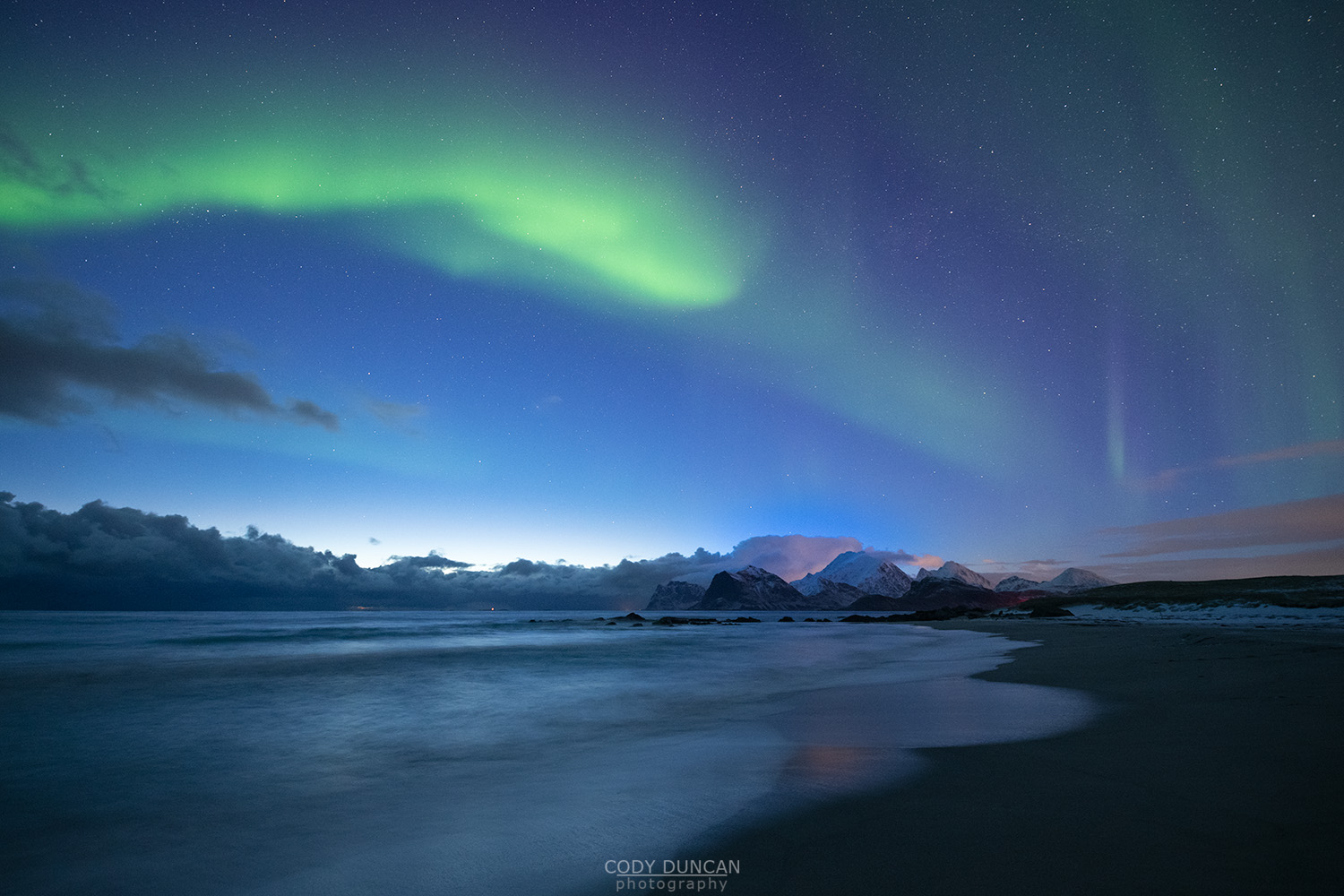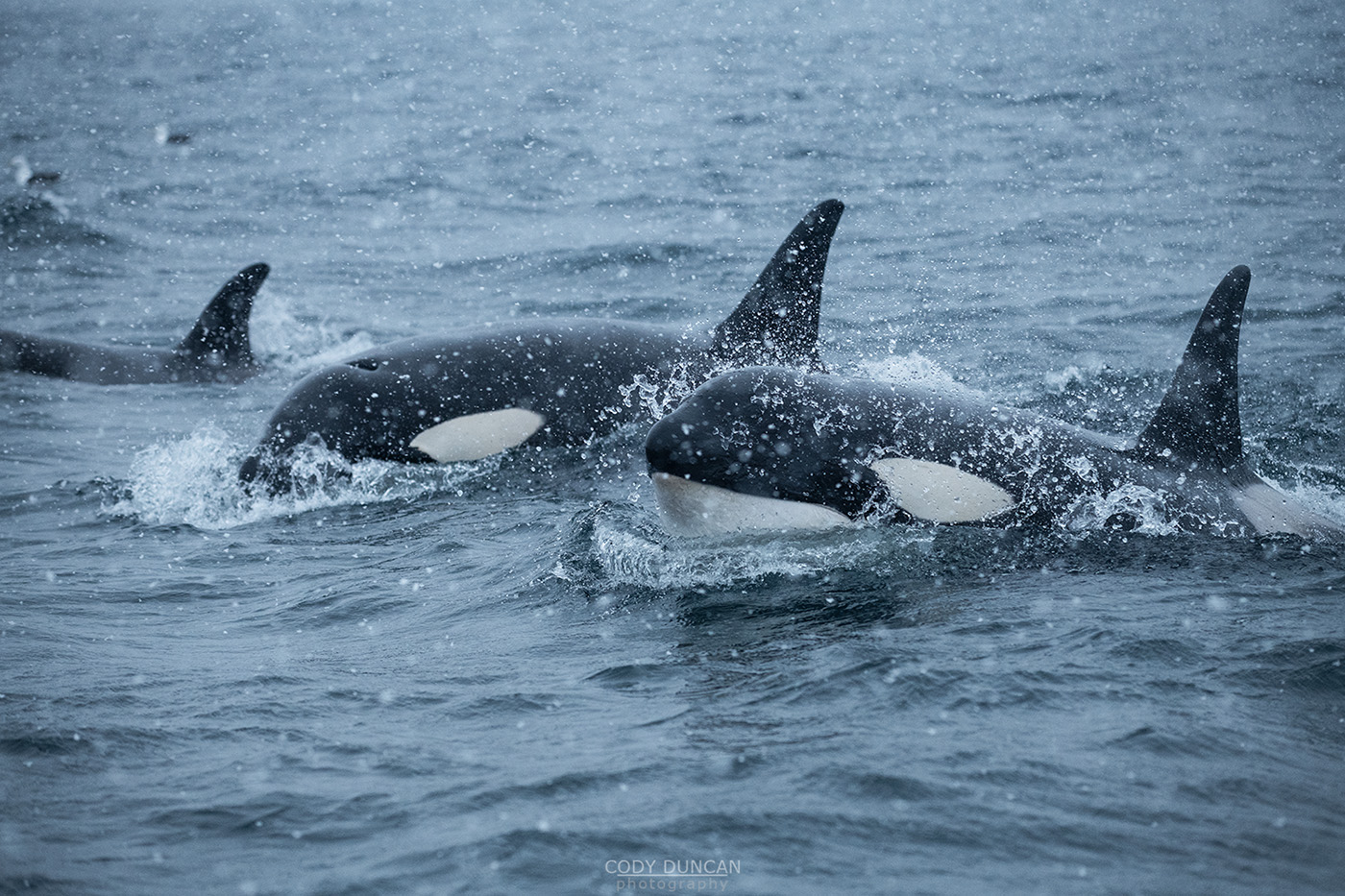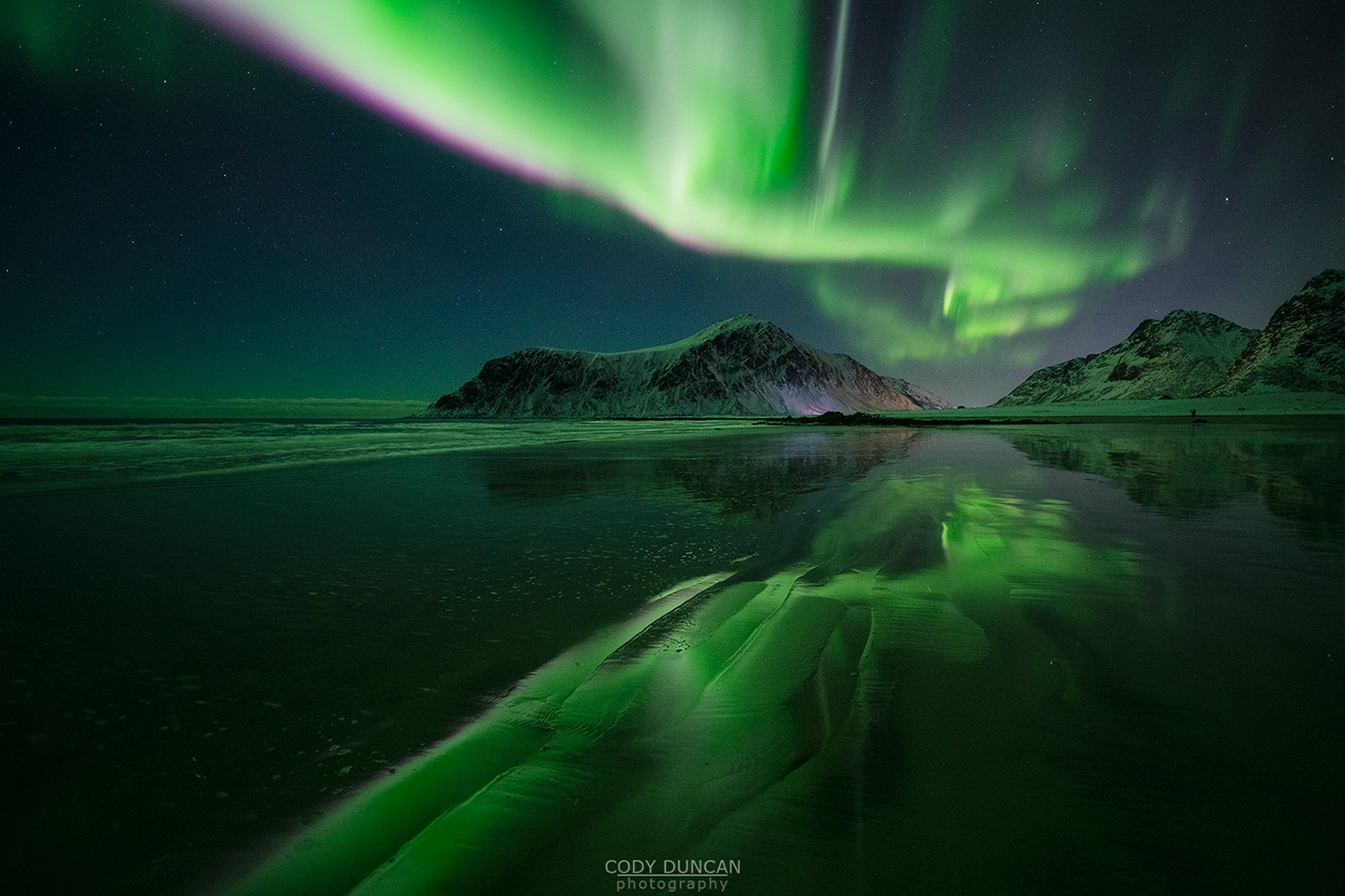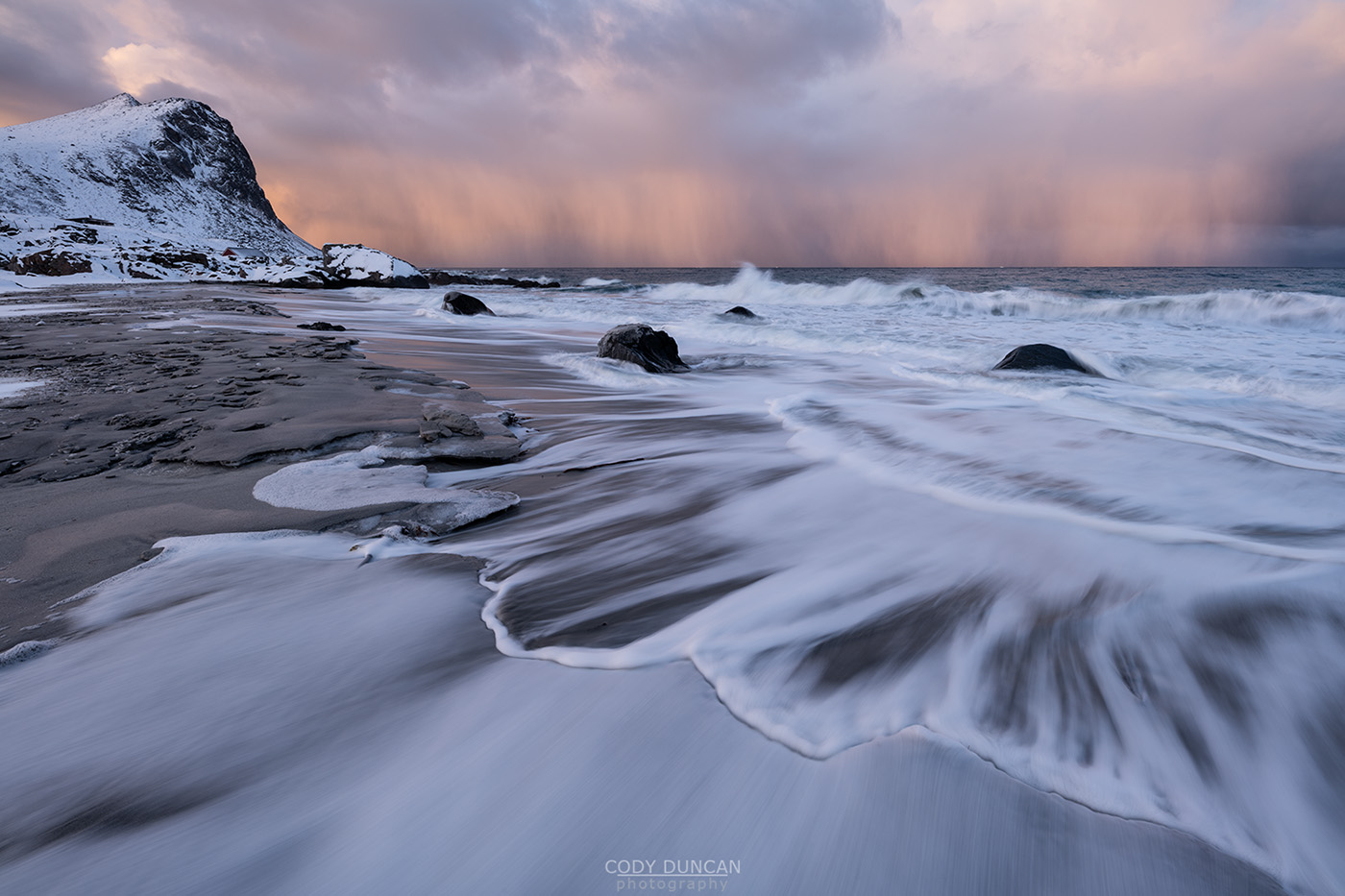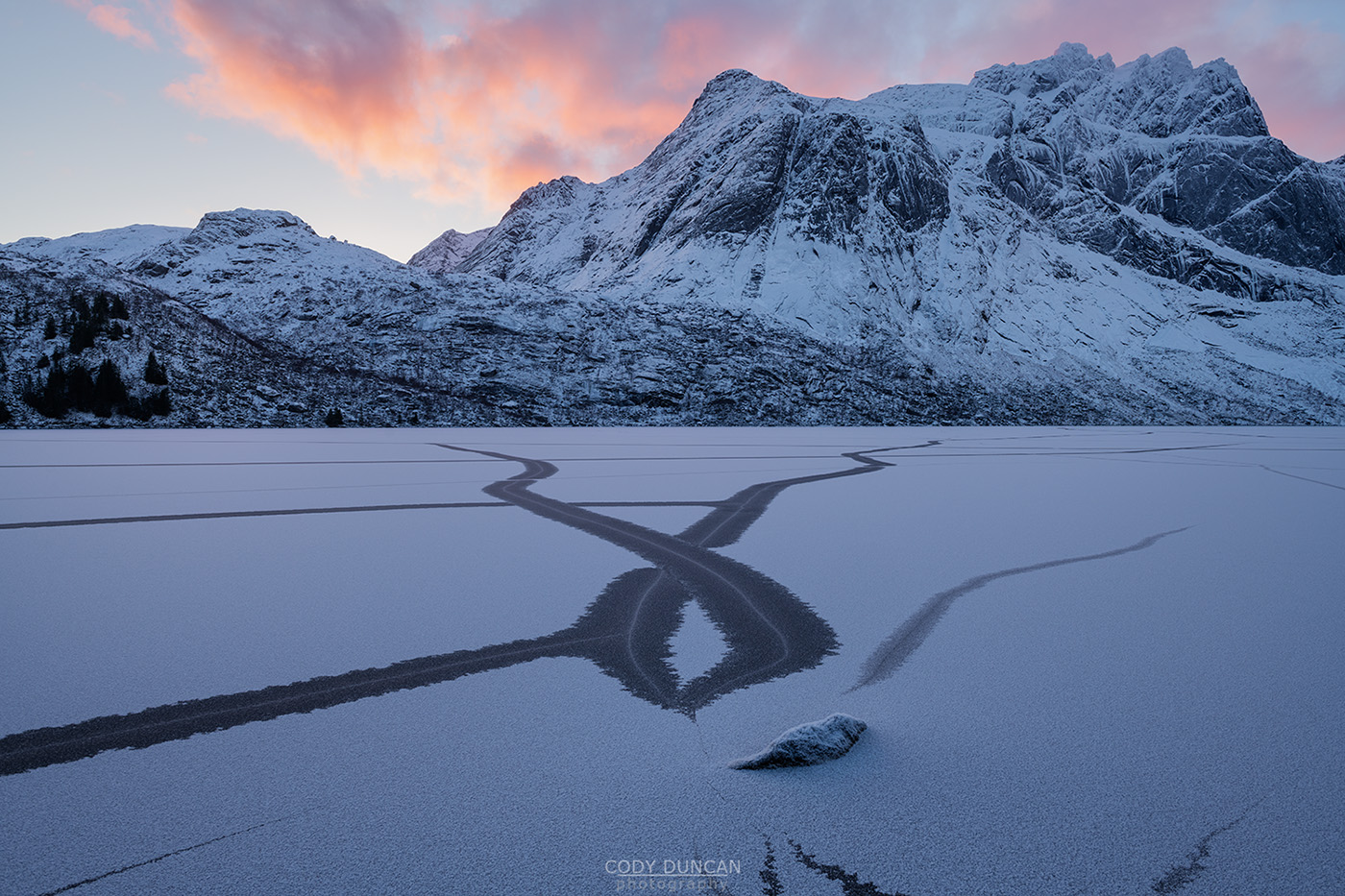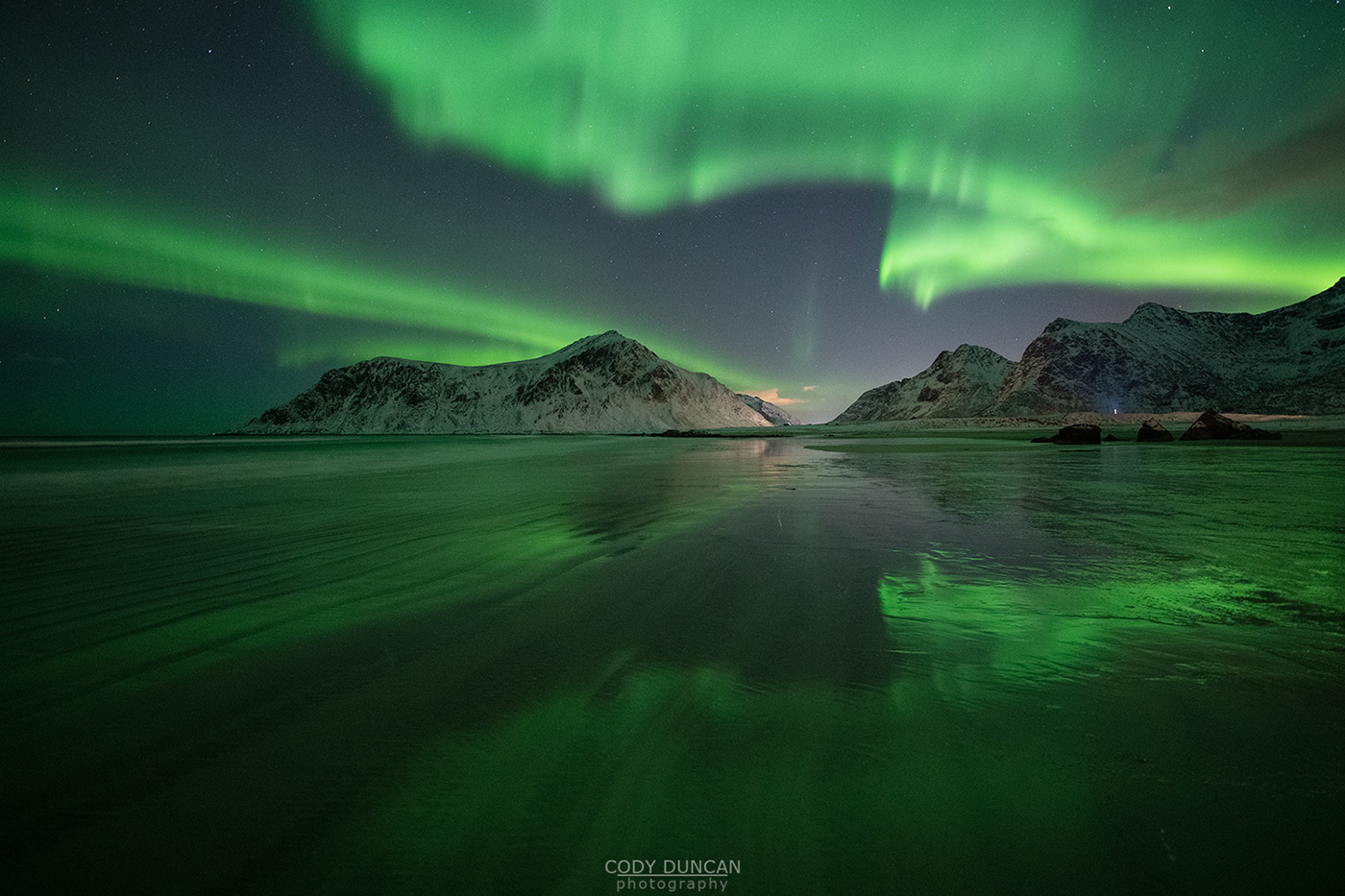
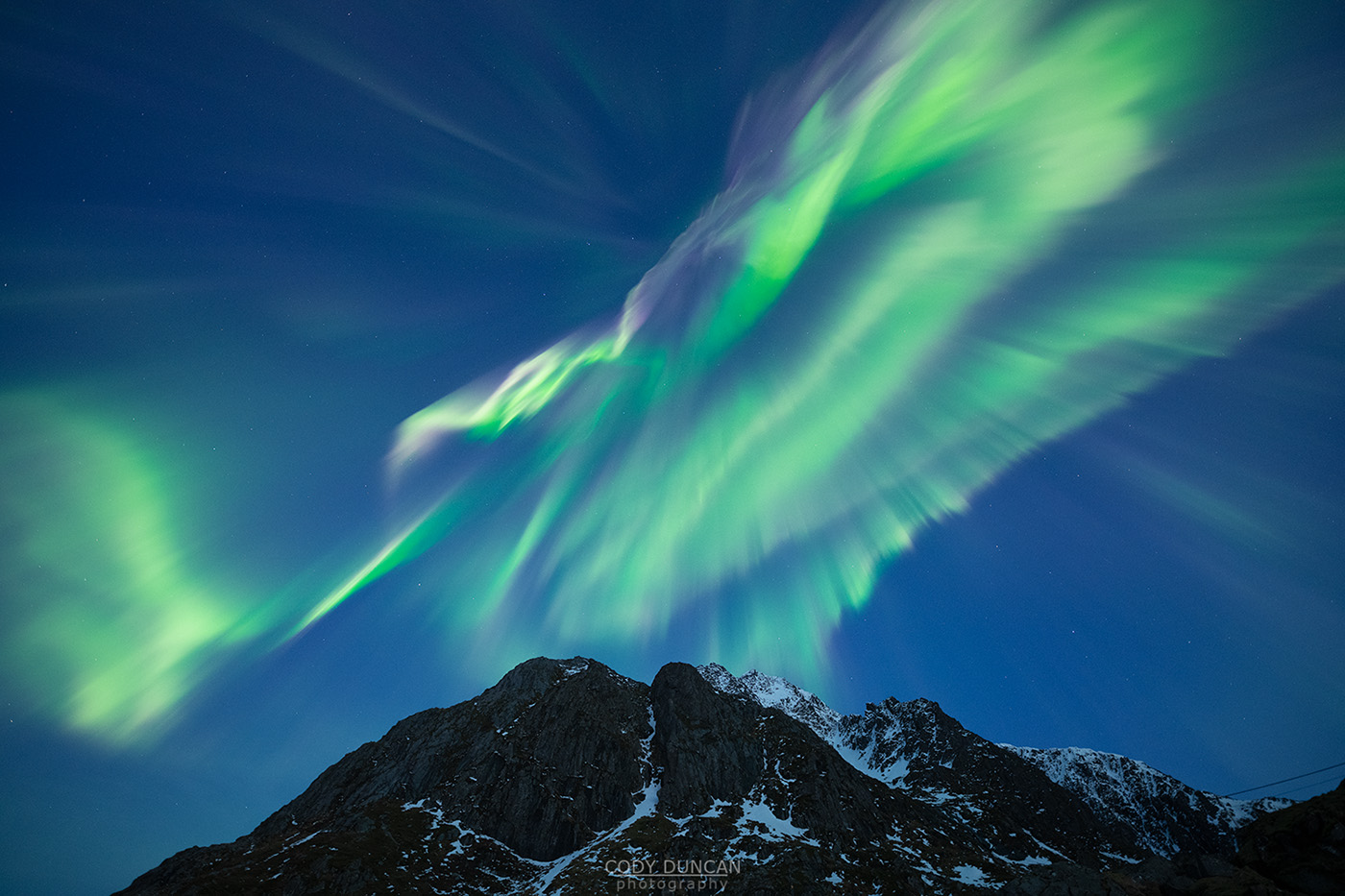
Photo: Aurora Corona fills the southern sky over Stornappstind just before midnight, Flakstadøy, Lofoten Islands, Norway. April 16, 2021. 23:40

My prediction for the weekend in last weeks post (Friday Photo #432) of maybe 1-2 more last nights of northern lights of the season more than came true, turning into 4 consecutive nights of aurora from Friday to Monday. The best display by far though, was Friday night and into the early morning hours of Saturday, with multiple KP5 coronas appearing well into the southern half of the sky.

I’m posting multiple photos this week, as these will be the last northern lights photos I’ll have until the sky begins to darken again in late August. But this was a good finish to the year, and now the latest I have taken northern lights images into April, with the last night being Monday/Tuesday the 19/20th – where previously it had been the night of 13/14th. So almost a week later this year.

Really though, it is just pure luck after the beginning of April, as it needs to be a large enough aurora display to appear overhead or in the southern sky which remains dark enough. Any small northerner lights along the northern horizon would not likely have been visible. But I think there is something unique and special about these spring auroras, with the horizon glowing which adds depths and color to the image.

The second image, taken just after midnight on Sunday night/Monday morning might be my favorite of this group. Too bad I hadn’t been in Reine on Friday, that would have been a show! But I kind of like the subtlety of this image, with the aurora almost interacting with the moon, which itself was also nicely situated over the landscape. Normally I try and avoid including city lights in my aurora photos, but here, I think they add to the sense of place to the image. The aurora didn’t last long this night, but eventually some really cool lenticular clouds began floating over the fjord (you can see a time lapse of if you follow me on Instagram) which eventually took over my attention – Perhaps only a photographer living on Lofoten can be more interested in clouds than northern lights!

Head over to my Instagram account for (almost) daily postings of the local conditions here on Lofoten: @distant.north

Camera Info:
Nikon D850
Sigma 14mm f/1.8
40mm
ISO 1250
f 2
2 seconds
WB Daylight
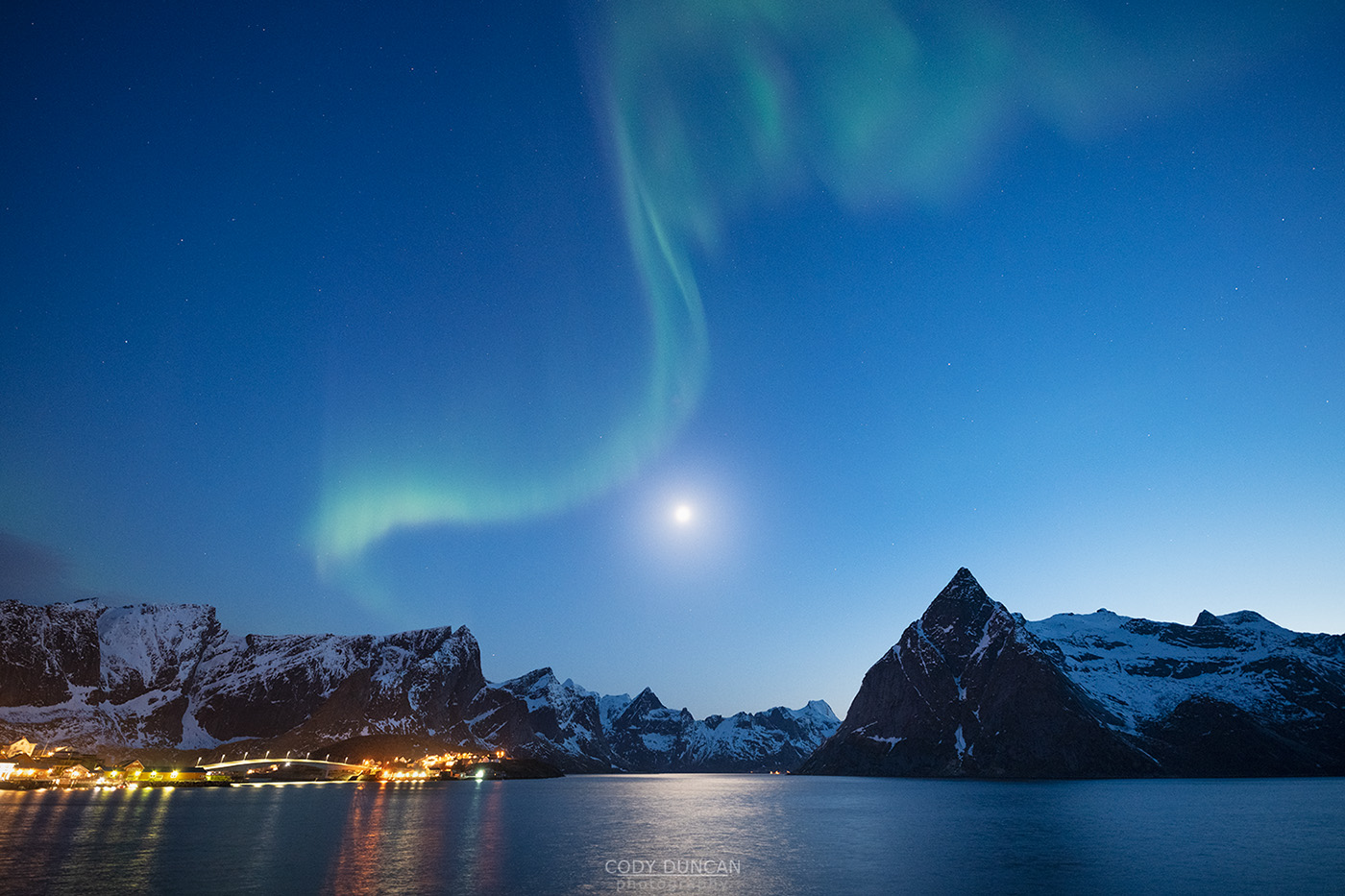
Photo: Northern Lights in sky over glowing April horizon, Flakstadøy, Lofoten Islands, Norway. April 13, 2021. 01:10

It is mid April and the northern horizon is growing lighter with each passing night as the sun continues on it’s northern journey over the next two months. And so, it is time to say goodbye to the northern lights until they return again in late August.

Every year it is always a question of when I will see the last aurora, doing it’s best to shine brighter than the midnight April sky. So far, the night of April 12/13 is the latest I have photographed northern lights here on Lofoten. Today’s image is also of that night. It won’t be until next week when the sky will definitely be too bright, that I will know if this was this years last aurora image or not.

However, the weather forecast is showing clear skies this weekend and there is also some solar energy hitting earth, which means there is a good change I might get one or two more nights of northern lights in the coming nights. And it really is a light night event at this time of year, usually becoming visible around midnight.

While the northern lights often get stereotyped as a winter event, from the Lofoten Islands, and in a strictly astrological sense of light and darkness, they are potentially visible for about 8 months of the year – about August 20-25 – April 15-20. So about 2/3rds of the year they are visible! I guess that is why I always lose a bit of motivation during the last month or so and don’t put too much effort to get out unless conditions seem ideal. The exception being, to try and get the last aurora dance of the season.

This year was a strange northern lights season, and defiantly not the best of the 5 winters I have now lived full time on Lofoten. It was much better than the 2019/2020 season, which simply had terrible weather overall. This season we had a pretty rainy and gray start to the season and it wasn’t until January that the weather improved somewhat. And while we were lucky to have some large aurora displays on a few perfectly clear nights, they were still somewhat few and far between. And frustratingly, there were also multiple clear but aurora-less nights this season. I guess that is why northern lights photography is usually referred to as, ‘chasing’ or ‘hunting,’ or some other verb to describe the pursuit – as even in otherwise perfect conditions, you never know if they will show up or not…

Head over to my Instagram account for (almost) daily postings of the local conditions here on Lofoten: @distant.north

Camera Info:
Nikon D850
Nikon 70-200mm f/4
140mm
ISO 1000
f 4.5
1/1600 second
WB Daylight

Photo: Orcas in the snow on the coast outside Nusfjord, Flakstadøy, Lofoten Islands, Norway. April 5, 2021. 17:20

For the last week I’ve been hearing various reports that the killer whales have returned to the Lofoten coast for their spring herring feeding. On Sunday, while planning to go out for a hike from Nesland, I finally spotted them in Skjelfjord – but they were on the far side and barely visible from land. I need a boat, I thought.

Monday I was out with some friends fishing near Stamsund when I got a text that the orcas were back in the bay at Nusfjord. Typical situation for me, that I’m usually occupied with some other activity when they are in a good location. But fortunately, there weren’t many fish to be found (I don’t eat fish myself anyhow, was just along for the ride), so we returned early to Stamsund, where I quickly said goodbye and headed to Nusfjord.

I arrived to the news that they had already left and were further along the coast. But, I was also informed that a boat would be coming, so I asked if I could join along. Having already been at sea outside of Stamsund, I knew it was going to be rough sailing in the choppy water. And even more difficult trying to photograph the orcas with a telephoto lens from a wildly bouncing boat. And soon enough, a large front of snow arrived, making photography even more difficult by limiting which direction we could shoot in.

But luckily enough, the orcas were just hanging around and feasting on the herring. As we drifted in the boat, occasionally they would surface nearby and swim around us. Then it is a matter to try and point the camera in the right direction and hope it focuses on the orcas and not the falling snow.

Hopefully this is just the first chance of the year and there are more times ahead as they hang around the coastline over the next couple months.

Head over to my Instagram account for (almost) daily postings of the local conditions here on Lofoten: @distant.north

Camera Info:
Nikon D850
Nikon 70-200mm f/4
140mm
ISO 1000
f 4.5
1/1600 second
WB Daylight

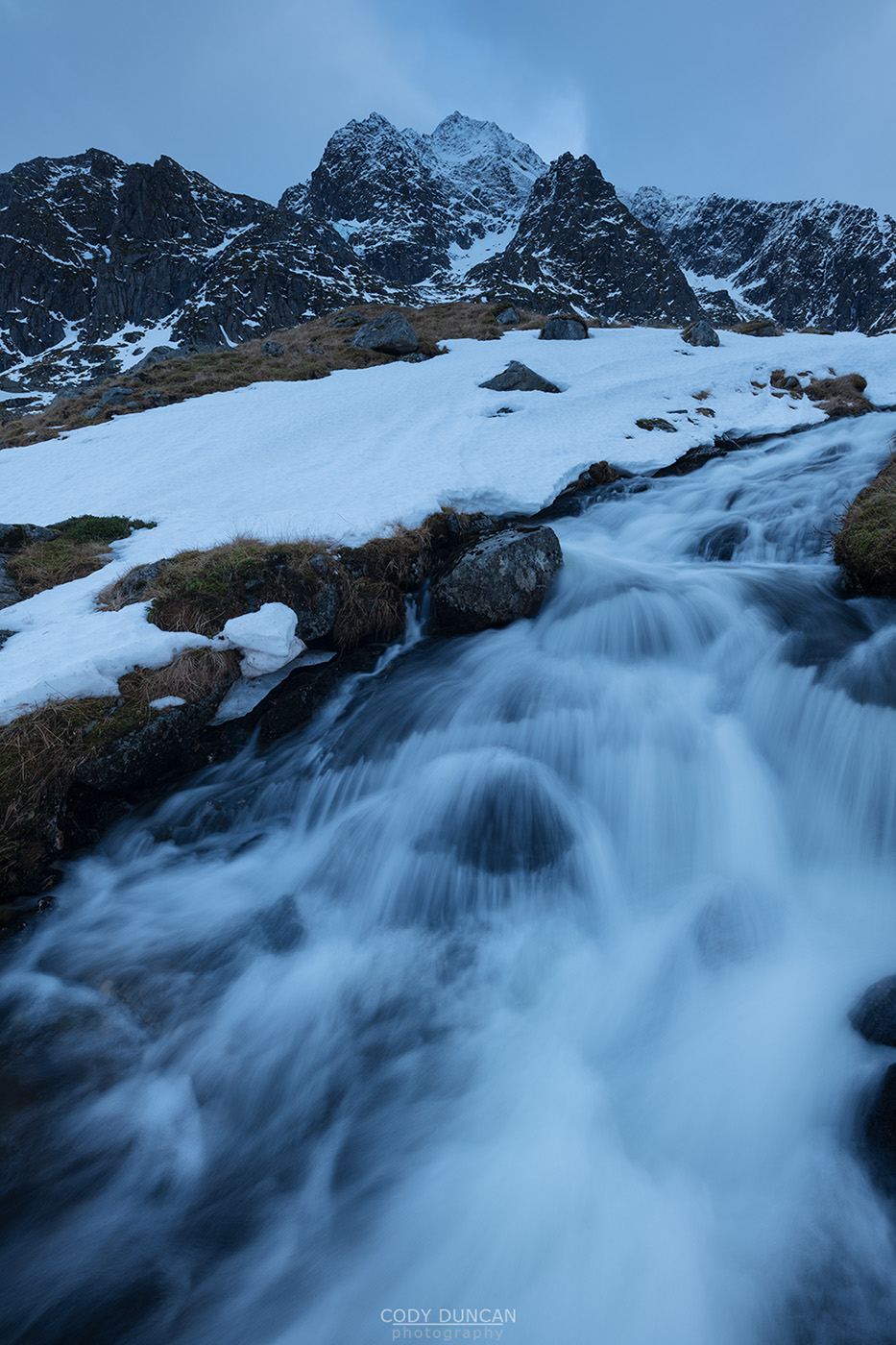
Photo: Flowing river below Stornappstind after a week of rain and mild temperatures, Flakstadøy, Lofoten Islands, Norway. February 26, 2021.16:47

The long period of Cold and settled weather since the beginning of the year ended this week with the arrival of a series of mild and wet weather from the south. Though it is not just us on Lofoten, most of continental Europe has gone through the same shift this week – from ice skating to the first flowers of spring – although flowers are still a few months away for us up here in the north.

As I’ve already written, we’ve been lucky so far this winter on Lofoten. So, as disappointing as it is to see, it is quite common for shifts in the weather and a week of snow-melting rain to arrive. There are still more or less two months of winter lefter here, so hopefully March fills the mountains with snow and there is still planting of skiing left this season!

The river here just down the road from my house, and which I pass daily on my way to/from Leknes had been frozen solid for most of the last month. But this weeks rain and warm temperatures, up to 8˚C on Wednesday, has turned the river into a flowing torrent. Well, maybe that’s an overstatement! But even during the spring thaw, this is about as big as this small little creek ever flows. So at the moment it is both a combination of a lot of rain combined with the snowmelt.

I had actually planned for myself to take a road trip to Senja this past week. But already looking at the weather forecast last weekend, I knew it would have been a mostly pointless and unproductive trip – and it’s no fun to spend a week in my van when it’s 3-5˚C and raining all day long. There’s only so much reading I can do per day while hurried in my sleeping bag to keep warm!

Head over to my Instagram account for (almost) daily postings of the local conditions here on Lofoten: @distant.north

Camera Info:
Nikon D850
Sigma 14mm f/1.8
14mm
ISO 31
f 14
0.6 second
WB Daylight

Photo: February northern lights – aurora borealis fill the sky over Skagsanden beach, Flakstadøy, Lofoten Islands, Norway. February 15, 2021. 22:12

After a weekend of clouds over Lofoten and a high aurora activity that wasn’t visible, Monday night brought a cloudless sky and a low aurora forecast. Looking at one of the space weather websites, it was stated that the solar wind had now passed earth. And yes, at 19:00 I could already see the first glow of green in the fading twilight. This turned into an all night show, still visible at 06:00 Tuesday morning. KP 2 they said…

I began the night shooting just down the road from home at one of the my local beaches. The sky produced a couple good outbreaks during that time. But finally during a calm period, I took the chance to make the 20 minute drive to Skagsanden. The temperatures where mild and the roads slippery. I passed and slowed to check on one person crashed into the ditch on the side of the road, which were fine, but unfortunately the Nappstaumen tunnel was closed for hour long periods, so the tow truck would take a while.

Most years it can be a little risky to move from a location you have to yourself to somewhere else, which might be overly crowded and impossible to shoot from. Corona has made this year different. There are only a handful of photographers actually living on Lofoten (or even overall in Norway as a whole), so as I pulled into the parking lot at Skagsanden, there was only 1 other car there.

Lucky again, the tide was cooperating, with low tide around 22:00 or so, which is perfect condition for Skagsanden – with about 100 meters from the high tide line to the low tide area across the flat sandy beach – perfect for reflections! The upper section of the beach was actually somewhat frozen, resulting in somewhat ‘dull’ reflections, so I walked down to the tide line, gentle waves crashing over my boots and the aurora shining bright in the wet sand.

Soon after my arrival the aurora increased in activity, dancing across the sky from east to west, with lots of pink highlights among the green. Despite the moonless night, the aurora was bright enough at times for me to have a shadow. Shooting in manual in the camera, one has to take care to pay attention to exposure. When I arrived at the beach, I was shooting around 4 second exposures, but when the aurora got bright, I was even down to 0.6 second for some periods of time! KP 2 they said…

I’m probably a slightly broken record with how many times I’ve said the aurora forecast doesn’t really matter. Even with all the technology and aurora apps, etc, there is still always an aura of mystery in which you never quite know what will happen. Like Monday night, which the fantastic show was the result of the earth’s magnetic sphere allowing the slow solar wind to enter. So no need for a forecast for a X-class flare and a geomagnetic storm for an amazing night of northern lights! Sometimes it just happens…

Head over to my Instagram account for (almost) daily postings of the local conditions here on Lofoten – and of nights like this when it happens: @distant.north

Camera Info:
Nikon D850
Sigma 14mm f/1.8
14mm
ISO 1600
f 2
1.3 seconds
WB Daylight

Photo: Waves flowing over frozen sand at Myrland beach, Flakstadøy, Lofoten Islands, Norway. February 1, 2021. 14:15

I was driving home Monday afternoon as some cool looking snow clouds were passing by just out to sea to the north and catching the low afternoon sunlight. I took a few shots from up on the road, but it wasn’t quite what I was looking for – though this was also partially because my 14-24mm lens has been broken for almost a year now, and the scene probably needed something in the 18-22mm range. 24mm was not quite wide enough, and 14mm was way too wide. It’s a bit frustrating when you don’t have the tools you need, but with a full year of workshops canceled thanks to Corona, and least I’m still around to complain at the moment…

Lofoten, and most of northern Norway has had a cold but dry start to 2021. But finally, on Monday, Jan 25th, the middle parts of Lofoten received about 20-30cm of snow, including my valley. Ordinarily in most years, one day of snowfall would have quickly been tracked up by all the winter photography workshops that should be here right now. So it’s always a race to get to a beach with fresh snow and enjoy it while you can.

This year, with Lofoten completely empty, I was the first person to walk down to the beach this past Monday, a full week after the snow fell! Crazy! Even Storsandnes beach down the road has remained largely footprint free as well for a week and a half now. It’s like the old days when I was sleeping in a rental car and pretty much the only photographer around in winter.

The cold of the last weeks in addition to the snow fall means the sand on the beaches can often freeze, basically turning to ice. Then when the tide come in and waves wash against it, it can form cool patterns and structures that wouldn’t otherwise exist. And then when larger waves come and crash against this frozen line, cool stuff can happen.

I spent about an hour of the beach until the light faded to blue. Myrland beach can sometimes be difficult to shoot, as the large boulders in the tide line, one of the nice things about the beach, can sometimes become distracting as well, and require careful placement within the frame – making some compositions not really ideal, compared to if the boulders were gone – and more so on days like this when the water itself is already quite dynamic.

Camera Info:
Nikon D850
Sigma 14mm f/1.8
14mm
ISO 31
f 16
1/100 second
WB Daylight

Photo: Cracks in the thin ice on lake Storvatnet, Flakstadøy, Lofoten Islands, Norway. January 19, 2021. 14:13

Just after getting back to my van on Tuesday afternoon from a hike up around Nesheia, what had been a previously mostly grey sky erupted in color. Luckily, lake Storvatnet was just around the corner and had had some cool looking lines running across the surface. So I headed there in a rush.

The lines and patterns on the lake were some of the coolest Ive seen here for a while. Just a perfect light dusting of snow contrasting with the long cracks formed from the freezing surface. It was nearly perfect except for one thing: The ice was too thin to safely walk on.

I scrambled around the lake shore looking for a nice leading line from one of the cracks, but just couldn’t find anything. If only I could have walked 2-3 meters onto the lake to fine the perfect line, I probably would have gotten one of my best ever photos of the lake. But no. I had to painfully watch from the rocks on the shoreline as the light eventually began to fade. So close, but breaking through thin ice is not something I want to experience in this life.

And so I tried to shoot what photos I could. But nothing quite worked. So close…

Camera Info:
Nikon D850
Nikon 24-70mm f/2.8
24mm
ISO 100
f 10
1/10 second
WB Daylight

Photo: Northern lights fill the sky over Skagsanden beach, Flakstadøy, Lofoten Islands, Norway. January 11, 2021. 19:06

It was not even dark yet on Monday afternoon when I thought I noticed faint hints of northern lights dancing in the twilight sky. at 16:15 I took a test photo from my backyard just to see if my eyes were playing tricks on me or not. Nope, it was aurora! By 16:30 I was taking my first photos at Storsandnes beach. What followed was an aurora that lasted the entire night over Lofoten and probably the best show of the last two winters.

Around 18:00 the northern lights calmed down for a little while – which is normal, the northern lights often fluctuates in levels of activity/brightness throughout the night. The beach I was at wasn’t the best, as the aurora were too far overhead and towards the south, so I took the chance to relocate, this time to Skagsanden beach.

Covid has kept the tourists away, but even so, I’m always somewhat hesitant about Skagsanden these days, as it can get crowded with tripods! To my surprise, I arrived to an empty parking lot! I got down to the beach and was focusing my camera just as the sky exploded with light. I didn’t even have time to adjust my shutter speed before I was taking the first shot just to make sure my camera was in focus. Then I took a couple seconds to actually find a better composition.

This photo is from about 20 minutes later, after the aurora had calmed slightly, but still filling much of the sky. This is generally slightly easier to photograph anyhow, as the highly active aurora can be moving so fast through the sky, that it can be difficult to compose into a shot. What can also occur on active nights is that the aurora moves ‘beyond’ the location your at. I.e. If the best composition is is facing northwest to north, but the aurora moves to the west or southwest, often times then becoming obscured by mountains as well. This can often happen at several of Lofoten’s beaches – sometime the aurora is just too high in the sky to work with the location.

But luckily, this wasn’t the case on Monday and Skagsanden works well as a location for active northern lights. A car or two would occasionally pull into the parking lot, but despite my fears of seeing 20 vans show up and a line of headlamps marching across the beach in front of me, only two other photographers eventually showed up in the hour or so I was there.

Winter tourism on Lofoten has been steadily increasing since 2015 or so, to the point where it has felt busy and crowded at times in recent years – especially in the popular destinations. But this winter will be quiet – I’ve had to cancel all my winter photo tours, and I image most others have as well – Norway currently requires 10 day quarantine + a covid test on entry. So this winter will likely feel like the old days, where I could wander around and hardly ever see another tripod. If the idea of the winter crowds has been putting you off of visiting Lofoten, then this year might be the one chance you have to experience the winters as they used to be and to find yourself alone at Skagsanden beach while the northern lights dance in the sky overhead…

Camera Info:
Nikon D850
Sigma 14mm f/1.8
14mm
ISO 2000
f 2
3 seconds
WB Daylight

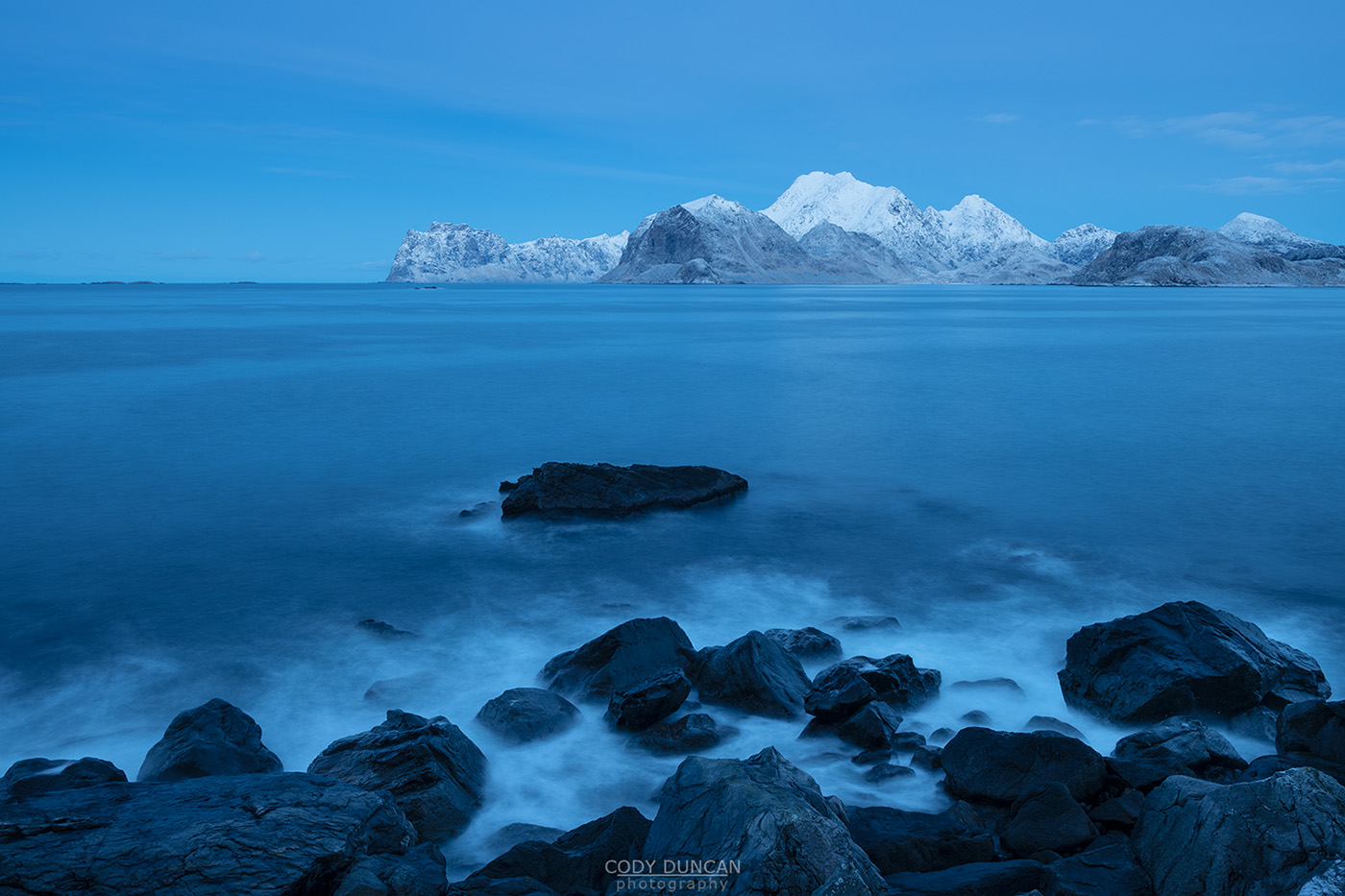
Photo: Blue hour over Nappstraumen during December’s polar night, Flakstadøy, Lofoten Islands, Norway. December 7, 2020. 14:05

The sun has left Lofoten for the year and will remain below the horizon until early January. Though, the reality of this year’s weather has meant the sun has been a rare visitor since the beginning of November – with almost constant overcast skies for over a month now.

Monday was a rare moment of somewhat clear skies, though a layer of cloud along the southern horizon blocked most of the light from coming through. But for the next weeks, twilight will be as light as it gets, with no direct sunlight reaching Lofoten. And while fantastic colors are still possible given the right cloud conditions, for the most part the islands are left in shades of blue and grey.

The polar night does not mean complete darkness, and as you can see, even at 14:00 there is still some glow to the sky – though with an exposure of 20 seconds without a Neutral Density filter – it is definitely far from daylight! Though the level of brightness is highly affected by weather, and on dreary, overcast days even noon can feel quite dark. And beyond weather, the level of snow also affects the feeling of brightness – and unfortunately rain over the last days has melted away what was only a light dusting of snow seen in this image.

Camera Info:
Nikon D850
Nikon 24-70mm f/2.8
29mm
ISO 32
f 13
20 seconds
WB Daylight

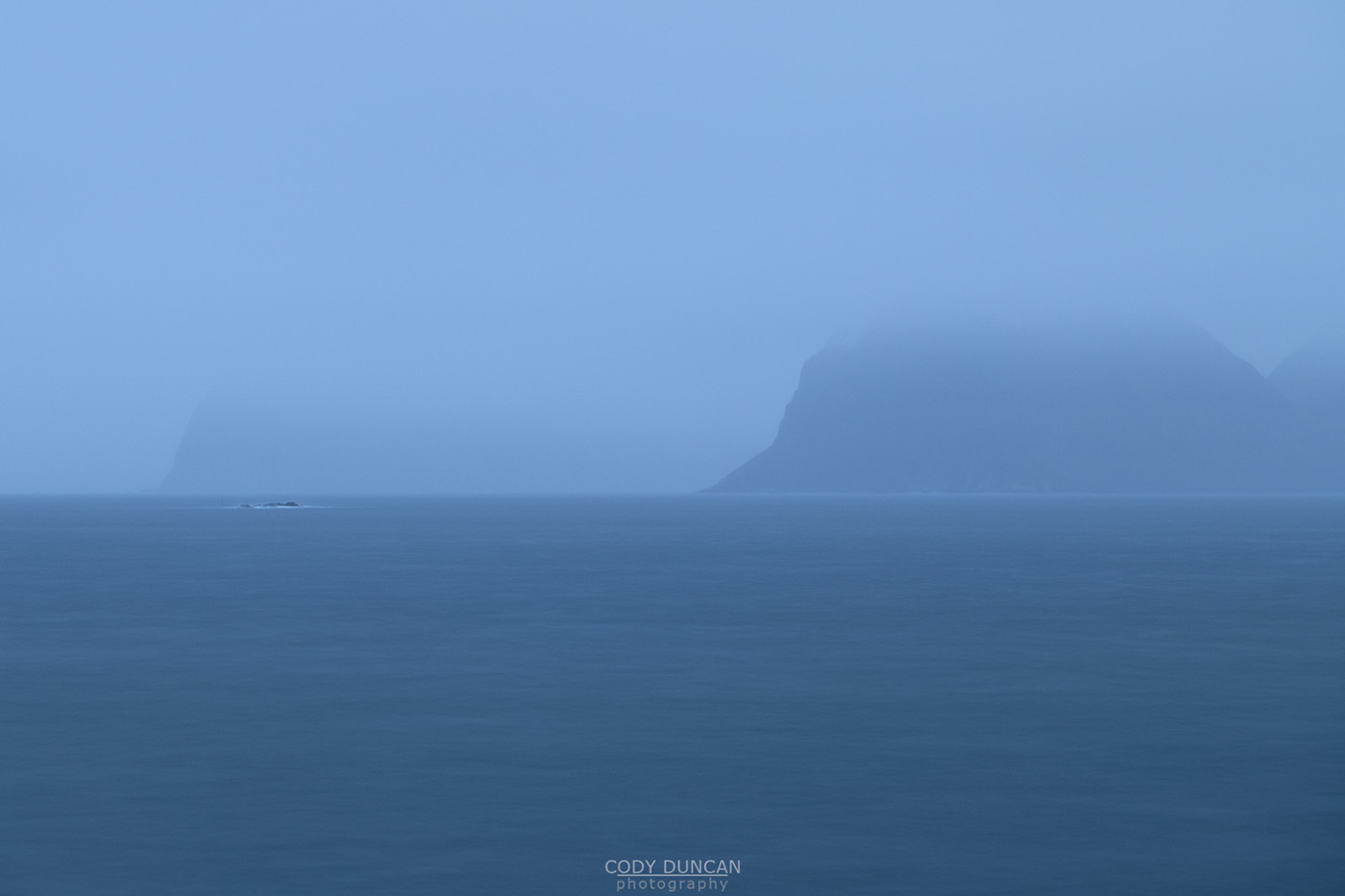
Photo: Rainy view across Nappstraumen to cloud covered peaks of Vestvågøy, Lofoten Islands, Norway. December 3, 2020. 10:35

The wet and soggy weather has carried into the first days of December, and judging by the forecast, carry on throughout next week. I’ve already given up hope on seeing the sun again this year, so it will just be the slow fade into the Polar Night which begins on Monday.

Last week (Friday Photo #412) I wrote that I was expecting this November to come in several degrees above the normal average. And I was close, it ended up being 4.2˚C warmer than normal for the month. And in fact, Norway as a whole had the warmest November (but also tied with 2011) since record keeping began in 1900. And I also wasn’t crazy to complain about all the rain either, as this ended up as the 9th wettest November since 1900 as well, with Lofoten at about 150% above normal rainfall.

I’ve slowly been working away on what I’m referring to as my ‘Lofoten 365’ project. Yesterday was one of the days I needed to shoot on. Unfortunately the weather was far less than cooperative. To by benefit, the wind was blowing the rain mostly sideways, so I was able to use my van as a wind/rain block while I took photos. There is already little light or contrast at this time of year, but with low, flat clouds covering the islands, the scene seemed almost empty.

The sea was rough, but not interestingly so. So I threw on a 6 stop ND filter to get me to a 30 second exposure (I probably should have gone up to 1 minute for a smoother sea – but I was lazy) to turn the scene into soft shades of blue.

I shot another version with a large rock in the foreground, and while it adds a nice piece of contrast to the scene, I feel its almost more of a distraction than anything.

Camera Info:
Nikon D850
Nikon 24-70mm f/2.8
70mm
ISO 100
f 7.1
30 seconds
WB Daylight
Breakthrough Photography 6-stop ND filter