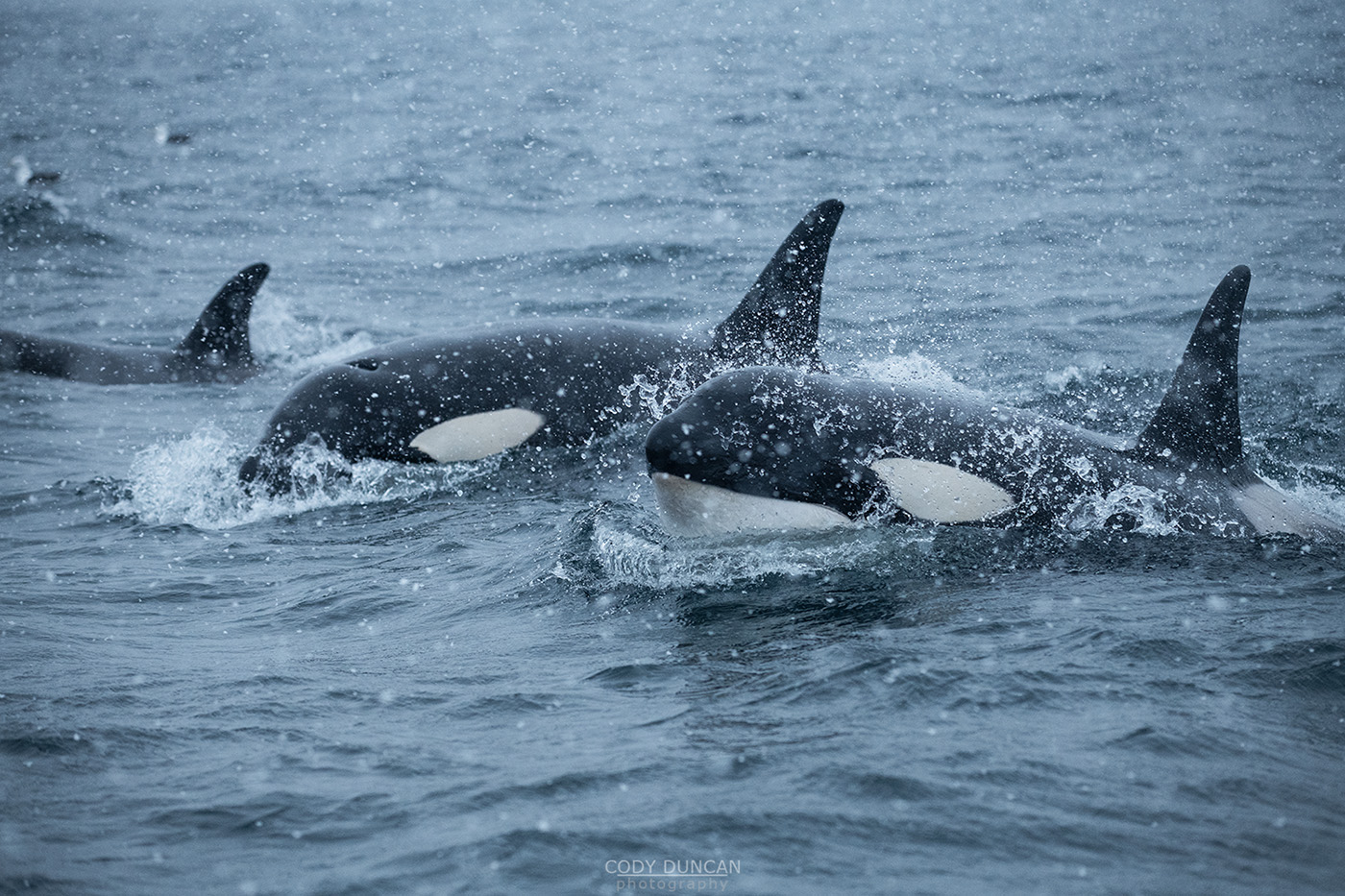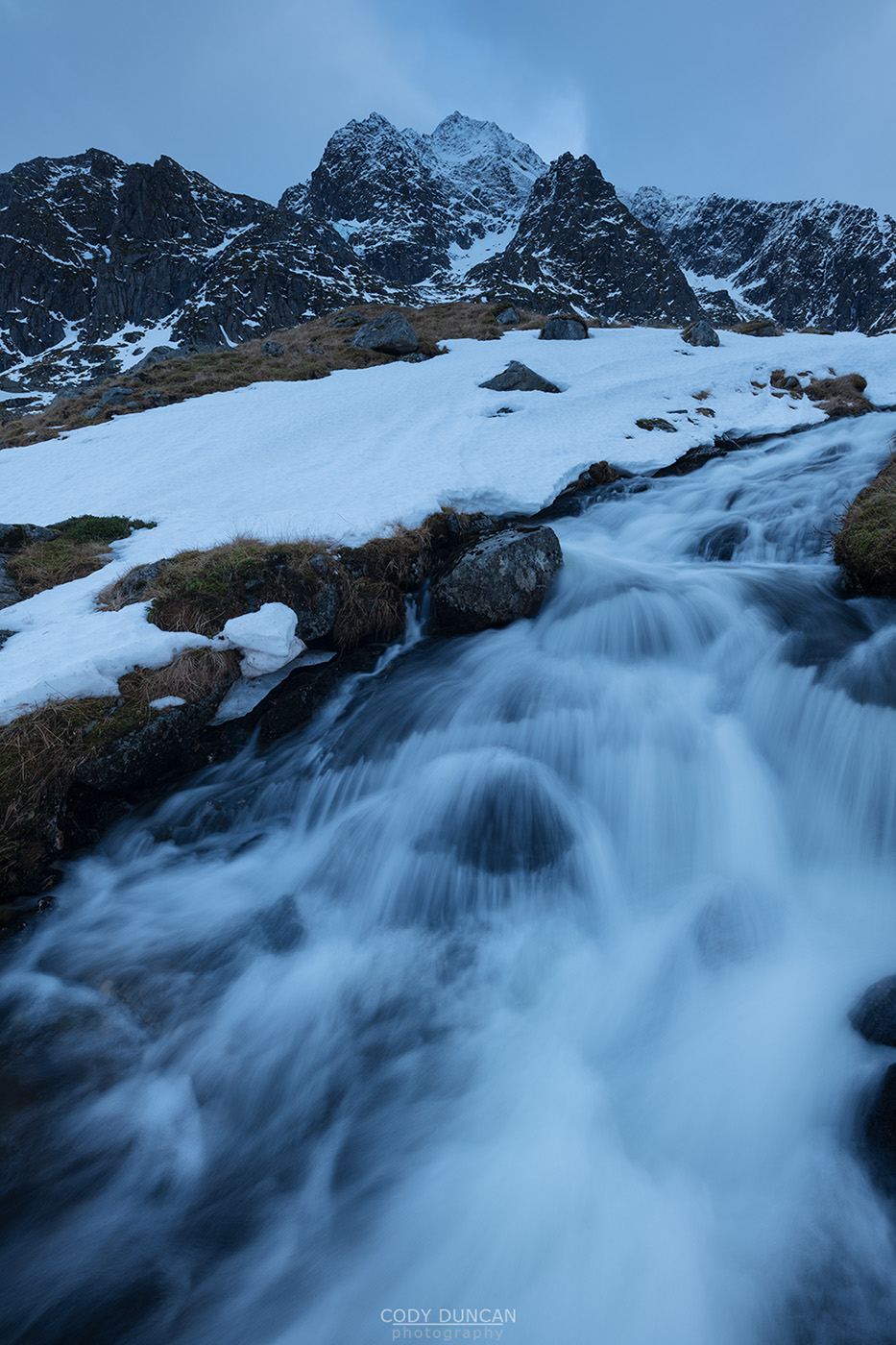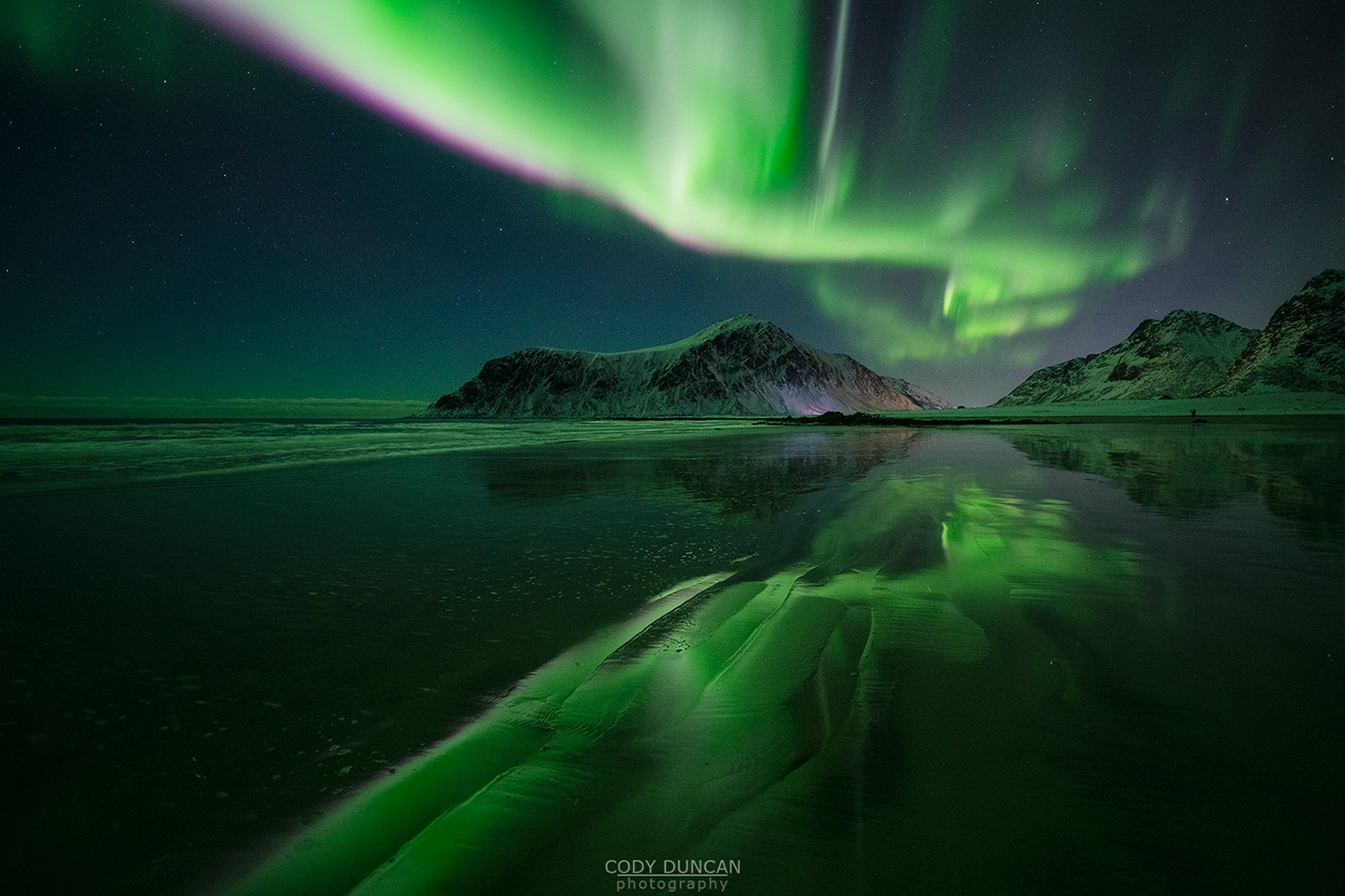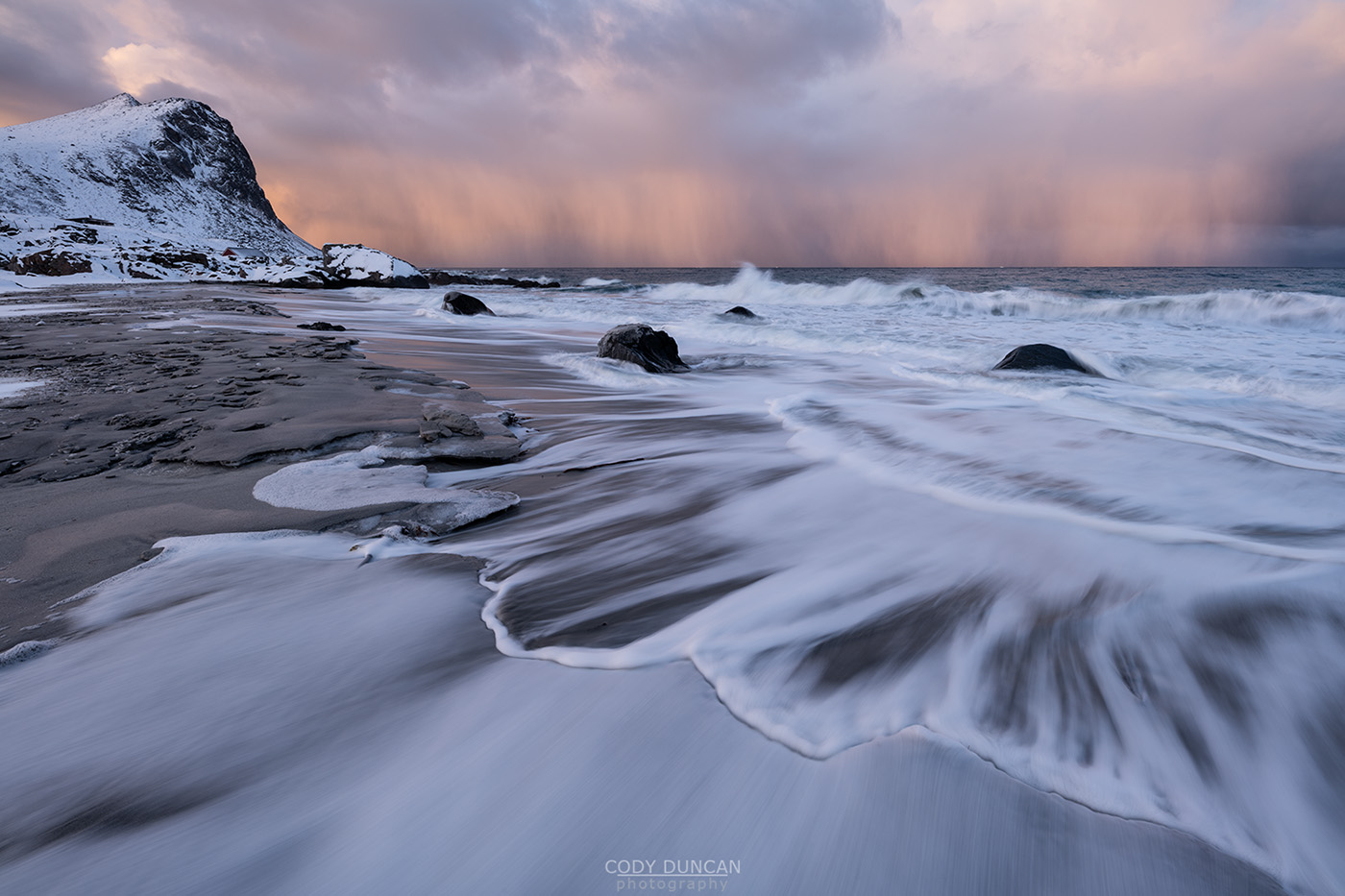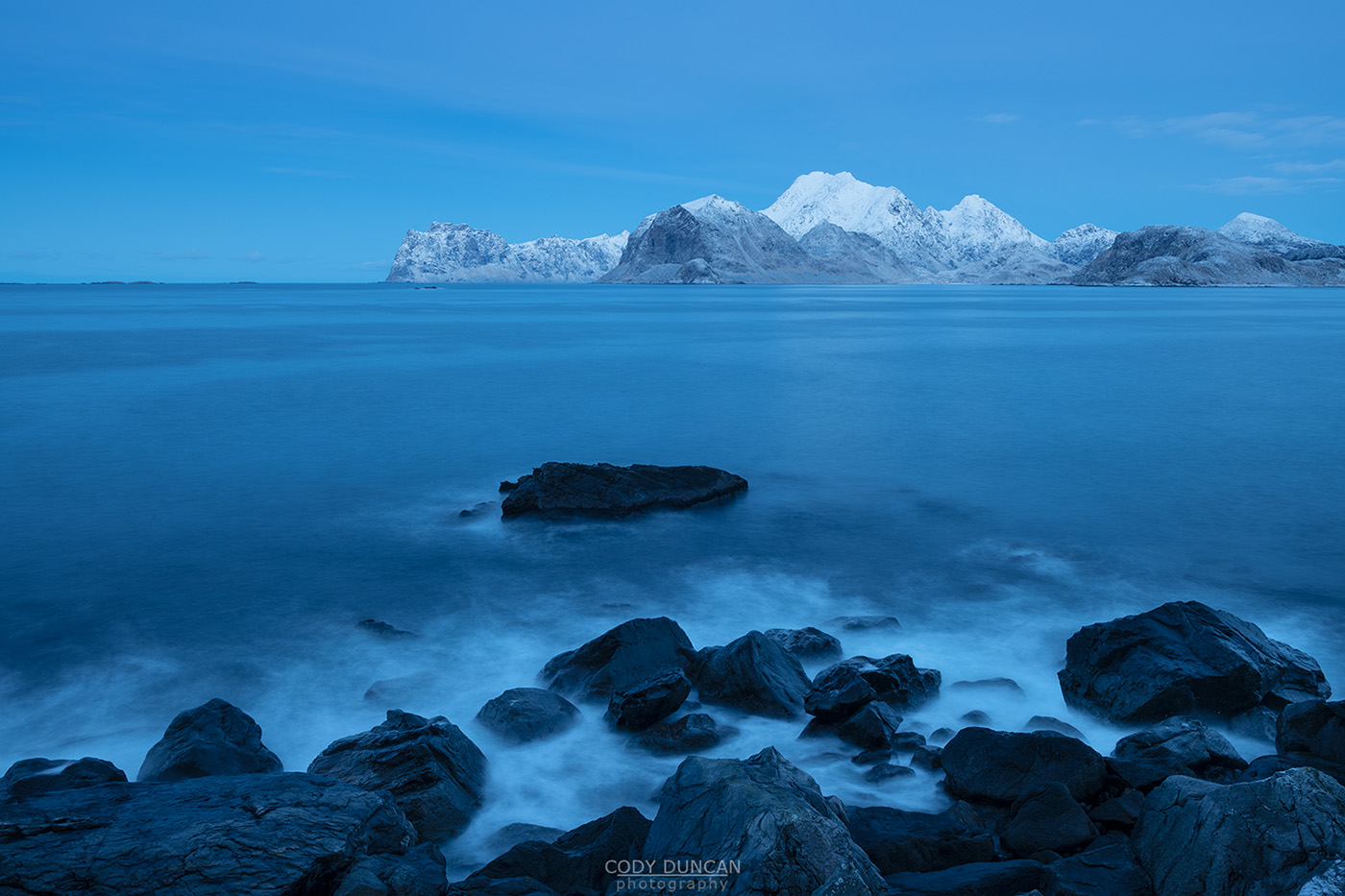
Photo: Blue hour over Nappstraumen during December’s polar night, Flakstadøy, Lofoten Islands, Norway. December 7, 2020. 14:05

The sun has left Lofoten for the year and will remain below the horizon until early January. Though, the reality of this year’s weather has meant the sun has been a rare visitor since the beginning of November – with almost constant overcast skies for over a month now.

Monday was a rare moment of somewhat clear skies, though a layer of cloud along the southern horizon blocked most of the light from coming through. But for the next weeks, twilight will be as light as it gets, with no direct sunlight reaching Lofoten. And while fantastic colors are still possible given the right cloud conditions, for the most part the islands are left in shades of blue and grey.

The polar night does not mean complete darkness, and as you can see, even at 14:00 there is still some glow to the sky – though with an exposure of 20 seconds without a Neutral Density filter – it is definitely far from daylight! Though the level of brightness is highly affected by weather, and on dreary, overcast days even noon can feel quite dark. And beyond weather, the level of snow also affects the feeling of brightness – and unfortunately rain over the last days has melted away what was only a light dusting of snow seen in this image.

Camera Info:
Nikon D850
Nikon 24-70mm f/2.8
29mm
ISO 32
f 13
20 seconds
WB Daylight

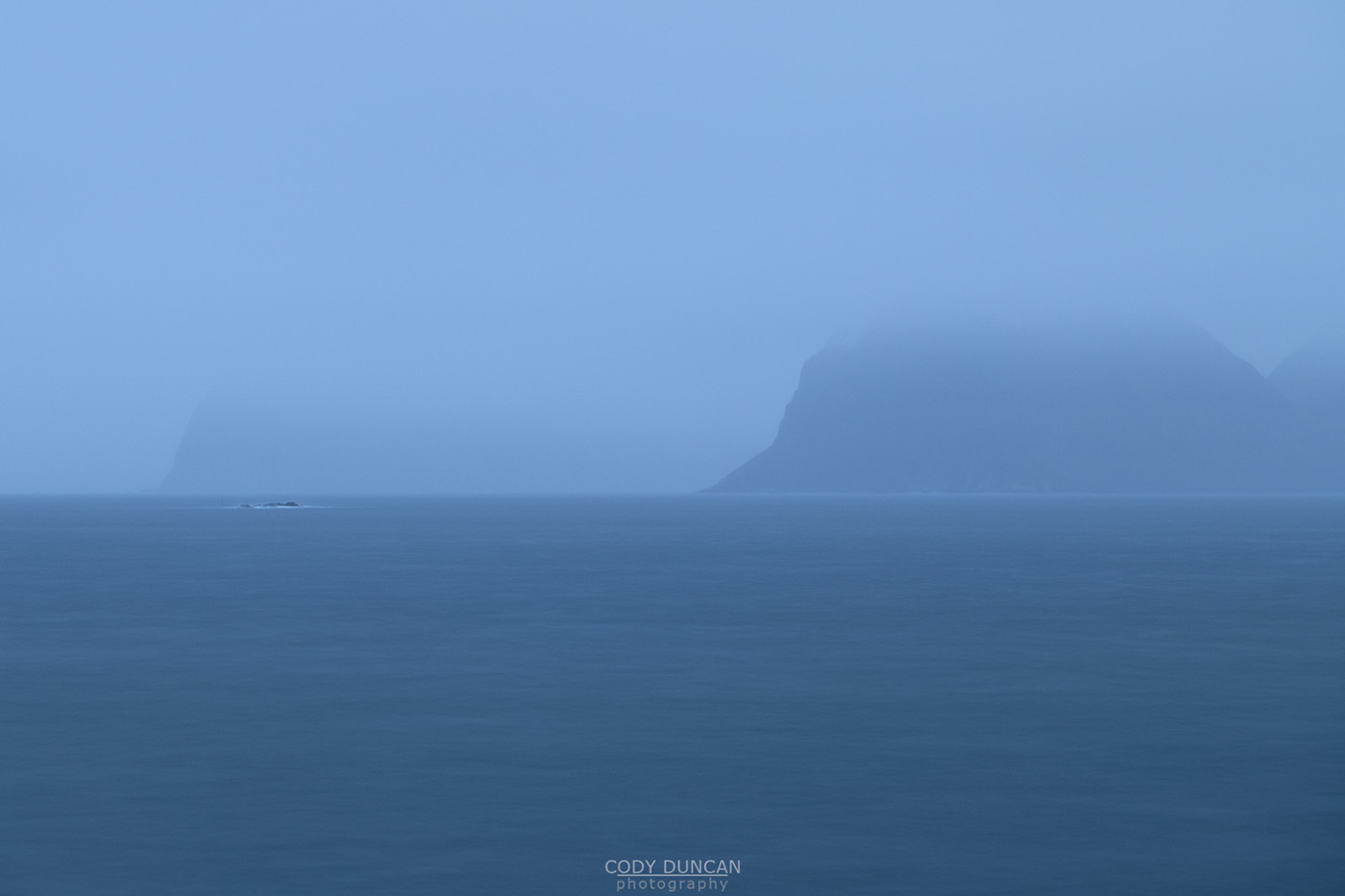
Photo: Rainy view across Nappstraumen to cloud covered peaks of Vestvågøy, Lofoten Islands, Norway. December 3, 2020. 10:35

The wet and soggy weather has carried into the first days of December, and judging by the forecast, carry on throughout next week. I’ve already given up hope on seeing the sun again this year, so it will just be the slow fade into the Polar Night which begins on Monday.

Last week (Friday Photo #412) I wrote that I was expecting this November to come in several degrees above the normal average. And I was close, it ended up being 4.2˚C warmer than normal for the month. And in fact, Norway as a whole had the warmest November (but also tied with 2011) since record keeping began in 1900. And I also wasn’t crazy to complain about all the rain either, as this ended up as the 9th wettest November since 1900 as well, with Lofoten at about 150% above normal rainfall.

I’ve slowly been working away on what I’m referring to as my ‘Lofoten 365’ project. Yesterday was one of the days I needed to shoot on. Unfortunately the weather was far less than cooperative. To by benefit, the wind was blowing the rain mostly sideways, so I was able to use my van as a wind/rain block while I took photos. There is already little light or contrast at this time of year, but with low, flat clouds covering the islands, the scene seemed almost empty.

The sea was rough, but not interestingly so. So I threw on a 6 stop ND filter to get me to a 30 second exposure (I probably should have gone up to 1 minute for a smoother sea – but I was lazy) to turn the scene into soft shades of blue.

I shot another version with a large rock in the foreground, and while it adds a nice piece of contrast to the scene, I feel its almost more of a distraction than anything.

Camera Info:
Nikon D850
Nikon 24-70mm f/2.8
70mm
ISO 100
f 7.1
30 seconds
WB Daylight
Breakthrough Photography 6-stop ND filter

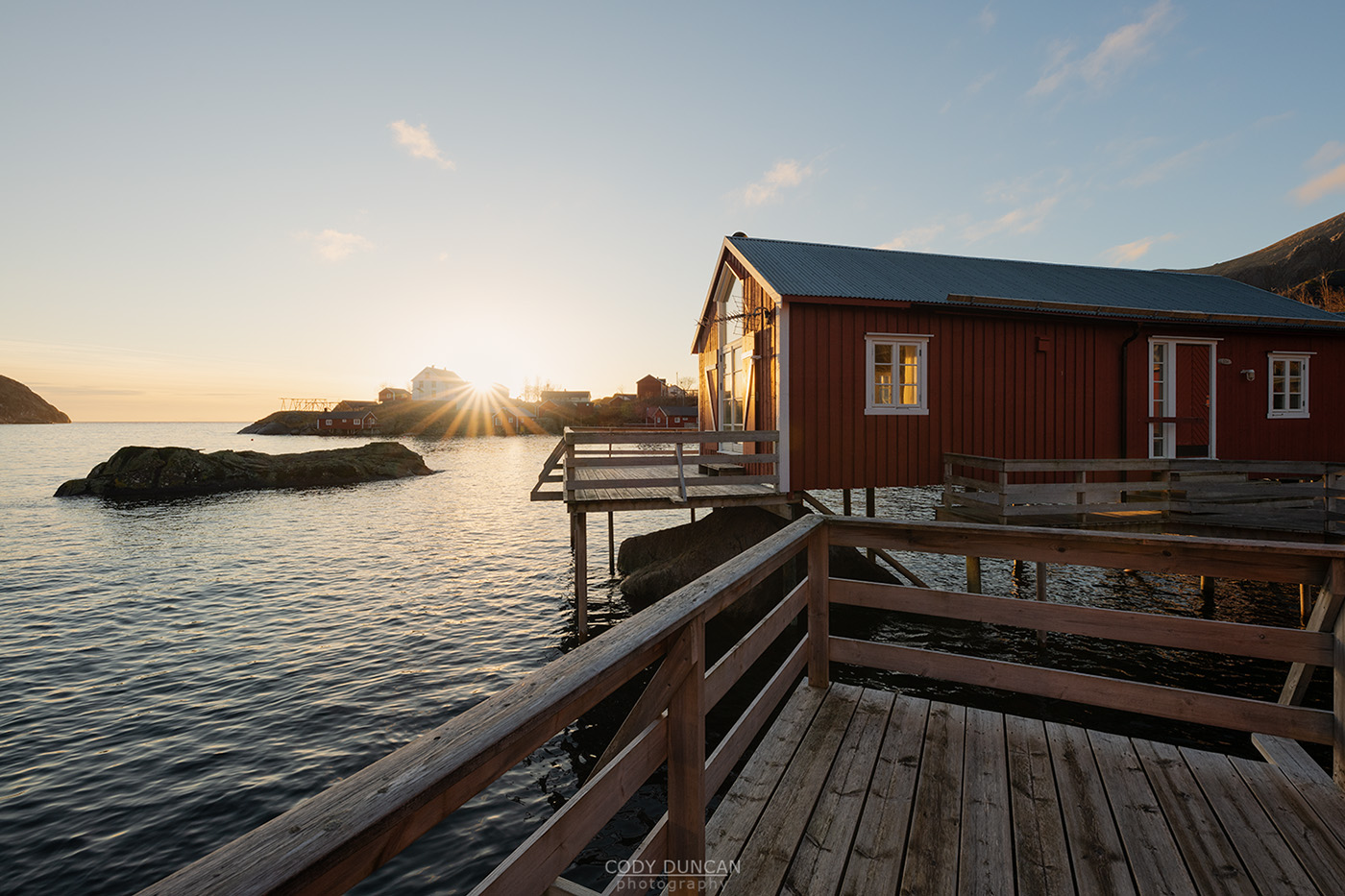
Photo: Friday Sun low in the sky over Rorbu cabins, Nusfjord, Flakstadøy, Lofoten Island, Norway. November 13, 2020. 11:01

After a rainy, grey, and windy start to November the sun finally reappeared today! Even better the temperature was also quite mild for this time of year, reaching over 9˚C in Leknes – Normally a clear day such as this would be cold and chilly. A photo project I’m working on with a friend took me to Nusfjord, on the south side of Lofoten in search of today’s light.

Even with a fully clear sky, the sun is only around for a few hours now that it is mid November and the Polar night is a little over 3 weeks away. You can see in this photo, taken at 11:00, that the sun is low on the southern horizon. So at this time of year, even with the sun shining as brightly as it can, much of Lofoten remains in the shadow of mountains. For sun over the next weeks, you have to travel to the southern side of the islands, or up a mountain…

Camera Info:
Nikon D850
Sigma 14mm f/1.8
14mm
ISO 100
f 11
1/80 second
WB Daylight

Photo: Storm wave crashes over rocks (and me) at Storsandnes beach, Flakstadøy, Lofoten Islands, Norway. November 5, 2020. 14:17

I walked returned to my house with completely wet shoes today. Not from the normal hiking through bog or photographing down on the beach. Today the ocean came to me, fairly high up on the rocks. This was after I’d already been completely blasted with sea spray at another location a little earlier – after which when I bumped into a friend in the supermarket, they commented that I was dripping water.

November has been off to a mild but soggy start. But last night the first big winds arrived or a series of storms which will pass over the next few days. My weather station recorded over 33 m/s wind gusts this morning, and at times, if I closed my eyes, I could have imagined I was back home in a California earthquake, my house was shaking so much.

It was tough conditions to shoot today for sure. And it wasn’t just the sea spray to content with, but frequently passing hail and heavy downpours. I really should have gone out in full waterproof gear, but the mild temperatures lulled me into a state of complacency. But more that myself, the main struggle was often keeping the camera lens clear, as every crashing wave send up clouds of mist which blew across any downwind objects – me.

With all the chaos, I still managed several decent images. This one here isn’t what I would consider the best, but it the beginning of the last wave to hit, and completely soak me (if you follow me on Instagram: @distant.north, I posted the full time lapse sequence from the location yesterday). Luckily I saw it coming and made sure to shelter my camera as best as possible. After that I was done, my feet slopping away in my soggy shoes as I walked back to my van, assisted by the wind blowing me forward…

Camera Info:
Nikon D850
Nikon 24-70 f/2.8
24mm
ISO 200
f 8
1/20 second
WB Daylight

Photo: October snow flurries over Moskenesøy and Sund, Nesland, Flakstadøy, Lofoten Islands, Norway. October 13, 2020. 16:32

The brief Indian Summer which I wrote about last week now seems to have come to an end and the normal cool-ish weather of mid October has now arrived. While no snow has made it down to sea level year, Himmeltindan is showing a light coating of snow in what is otherwise a cold, misty rain down below. It has been cloudy for the last week, but I think finally the sun is below my mountains for the year, not to return again until late February next year.

The trees have more of less lost their leaves for the year, and most of the small plants seem to be quickly turning to winter brown as well. But there are still hopefully some days left in the hiking season for the year – and by hiking, I mean in normal conditions and not winter hikes. So far over the summer I was able to get 5 new routes hiked for the next update of ‘West Lofoten Hikes’ ebook. There’s still a couple more mountains on the list, so maybe I’ll manage a few more.

I was a little late to hike on this day, last Tuesday. I can feel the days getting shorter, but somehow I haven’t realised that sunset is now at 17:30 already! After a few days of wind, the weather was finally a little calmer as I headed up Neslandsheia, overlooking my old home in Skjelfjord. Misty clouds were floating around and what initially was a light rain as I began the steep hike up an old sheep trail turned into a blowing snow as I reached 400+ meters elevation. Initially the sun was shining bright over the sea, but upon returning to one of the view points on my way down, it had moved to behind the mountains as another wave of autumn snow floated by.

Camera Info:
Nikon D850
Nikon 24-70mm f/2.8
58mm
ISO 100
f 11
1/40 second
WB Daylight

Photo: Between Storms – Rays of light shine over Flakstadøy, Lofoten Islands, Norway. September 22, 2020. 14:49

Lofoten received its first proper autumn storms this week with two back to back storm systems sweeping across the islands on Monday and Wednesday – the highest wind gust I measured from my house on Monday was 35 m/s, just a little over hurricane force which begins at 32.6 m/s. Skrova measured 38 m/s during Wednesday’s storm.

Monday’s storm was the remaining winds from the previous tropical storm Sally and while longer lasting, seemed to be slightly milder than Wednesdays storm – which canceled all the ferries, closed most of the bridges, dislodged boats, sent motorhomes and hot tubs flying off the road, and did some structural damage in some locations. Driving by this morning, I noticed the old torsk drying racks down the road from me are now mostly collapsed – and will probably be completely destroyed by the end of winter.

But while Lofoten was suddenly windy, the islands have been soaked in near daily rain for the last month or so – with seldom moments of clear sky and poor aurora watching. I was even up north on a road trip to the Lyngen Alps and Senja, but decided to cut the trip a week short because I was tired of sitting around in the rain – and there was nothing better to look forward to in the weather forecasts at the time.

Though now it seems we might have a slight break from the wet weather during the next week. Lets hope so! I still need to attempt one final lawn mowing before the winter sets in, but my yard is currently too soggy to do so…

I took this photo on Tuesday afternoon, on a relatively calm day between the two passing storms. The weather had cooled significantly from Monday’s warm southwest wind, and showers of hail were sweeping across the islands – and the first mountain snows of the year were visible on the higher peaks. I did not desaturate this image, but the scene almost appears black and white.

Camera Info:
Nikon D850
Nikon 70-200 f/4
72mm
ISO 100
f 6.3
1/800 second
WB Daylight

Photo: Late summer heather bloom, Flakstadøy, Lofoten Islands, Norway. August 25, 2020. 21:01

The purple heather flowers of late August are a sign that summer is soon over. Even the bright fireweed will mostly have faded and soon it will be autumn’s yellows and reds that fill the landscape. While 2020 seems to have sent the world into chaos – and a disaster for me as well with 90% of my income revolving around tourism – we at least had the best summer here on Lofoten since I moved here in the early winter of 2016. So it is ok for it now to be over, I’m content and looking forward to what the autumn will bring.

I mentioned a couple weeks ago that I’m kinda working on a special ebook project. Not a Seasons on Lofoten – Autumn/Spring, which I’ll probably finally get around to over the winter. But something new and more ambitious.

The weather wasn’t the best this day, so I waited until early evening to finally head out – though there was little chance for a sunset in the heavily clouded sky. There are a few places on Lofoten that I kinda keep as a backup for when I’m both lazy and the conditions aren’t ideal. I shot in this area a lot in the spring during the snowmelt when the rivers were flowing. And now in the last days of summer, I was back again, looking for some composition which might work.

Despite the recent rain, the rivers and lakes weren’t particularly interesting. What caught my eye more was the blooming heather covering the landscape.

Camera Info:
Nikon D850
Nikon 24-70mm f/2.8
38mm
ISO 400
f 5.6
1/30 second
WB Daylight

Photo: Autumn leaves below Stjerntind, Flakstadøy, Lofoten Islands, Norway. August 25, 2020. 20:52

The golden colors of autumn are beginning to take hold in Lofoten’s landscape. Even last week while wandering around near the famous road to Nusfjord the first small changes in the birch leaves were already visible on some trees. And a week later, with a golden sunlight shining across the land, it seems the green of summer will soon be gone. Hiking up on Reinebringen on September 1st, the change in color was even more apparent looking down over the landscape.

The weather was mostly stormy on the day of this photo – like it has been for almost two weeks now since the middle of August. I’m attempting to work on a new ebook – my most ambitious yet. It might actually be impossible, and won’t be finished for at least a year at the earliest, if not two or three.

The result of attempting this project was I needed to go out and shoot this day. It is something difficult, to force yourself to take an image on a certain day with whatever conditions might be present. It’s not normally the way I work, and it will probably present quite some challenges going forward. But at least it will be an exercise is creativity.

This image actually won’t make the cut, I took a better photo a few minutes later. But It was the first autumn leaves I photographed this year. So here it is…

Camera Info:
Nikon D850
Nikon 24-70mm f/2.8
62mm
ISO 100
f 4.5
1/25 second
WB Daylight

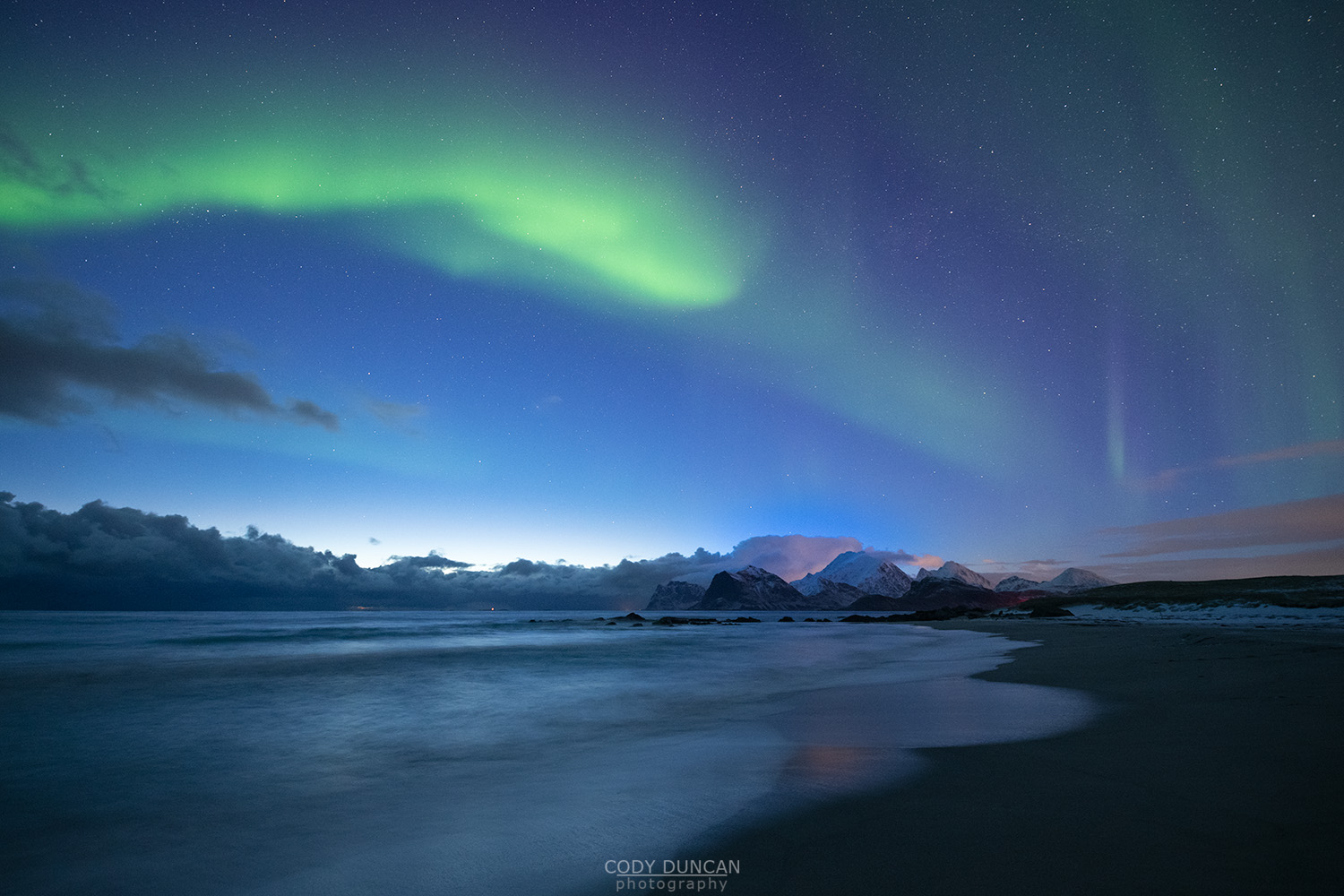
Photo: First sighting of aurora borealis – northern lights in the sky over Lofoten of the 2020/2021 aurora season, Flakstadøy, Lofoten Islands, Norway. August 23, 2020. 00:50

Anytime after around August 20th the wait for the first aurora of the season begins. The weather has generally been cloudy for the last week and so even with the forecast of a possible incoming solar storm, I didn’t put much effort into looking – as I generally just saw clouds in the night sky.

And so Saturday night I was on my way to bed a bit after midnight and took one last look at the sky while brushing my teeth. Hmm, that could be aurora! I thought as I saw a light streak high overhead in the now somewhat clear sky – though the clouds were quickly incoming from behind the mountains. I ran and grabbed my camera to take a test shot. Green! Yep, northern lights!

Like a rehearsed fireman off to a fire, I was out the door and heading down to my local beach, anxiously watching the sky overhead. The aurora was still there. The clouds were moving in quickly so I didn’t have too much time to think or look for the best foreground composition. I just wanted to get something at all. Luckily the aurora increased for a couple minutes once I began shooting – even forming into this green heart in the sky.

Even at nearly 01:00, the darkest time of the night, you can see the horizon was still glowing bright. I actually think the surrounding clouds in this image help make it better by darkening what might have been an otherwise overly bright horizon.

I saw a dancing corona directly overhead the following night as well, but the hole in the clouds was too small for me to make the effort to go out. But the season has begun! And hopefully it turns out a little better than last year.

Camera Info:
Nikon D850
Sigma 14mm f/1.8
14mm
ISO 1250
f 2
2.5 seconds
WB Daylight

Photo: The sunsets continue, Flakstadøy, Lofoten Islands, Norway. August 11, 2020. 22:23

The nights are getting darker, but the fantastic sunsets continue. This has been the most colorful summer that I can remember in recent years. Usually 2-3 sunsets like this would be good. But they have been continuing for weeks this year. Luckily I can just wander down to my neighbourhood beach when I’m lazy, so at least I have some photos of what occurred this year, otherwise I might not believe it myself!

But now, midway into August, I can feel the usual shift in the weather. It is nothing specific, more a sense that the sun is lower in the sky and summer will soon be replaced by autumn. Although the typical August weather here on Lofoten might already be considered autumn weather for countries further south. In today’s image you can see the moody sky which was overhead – luckily the northern horizon remained clear though!

Soon though, my attention will shift from sunsets to auroras, which might become visible anytime within the next week. We are loosing 1 hour of daylight per week here on Lofoten, so the nights are steadily growing longer. On last weekends hiking trip was the first time I brought my headlamp again this season. Last years aurora season was pretty poor, mostly due to the near constant cloud cover. So far this summer, northern Norway has received the most hours of sunshine in the whole country. Will this continue over the next months, with endless clear night skies and dancing northern lights like in September 2017? Or will the clouds return again? No one knows. But with the world locking down again, it’s not like I’ll be going anywhere, so I guess I’ll eventually find out…

Camera Info:
Nikon D850
Sigma 14mm f/1.8
14mm
ISO 31
f 11
1 second
WB Daylight