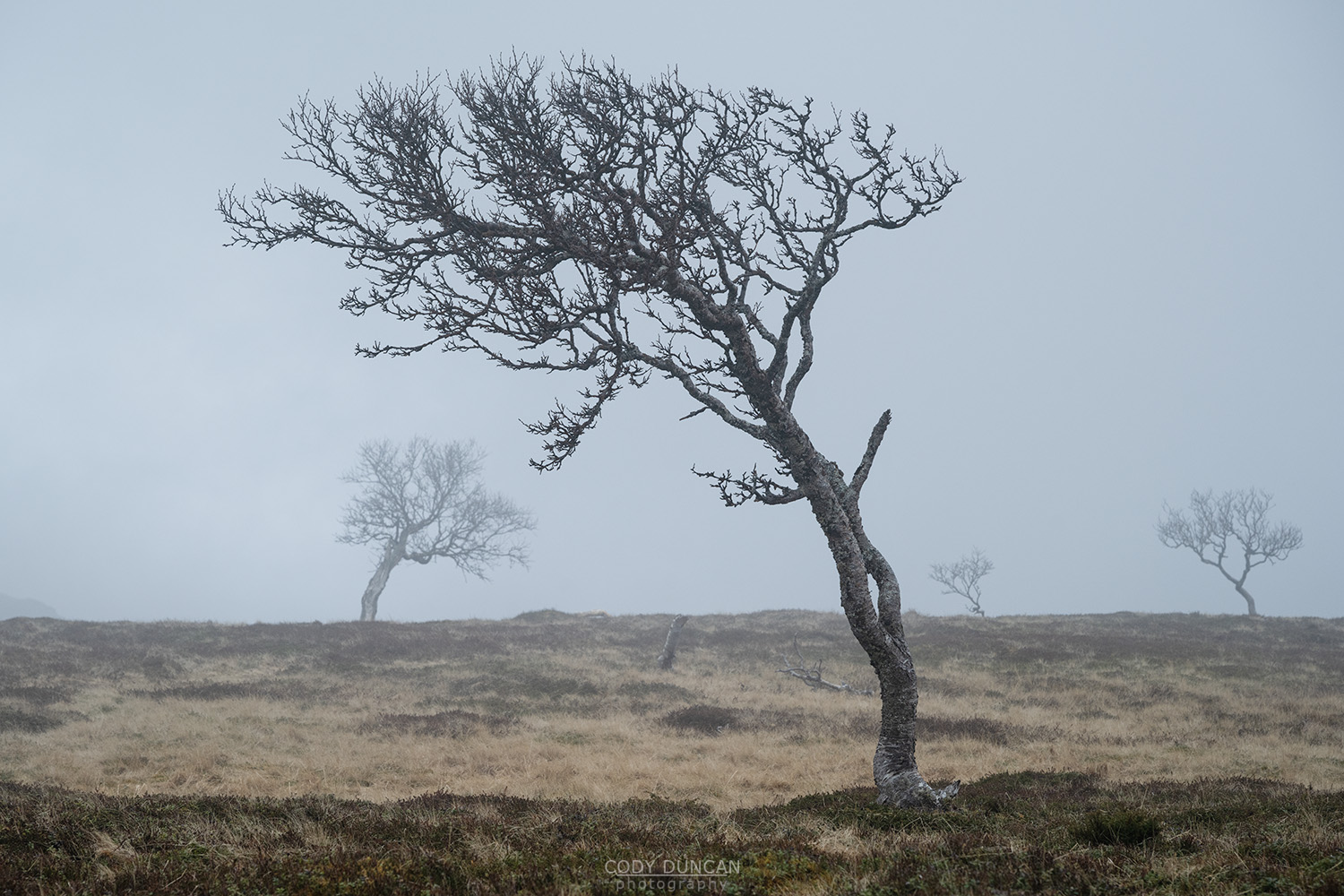
Photo: Mountain birch tree in grey clouds on Haugheia, May 10, 2023. 14:53
May is usually the start of sunset-to-sunrise season of Lofoten, and I had actually already written an article about that for this weeks post. However, May this year has been on the grey side and there hasn’t been too much in the way of colourful nights lately. Even when the sky has been clear overhead, there’s oven been a layer of cloud over the northern horizon, which largely blocks any color which might occur.
The last few days have actually felt like cold summer days, with a mild temperature around 10˚c, still air, and low, misty clouds concealing the peaks. Even on a Wednesday hike up the low ridge of Haugheiafor a bit of exercise, clouds were blowing across the summit forest leaving me wanting around in a sea of grey. Although for the wind twisted mountain birch grove at the summit, I actually like this type of low visibility and it removes the distractions of the background or sky and allows more of an emphasis on the shapes of the trees. Even better is when this occurs in winter.
I only shot a couple images on this hike as I often prefer the shoot the trees from a low vantage point, but the flip screen on my camera stopped working a couple months ago, and I’m too lazy to otherwise have to lie on the ground for some trees I’ve already shot dozens of times. One difficulty with living in Lofoten is that any sort of equipment repair takes a long time! So I would like to fix my camera soon, but I also can’t be without one for a month or more in the height of summer…
Head over to my Instagram account for (almost) daily postings of the local conditions here on Lofoten: @distant.north
Camera Info: Nikon Z7 II Nikon 24-120 f/4 110mm ISO 100 f 8 1/250 Second WB Daylight
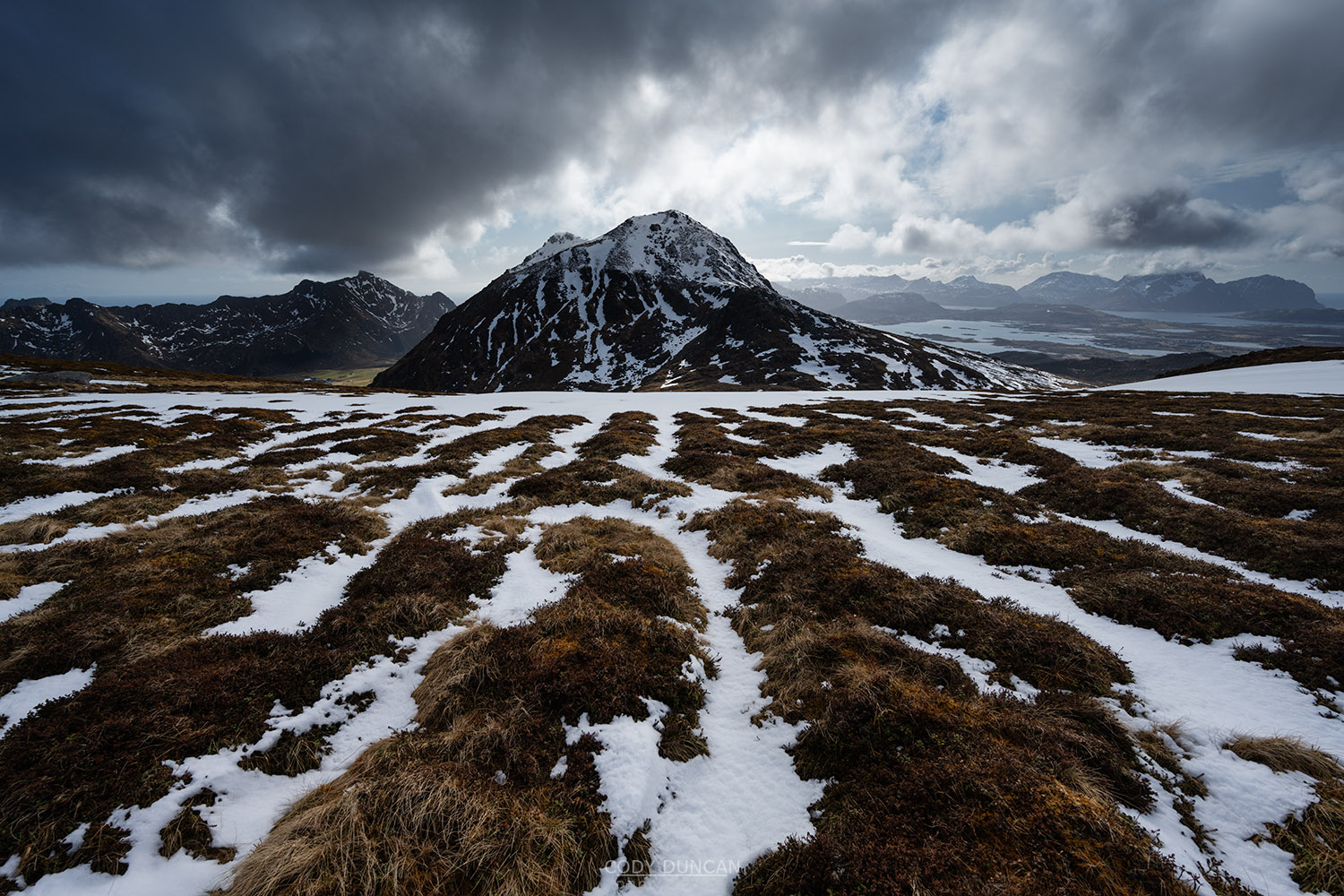
Photo: Dark clouds over Bulitind from Smordalskammen, Vestvågøy, Lofoten Islands, Norway. May 1, 2023. 16:36
It is that time of year that locals often call false spring, winter part 3-4-5, the May summer tire club, and various other jokes about the weather. After a few ‘warm’ days in April it’s easy to think that the trend will continue. But almost reliably, the the temperature will drop as winter fights to hold on a little longer. This last week has been a perfect example of that weather as the wind shifted north and snow flurries have been passing over the islands, with Wednesday’s temperature dropping down to -4.8˚c and leaving my backyard and surrounding fields with a layer of snow.
Once the sun returns however, the snow quickly melts until the next wave of snow passes. Winter takes over the shadows while the sun brings spring. But overall, the snow is slowly melting away and the coastal farmlands are beginning to turn green. I kinda lost track of time a bit this week noticing a few flowers on the side of the road and thinking it was an early spring. Until I remember that it was already a few days into May! So the pace of ‘the greenening’ (not a real word, but sounds cool) of the land seems normal this year.
On a May day hike in the cold blustery wind on Smordalskammen a small recent dusting of snow survived in a few places while in more exposed areas it had melted, creating these cool patterns across the land. The sun was high over Bulitind, but luckily the clouds concealed it from time to time for a slightly more balanced image.
Loosing track of time again while planning where to hike today, I suddenly realised that sunset is now at 22:20. I always find it hard to image that it’s still snowing but the days are already longer than midsummer in Berlin or London, for example. Winter weather but summer light. The midnight sun is now only 3 weeks away!
Head over to my Instagram account for (almost) daily postings of the local conditions here on Lofoten: @distant.north
Camera Info: Nikon Z7 II Nikon 14-30mm f/4 14mm ISO 100 f 8 1/1000 Second WB Daylight
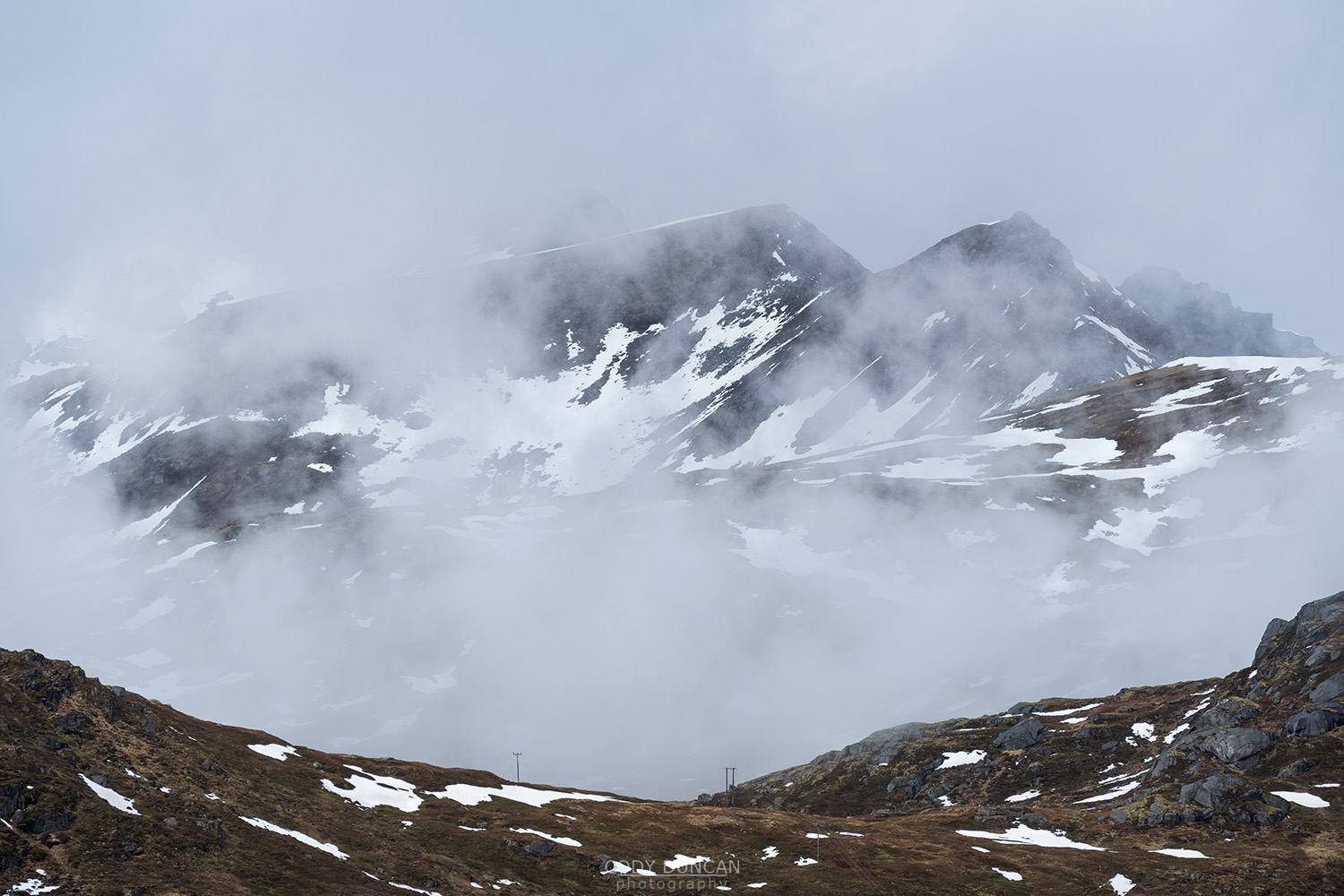
Photo: Mountains emerge from misty clouds, Eltofttuva, Vestvågøy, Lofoten Islands, Norway. April 24, 2022. 14:19
Last week I was somewhat optimistic that it would be an early start to barbecue season this year. But unfortunately, what I thought would be a warm April has cooled again and a layer of snow was once again sitting in my yard over the past weekend. So I think I’ll have to wait a little longer this year. But that is almost always Lofoten at this time of year – sitting in a limbo of not-winter and not-summer. Up north they are still getting good ski days in the mountains, while down south the land is already turning green. On Lofoten, we just wait.
I actually haven’t been out shooting too much lately. There has been some nice light, but I’m often stuck on the computer most of the day and then the thought of sitting up on a mountain in the cold wind waiting for sunset at 21:45 turns me a bit lazy. Though I guess I probably need to get the legs moving soon in preparation for summer, as even after my winter photo workshop season ended, I only managed a few days on skis before the snow melted away. But if I have to be stuck on the computer, I’d rather it be now than during the summer.
Another reason is that my photographic focus isn’t on Lofoten at the moment. In 2020 I had meant to spend most of my time hiking and photographing in the eastern parts of Lofoten for a new ebook companion to my West Lofoten Hikes ebook. But it is actually a lot of driving for me to get to the eastern parts of Lofoten, and with everything surrounding Corona, I had to put that project on the shelf for a while as I simply couldn’t afford the driving required.
But as the world normalised again, I found I had a new interest, which is my current ongoing ebook project. This one is my most ambitious one to date and I’ve already put in a few weeks on it during the last couple years. If I am lucky I might finish up most of the photography by this autumn and the writing over winter. I guess I found it easier, and more interesting, to take a longer trip a bit further to new places, than just driving around in circles over Lofoten all summer. And there are so many beautiful regions in Norway, that I sometimes wonder how they are so overlooked. I guess it’s just branding and name recognition, like any other commercial product. I could spend 10 lifetimes just trying to photograph Norway.
So, with my mind on big plans for other parts of Norway, I’m a bit lazy about day to day photography on Lofoten without having a project to work on. Though the good news is that I still have a backlog of hikes that I’ve never added to the website for some reason. Mostly this will be some mountains on Vestvågøy which I don’t have anywhere else to use at the moment, and a few ones from West Lofoten Hikes ebook that never made it online. Though some of those hikes in that will remain only in the ebook for the time being.
This week’s photo is from one of those new hikes on the website, taken on a misty and rainy April hike to Eltofttuva – hiking guide here. I think I’ve probably skied from the summit of Eltofttuva 10x more than I’ve hiked it, but as a fairly easy short hike just east of Leknes, I still usually make a couple trips a year, mostly for a bit of afternoon exercise with friends.
On this day, we were mostly in thick grey clouds and minimal visibility. I could see on the radar that the rain would (mostly) pass shortly after arriving at the summit, so we waited around a bit until I could at least see some distant peaks begin to emerge. I actually think this shot came out quite nice for what the day looked like. My only complaint would be the unfortunate location of the power lines running though the bottom of the frame. But nothing I can do about that…
Head over to my Instagram account for (almost) daily postings of the local conditions here on Lofoten: @distant.north
Camera Info: Nikon Z7 II Nikon 24-200 f/4-6.3 175mm ISO 100 f 8 1/250 Second WB Daylight
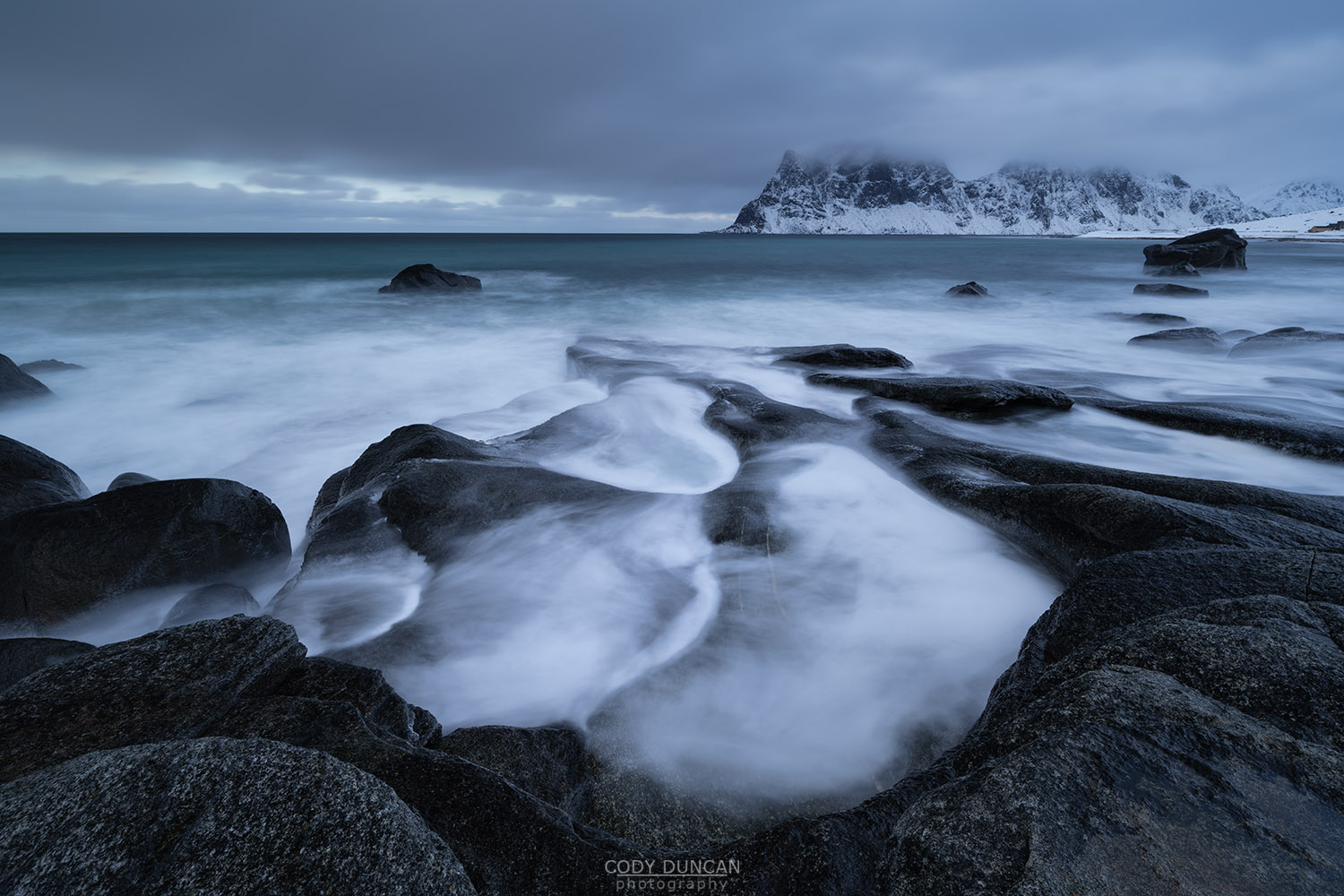
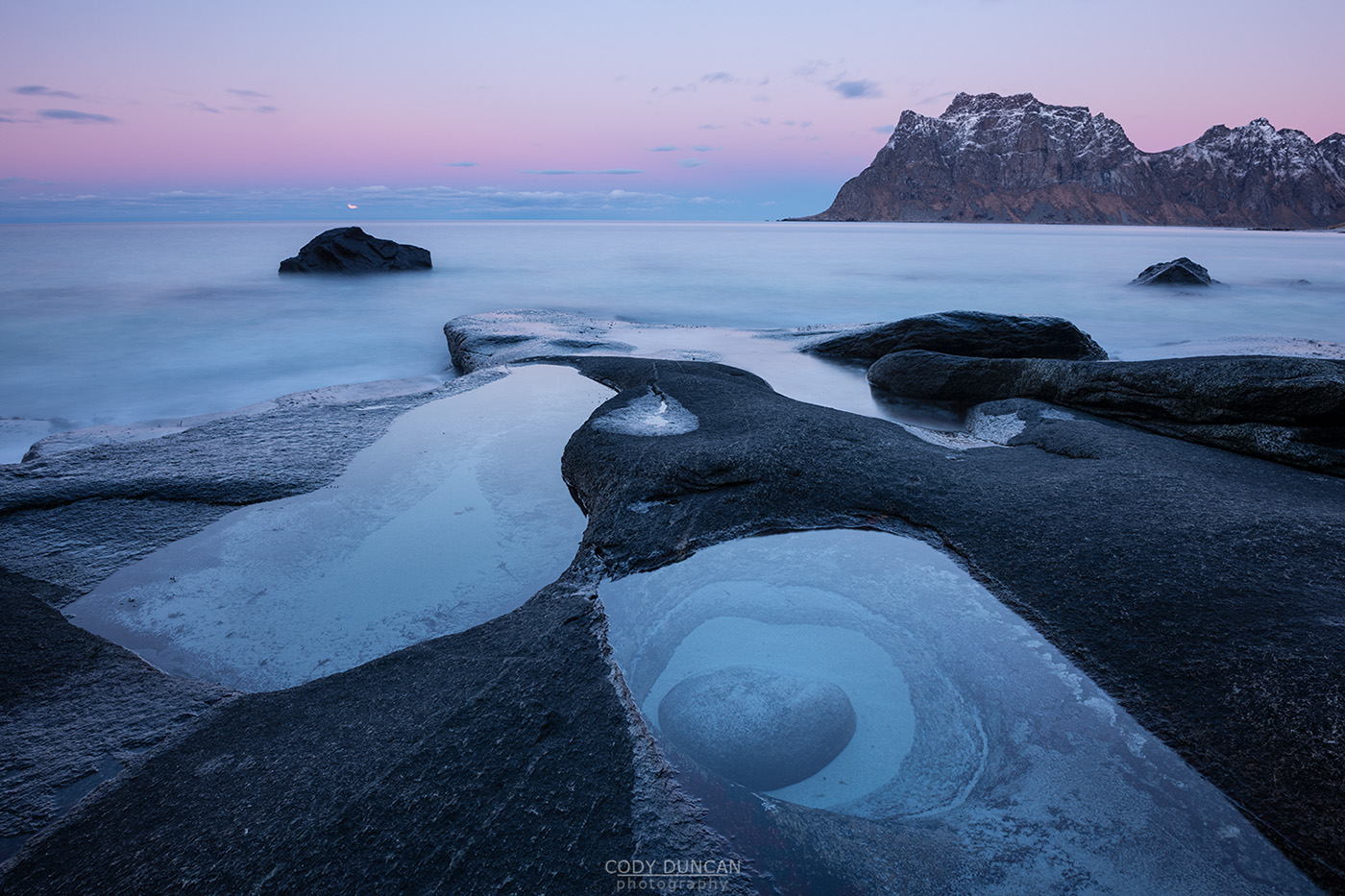
Photo: Winter waves wash over the rocky coastline concealing the Eye of Uttakleiv, Uttakleiv, Vestvågøy, Lofoten Islands, Norway. February 24, 2022. 15:32
I had originally planned another image of the full moon for this weeks post. But as the evening light faded I could see waves crashing over the small rocky islands off the coast from my house – the rocks I use as a gauge to see how stormy the sea is. And so with Lofoten well into winter, I thought I might talk about weather and timing for certain locations in Lofoten. And specifically for today, the famed ‘Eye of Uttakleiv.’
Where is the Eye in the above image? Well, that is specifically the problem I want to talk about with timing and weather. In the case of the above image, the Eye in concealed beneath the waves and tide of a stormy winter’s day. While I like the image itself well enough, had my intent been to photography the Eye on this day, I would have been out of luck. It was simply too stormy and the waves were crashing too high, even at low tide.
In general, I think the stormier the better for seascapes, particularly at Uttakleiv. But if one was hoping for a photo like the image below, a stormy day often won’t work. Or, I should be even more detailed and say that that a storm from a southern direction, bringing a southern swell and waves, will likely work for the Eye. With the above image, the storm and swell was out of the north, which crashes directly into the bay at Uttakleiv.
If you have have a few days on Lofoten and the ability to select locations for ideal conditions, it can be useful to use and app/website like windy.com to check the swell size and direct as it hits Lofoten. If you want stormy coastal conditions, head to parts of the islands where the swell is impacting directly. If you want calmer coastal conditions, head to the opposite side of the islands. Although, since you can’t move the Eye of Uttakleiv to another location, if it’s on your photo list, you’ll want to keep an eye out for a calmer swell on that part of Lofoten.
Head over to my Instagram account for (almost) daily postings of the local conditions here on Lofoten: @distant.north
Camera Info: Nikon Z7 II Nikon 14-30mm f/4 17mm ISO 31 f 13 10 seconds WB Daylight
Photo: Calm winter conditions at Eye of Uttakleiv, Vestvågøy, Lofoten Islands, Norway.
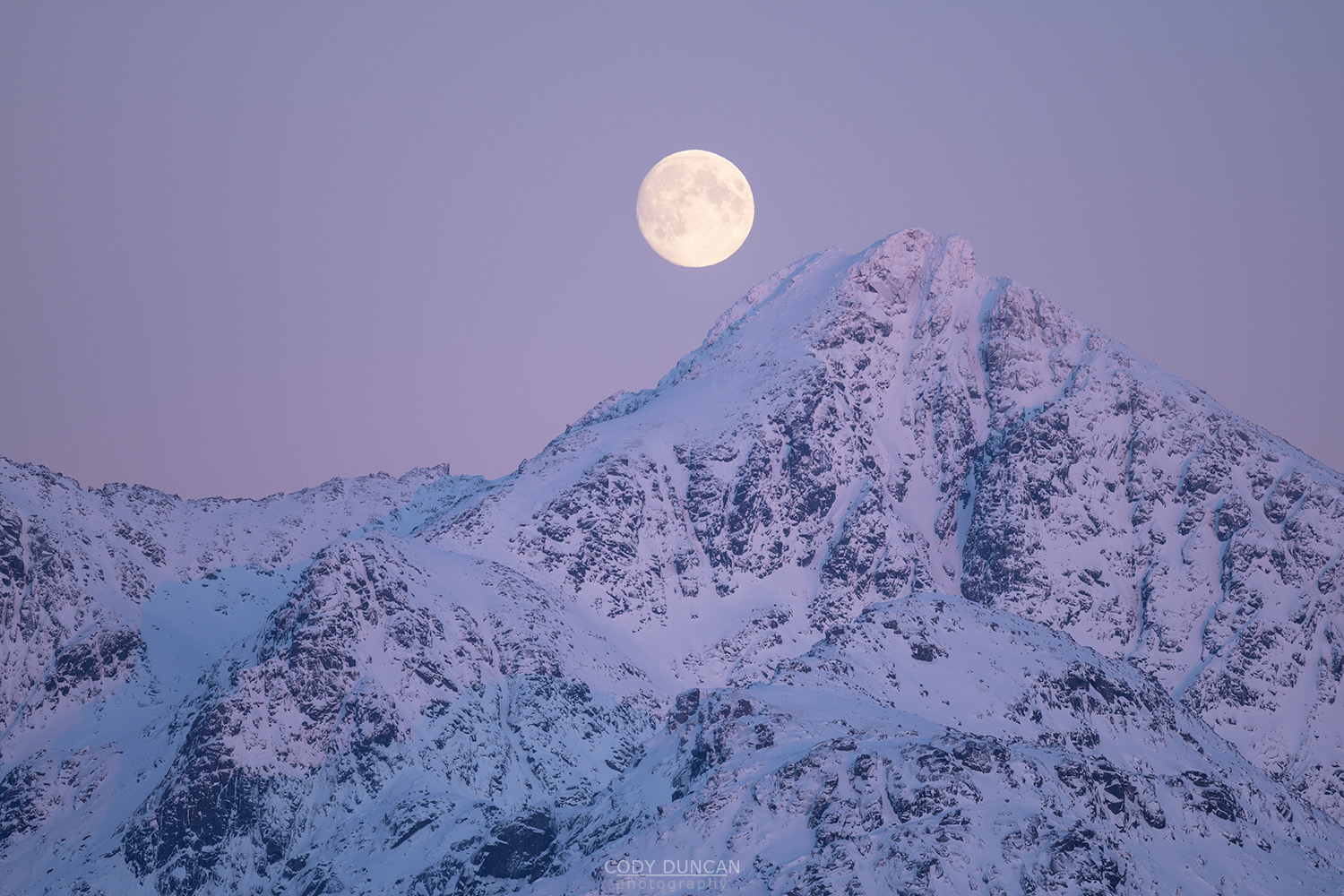
Photo: Winter full moon over Ristind, Vestvågøy, Lofoten Islands, Norway. January 5, 2023. 11:58
After the storms of the new year passed the weather of early January calmed just in time for the return of the sun, which I first saw on January 4th this year. At the same time was also a bright full moon filling the sky over Lofoten. And while I was happy to see the sun, I found it more interesting to shoot the moon.
Part of this is due to the fact that January sun is ‘south’ of Lofoten, barely rising over the water of Vestfjorden. So there’s not really too much you can do while shooting the sun, as its in an awkward location. The full moon offers much more variety in early winter, and being opposite the sun, if often in a more photogenic location during the midday twilight.
I wrote last month in Friday Photo #518, how I tried to shoot the full moon over Kirkefjord from Reinebringen, but didn’t quite succeed on the only day with suitable weather for that attempt. Conditions in January were no longer suitable for hiking Reinebringen, so I didn’t put in the effort for anything special. Though I knew the moon would shine over the mountains on the northern side of Vestvågøy during the day, so I kept an eye out for this.
I shot the moon here over two days. This first day produced slightly nicer light as the southern horizon was clear, allowing for a hint of alpenglow to shine over the mountains, Ristind in this image. Compositionally, with the multiple jagged peaks of Himmeltindene and Ristind, I found it easier for a long telephoto image, than a medium wide shot showing more of the landscape, as it was hard to light up all the mountains with the moon also in a location which felt balanced.
Head over to my Instagram account for (almost) daily postings of the local conditions here on Lofoten: @distant.north
Camera Info: Nikon Z7 II Nikon 100-400mm f/4.5-5.6 350mm ISO 100 f 5.6 1/80 second WB Daylight
Photo: Last December light over the summit of Skottind, Vestvågøy, Lofoten Islands, Norway. December 2, 2022. 11:48
November has been fantastic this year! It turned out to be the 2nd driest month after September – and that’s only by 0.5mm of rain. But it looks like the weather if finally beginning to shift in the next days and Lofoten might finally receive its first proper snowfall of the year. So even with the polar night still a week-ish away, today’s clear sky will likely be my last time to see the sun for the year.
With the sun low on the horizon, if you actually want to hike in sunlight at this time of year you are mostly limited to mountains on the southern side of Lofoten. While higher peaks on the north side still also receive a bit of light, most of the way up/down will be in shade. I wanted as much sun as I could find today, so I headed to Nonstind – Ballstadheia which I knew would have all the sun Lofoten was to get.
Leaving home, I was initially worried about a quite a few low clouds hanging over many of the peaks of Vestvågøy and Flakstadøy. Yesterday and last night had also been forecast for clear sky, but in the cold and stillness, a low cloud formed over all the islands. It seems it took the arrival of a bit of wind to blow the clouds away and I was happy to see Skottind rising into the late morning twilight as I rounded the corner near Napp.
I was already partially up the mountain when the sun first peaked over the distant mountains of the mainland, at 10:46. A could wind was blowing from the south as the sun and I ascended in tandem, but the low low does little to warm you at this time of year.
Reaching the summit, clouds were blowing across the summit of Skottind. It’s already tripod light at noon these days, but I decided to add a 10 stop ND filter to capture the moving clouds, which looked slightly boring otherwise. I only brought my light hiking tripod, but finding a bit of a sheltered rock and keeping it fairly low, it seemed to hand 60 second exposures on the cold and windy summit of Nonstind better than expected.
I don’t know when/where I will see the sun again, but perhaps it will be here on Nonstind again in the first weeks of January when the sun returns to Lofoten again…
Head over to my Instagram account for (almost) daily postings of the local conditions here on Lofoten: @distant.north
Camera Info: Nikon Z7 II Nikon 14-30mm f/4 14mm ISO 100 f 8 60 seconds WB Daylight 10 Stop ND filter
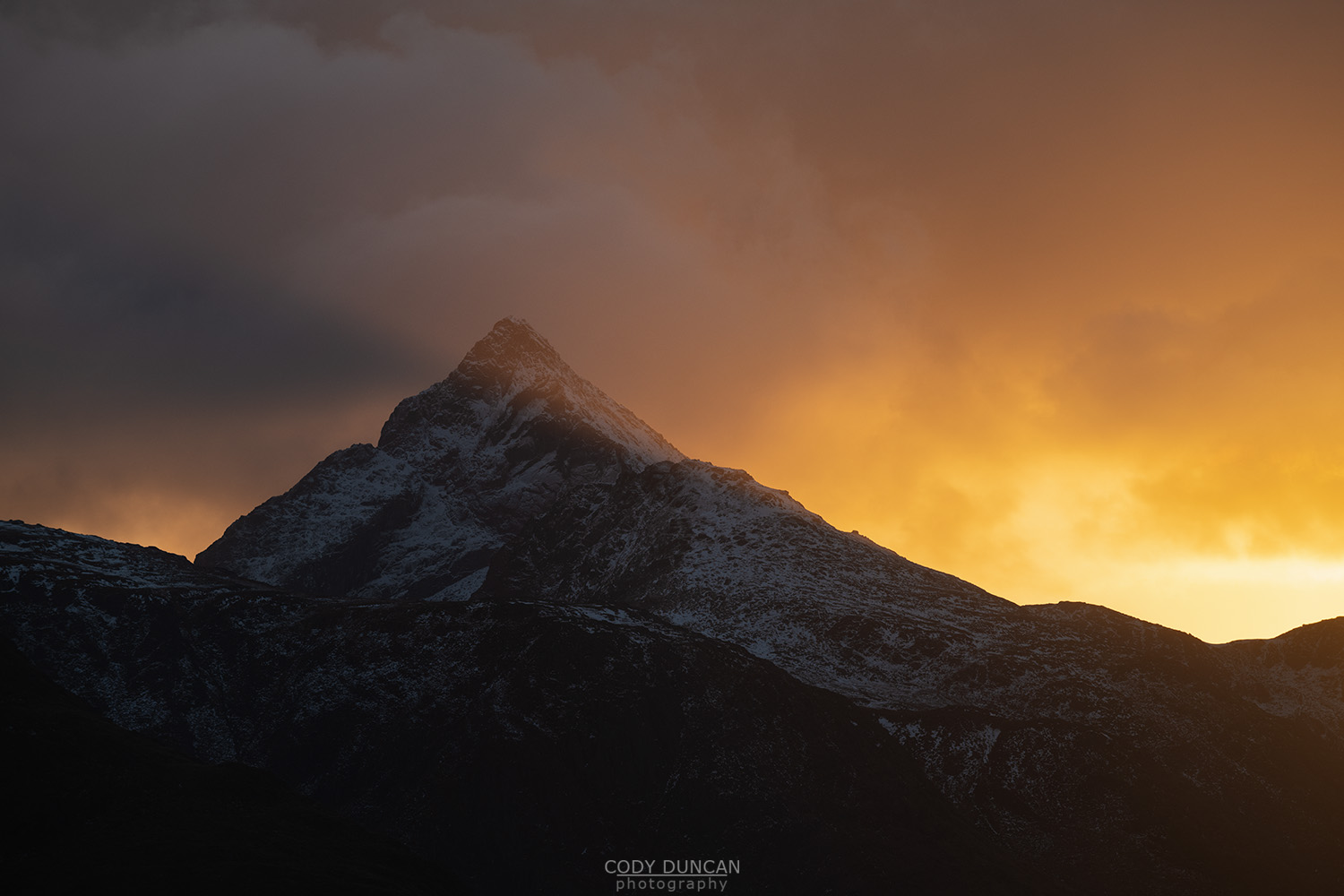
Photo: Rays of light shine from behind Skottind mountain peak, Vestvågøy, Lofoten Islands, Norway. November 23, 2020. 12:03
In mid November I usually begin my ‘last sun of the year’ countdown. While the polar night, beginning December 6, is still a few weeks away, the November weather and cloud conditions can mean that Lofoten will see its last sun of the year at any time. From my house on the northern side of the islands, which already loses the sun in mid October, I have to drive around to the southern side of the islands if I think there might be any chance of light.
Or, perhaps I just get lucky on my way to the supermarket in Leknes, where part of my drive takes my be Nappstraumen, opening directly towards the south and the noon sun, should it be there. That is the case for this image, with rays of midday sunlight shining over Skottinden. Even at noon, the light is more like sunrise/sunset at this time of year, Which it more or less is.
The sun’s location in mid November is the same as in late January, when Lofoten is known for its continuous sunrise-to-sunset lighting conditions. The same exact thing happens in November, but there just isn’t typically many photographers or other tourists around, so no one really notices. Though the snows of winter do help with conditions as well, as the often snow-less November landscape often just feels cold and dark – as opposed to the glowing snowy mountains in January.
Head over to my Instagram account for (almost) daily postings of the local conditions here on Lofoten: @distant.north
Camera Info: Nikon D850 Nikon 70-200mm f/4 20mm ISO 100 f 7.1 1/250 second WB Daylight
https://www.68north.com/content/2022/10/friday-photo-515-november-light.jpg10001500Codyhttps://www.68north.com/content/2016/12/68north-logo-V4.pngCody2022-11-18 03:00:002022-11-18 08:58:15Friday Photo #515 – November Sun
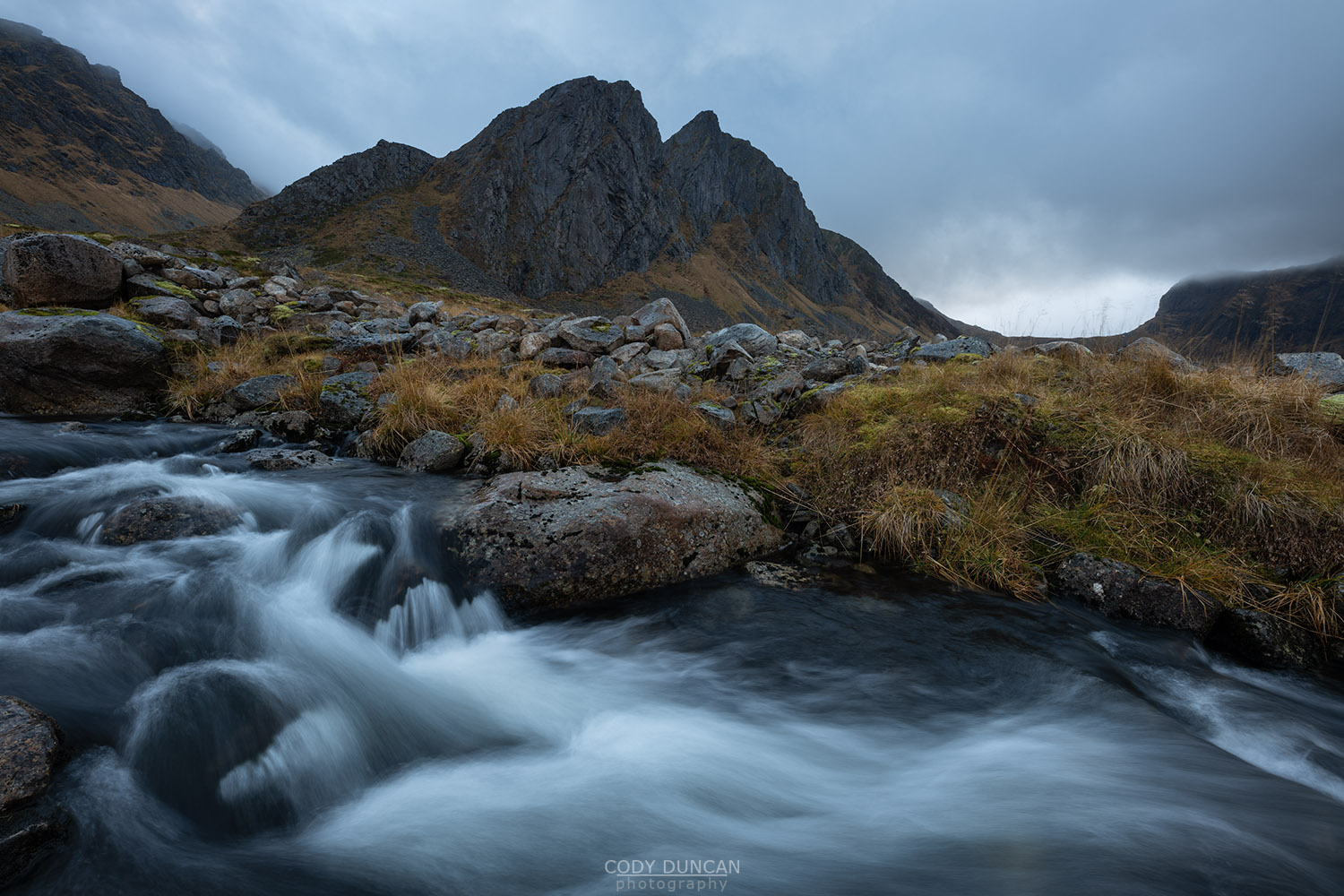
Photo: River flows through mountain valley, Unstad, Vestvågøy, Lofoten Islands, Norway. November 3, 2020. 14:31
By mid November the last of the autumn color is beginning to fade from the Lofoten landscape as the wait for winter continues. The leaves will already be long gone from the trees, but there still can be some of the grasses and smaller bushes which hold on for a little while longer until eventually being covered by the winter snows.
Usually at this time of year I’m not in the mountains as often as the days are short and the trails are often quite icy and slippery. Actually, November is perhaps my least photographed month on Lofoten. Sometimes there is special light here and there, but often is is just flat, grey, and rainy – like in todays image.
If I am out photographing, I’ll typically try and find scenes without any trees preset, which isn’t too hard in the wester half of Lofoten! And if there’s been a lot of rain lately, then usually the small rivers are flowing quite nicely and might be a useful subject.
Located just outside of Unstad, this small little creek has become a favorite of mine as a rainy day location, as it’s only a few minutes walk from the parking lot, but has a multitude of different angles it can be photographed from. I’m actually not sure I’ve ever photographed this location in ‘good’ weather, but maybe I’ll have to try one day.
Head over to my Instagram account for (almost) daily postings of the local conditions here on Lofoten: @distant.north
Camera Info: Nikon D850 Sigma 14mm f/1.8 14mm ISO 31 f 14 0.5 second WB Daylight
https://www.68north.com/content/2022/10/friday-photo-514-river.jpg10001500Codyhttps://www.68north.com/content/2016/12/68north-logo-V4.pngCody2022-11-11 15:00:002022-10-17 12:08:08Friday Photo #514 – November River
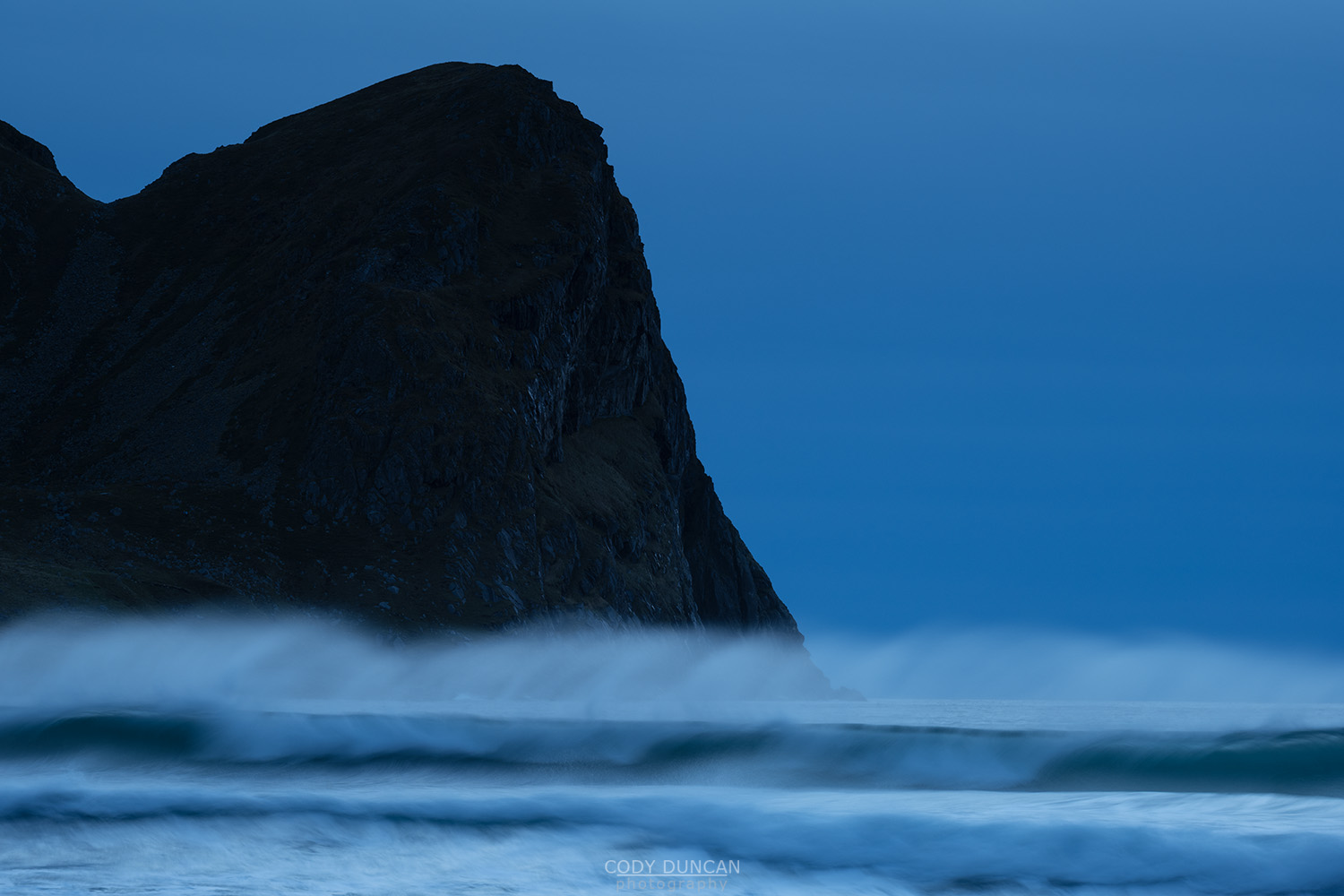
Photo: Sea spray flows off crashing waves at Unstad beach, Vestvågøy, Lofoten Islands, Norway. October 4, 2022. 18:18
I nice and clean autumn swell was hitting Unstad the other week just a few days after the Lofoten masters surfing competition – which I unfortunately missed. I arrived a while before sunset and was mostly shooting the surfers out in the nice backlit waves. Eventually though, the sun dipped into a layer of cloud on the horizon and the light soon faded.
But as the twilight approached, the offshore wind still kept blowing a nice sea spray off the incoming sets. I watched a few sets roll through, which timed with a stronger gust of wind sent the sea spray flying in a beautiful dance above the sea.
By now it was slightly too dark for a fast shot to freeze the motion, and the light had been better when the sun was still visible. But going in the opposite direction, I tried a slightly longer shutter speed to capture a bit more of the flow of the waves and wind.
Like most things to do with the sea though, it seemed I watched the best waves pass by, and by time I pulled out the camera the conditions had changed slightly. Or perhaps its just the difference between watching the real motion of the wind and waves vs. trying to capture the moment in a still image. Either way, I think this image is a good attempt, but not really representative of the moment I was trying to capture.
Head over to my Instagram account for (almost) daily postings of the local conditions here on Lofoten: @distant.north
Camera Info: Nikon Z7 II Nikon 24-200mm f/4-6.3 115mm ISO 50 f 13 0.3 second WB Daylight
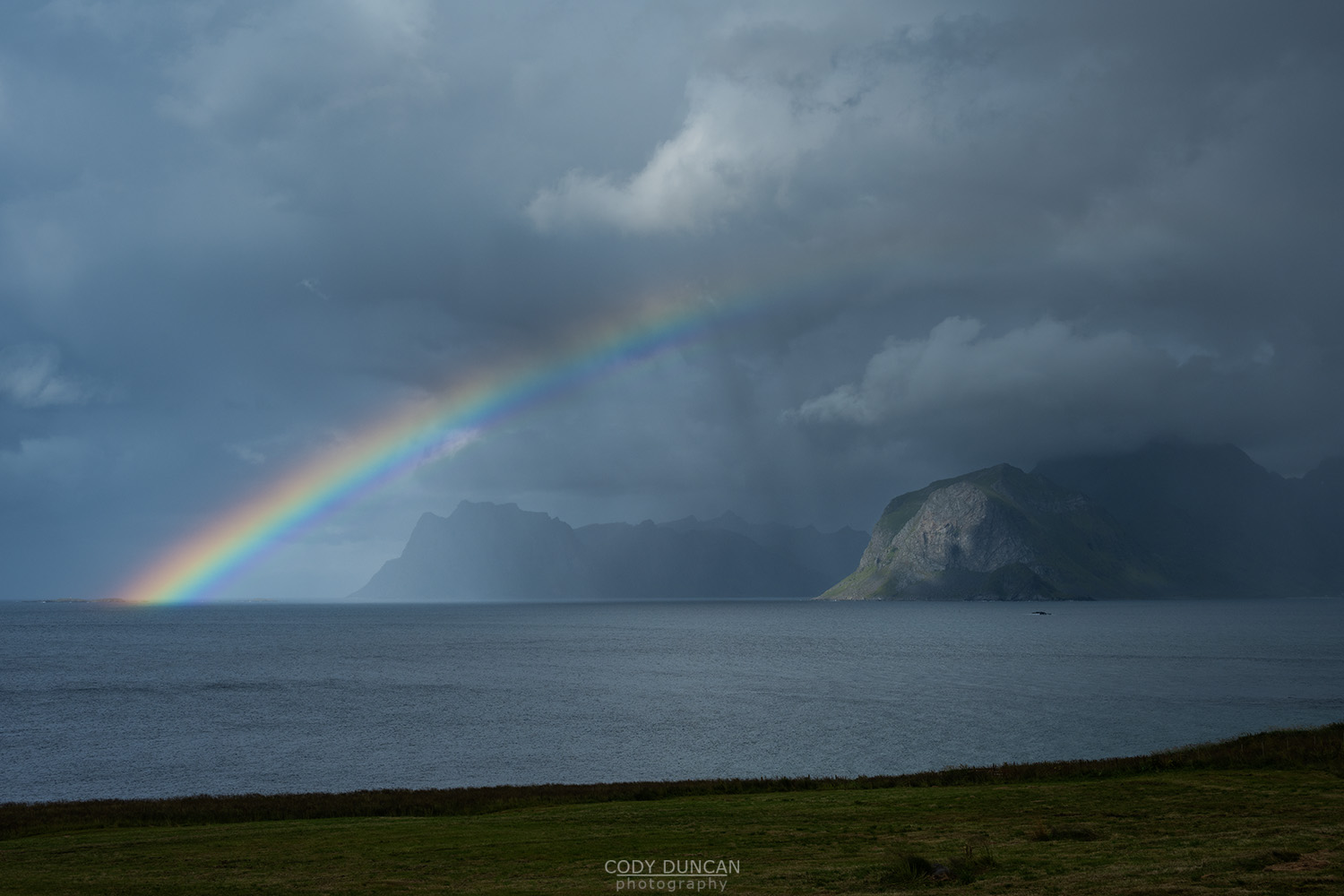
Photo: Partial rainbow over distant mountains of Vestvågøy, Lofoten Islands, Norway. August 5, 2022. 16:22
Like last year, this year has also been a cool and wet July and beginning of August on Lofoten, with July receiving almost 2x the normal amount of rainfall. Though this isn’t too bad, considering areas along the Helgeland coast have had the wettest summer since 1900! I’ve been attempting to make a few trips over to Helgeland throughout the summer, but the long term forecasts simply show near endless rain most of the time.
The wet weather has also led to a significant number of mountain rescues so far this summer, including the death of a young hiker on Reinebringen in June (the second death on Reinebringen in a 6 month period, the previous being in December 2021). The trails of Lofoten, especially the popular ones which are over-eroded and generally unmaintained are in pretty terrible condition due to all the mud. Even whin the sun briefly shines, I’ve mostly been sticking to quiet, untraveled areas that are mostly off-trail, as its far safer than muddy, slippery trails where it is easy to have a quick slip and end up with a sprained ankle or worse.
Fortunately, with the rain comes rainbows. This day last week was full of them and I was quite distracted from work while always looking out the window. It would have been a nice day for mountains views and a good soaking, but a strong south wind was blowing across the islands, so better to keep to low ground. Luckily, my office window still has a decent enough view!
Head over to my Instagram account for (almost) daily postings of the local conditions here on Lofoten: @distant.north
Camera Info: Nikon Z7 II Nikon 24-200mm f/4-6.3 48mm ISO 100 f 8 1/320 second WB Daylight
We may request cookies to be set on your device. We use cookies to let us know when you visit our websites, how you interact with us, to enrich your user experience, and to customize your relationship with our website.
Click on the different category headings to find out more. You can also change some of your preferences. Note that blocking some types of cookies may impact your experience on our websites and the services we are able to offer.
Essential Website Cookies
These cookies are strictly necessary to provide you with services available through our website and to use some of its features.
Because these cookies are strictly necessary to deliver the website, refusing them will have impact how our site functions. You always can block or delete cookies by changing your browser settings and force blocking all cookies on this website. But this will always prompt you to accept/refuse cookies when revisiting our site.
We fully respect if you want to refuse cookies but to avoid asking you again and again kindly allow us to store a cookie for that. You are free to opt out any time or opt in for other cookies to get a better experience. If you refuse cookies we will remove all set cookies in our domain.
We provide you with a list of stored cookies on your computer in our domain so you can check what we stored. Due to security reasons we are not able to show or modify cookies from other domains. You can check these in your browser security settings.
Google Analytics Cookies
These cookies collect information that is used either in aggregate form to help us understand how our website is being used or how effective our marketing campaigns are, or to help us customize our website and application for you in order to enhance your experience.
If you do not want that we track your visit to our site you can disable tracking in your browser here:
Other external services
We also use different external services like Google Webfonts, Google Maps, and external Video providers. Since these providers may collect personal data like your IP address we allow you to block them here. Please be aware that this might heavily reduce the functionality and appearance of our site. Changes will take effect once you reload the page.
Google Webfont Settings:
Google Map Settings:
Google reCaptcha Settings:
Vimeo and Youtube video embeds:
Other cookies
The following cookies are also needed - You can choose if you want to allow them: